
24/7 Customer Support

Free returns

Same-day & Next-day Delivery

Quality Guaranteed

Unlock Your Welcome Offers: FREE Delivery | Up to 80% OFF | Free 30-day JoyPlus trial
Download the APP
A Bodum double wall glasses set can make a morning coffee, evening cocktail or after-dinner espresso feel more considered. The practical appeal is equally important: double-wall construction creates a thermal barrier, while the outer surface is designed to remain more comfortable to hold and reduce condensation on cold drinks.
However, attractive glassware can be easy to overspend on. Before choosing a set, UK shoppers should check capacity, material, care instructions and the type of drinks they serve most often.
The floating-drink effect looks similar across many double-walled glass cups, but sizes can differ significantly. A 150ml espresso cup is not suitable for a large latte, while a 250ml glass may feel too small for generous iced drinks.
Check the stated capacity before purchasing:
The term thermal glass does not automatically describe the material or manufacturing method. Look for heat-resistant borosilicate glass, which is specified for the Bodum options covered here. The listed products are also mouth-blown and feature a silicone vent or valve to help equalise air pressure between the glass layers.
This construction supports insulation for hot and cold drinks, but it does not make the glasses unbreakable. Treat them as glassware rather than impact-resistant drink containers.
A listing may state that glasses are dishwasher, microwave, oven or freezer safe, but temperature limits still matter. The PAVINA range is listed as oven safe up to 180°C, while the CANTEEN information specifies up to 176°C/350°F. The BISTRO cups are listed with a temperature range of -30°C to 180°C.
Avoid sudden, extreme temperature changes, such as pouring boiling liquid into a frozen glass. Always check the product instructions, particularly when moving glassware between the freezer, oven and table.
For everyday use, prioritise products that clearly state their material. Borosilicate glassware is used in these Bodum designs because it is heat resistant and suitable for hot and cold serving applications when used within the stated limits.
The silicone vent is a functional detail rather than decoration. It helps regulate pressure between the inner and outer walls. If a listing does not explain how its double-wall structure manages pressure, read the care information carefully before buying.
Capacity should match the drinkware already used in your kitchen. Consider the height and width as well as the millilitre measurement, especially if you use a coffee machine, drinks tray or kitchen cabinet with limited clearance.
The options in this guide range from 150ml to 350ml. Their listed dimensions are:
All four listed options are described as suitable for dishwasher use. They are also listed as microwave, oven and freezer safe, subject to their individual temperature guidance.
For longer-lasting clarity:
These features make them practical dishwasher-safe glass cups, but careful handling remains important because the walls are made from glass.
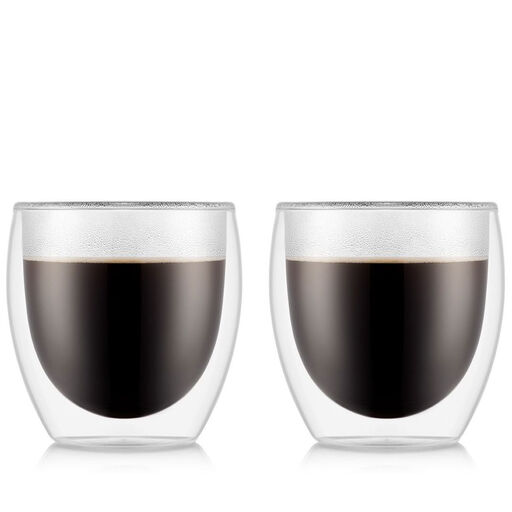
Why This Fits Their Persona: The 250ml capacity is a flexible starting point for everyday coffee, tea, cold drinks and small desserts without moving straight to a larger serving size.
Its stated capacity and borosilicate material are clearly specified, helping shoppers compare function rather than selecting by appearance alone.
Mouth-blown heat-resistant borosilicate glass; listed as dishwasher, microwave, oven and freezer safe.
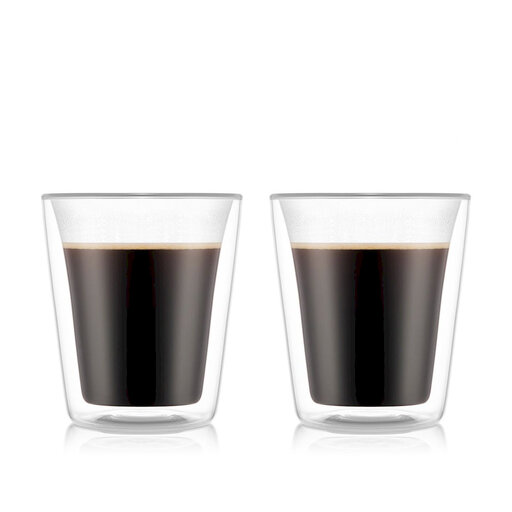
Why This Fits Their Persona: The 200ml format suits design-conscious kitchens and entertaining, with a floating-liquid appearance for coffee, tea, cocktails and chilled desserts.
The listing explains the silicone valve and names the borosilicate construction, rather than relying only on visual styling.
Suitable for hot and cold serving; listed as dishwasher, microwave, oven and freezer safe up to 176°C in the oven.

Why This Fits Their Persona: The compact 150ml capacity is intended for espresso, ristretto, small desserts and neat minimalist table settings.
The small capacity is explicit, so buyers are less likely to mistake an espresso cup for a general-purpose mug.
Double-wall thermal construction; dishwasher, microwave, oven and freezer safe according to the listing.
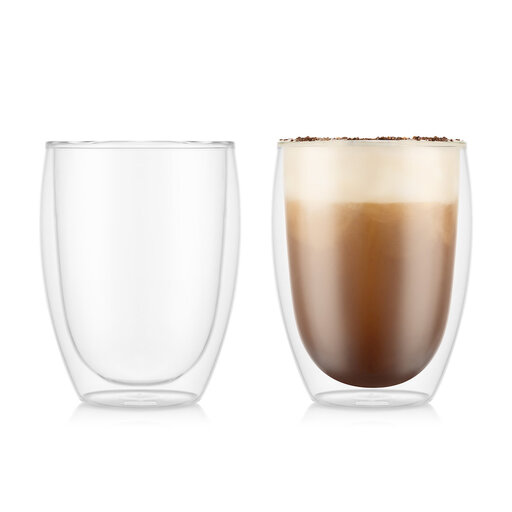
Why This Fits Their Persona: The larger 350ml capacity gives more space for long coffee, iced drinks, cold desserts and generous servings when hosting.
The 350ml measurement helps prevent the common mistake of buying a stylish glass that is too small for the intended serving.
Larger everyday capacity; listed as dishwasher, microwave, oven safe to 180°C and freezer safe.
We have compiled a complete, real-time list of products that fully satisfy these strict selection criteria and UK safety regulations.
The PAVINA glasses are described as made from heat-resistant borosilicate glass with double-wall insulation. The 250ml and 350ml versions are listed as oven safe up to 180°C, as well as microwave and dishwasher safe. Pour hot drinks carefully and avoid sudden temperature changes.
They are designed to reduce exterior condensation by creating insulation between the drink and the outer surface. Results can vary depending on drink temperature, room temperature and humidity, so “condensation-free” should not be treated as a guarantee in every situation.
The 150ml Bodum BISTRO espresso glass cups are the most targeted option in this selection. They are designed for espresso, ristretto and small servings. For larger coffees or iced drinks, consider the 250ml or 350ml PAVINA glasses instead.