Hosts serving dark-chocolate shortbread
If the biscuits are going straight onto a plate, decide whether your guests would prefer chocolate chips, chunks or a coating. Those formats do not tell you the chocolate’s cocoa-solids percentage.


Choose dark-chocolate chunk shortbread for ready-to-serve all-butter biscuits, or a mixed-chocolate version if your guests prefer both milk and dark chocolate. If a declared high cocoa-solids percentage matters, serve plain shortbread with separately labelled chocolate: Marks & Spencer and Sainsbury’s list 39% minimum cocoa solids in the chocolate used for their chunk rounds, while a separately sold bar can carry its own higher declaration. Check the exact ingredients and allergen warnings for every product you serve.
If the biscuits are going straight onto a plate, decide whether your guests would prefer chocolate chips, chunks or a coating. Those formats do not tell you the chocolate’s cocoa-solids percentage.
Look for a cocoa-solids declaration for the chocolate itself. The amount of chocolate in a biscuit answers a different question.
Compare butter-based and vegan-labelled recipes, then check each product’s ingredients and precautionary allergen warnings against your guests’ requirements.
Decide whether you want a precombined biscuit or control over the chocolate you serve alongside it. Then compare the declarations on the specific products.
Choose when: You want ready-to-serve shortbread with dark-chocolate chips, chunks or a coating.
Bear in mind: A dark-chocolate description alone does not establish a particular cocoa-solids percentage.
Choose when: Guests would prefer milk chocolate alongside dark chocolate.
Bear in mind: Waitrose lists more milk-chocolate than dark-chocolate chunks in its four-piece bakery product.
Choose when: You want to select chocolate with its own stated cocoa-solids percentage.
Bear in mind: You need to buy and check two products; the chocolate’s declaration does not describe the shortbread.
| Priority | What to check | Your needs |
|---|---|---|
| Cocoa declaration | Check the cocoa-solids percentage of the chocolate and, separately, the chocolate’s share of the biscuit. Marks & Spencer and Sainsbury’s each list 19% dark-chocolate chunks with 39% minimum cocoa solids in that chocolate. | I want to know how dark the chocolate itself is, rather than relying on the word “dark” or the biscuit’s chocolate percentage. |
| Serving format | Compare chips, chunks, a coating and mixed-chocolate pieces. Check the piece count when planning what to serve: Walker’s lists nine biscuits in its chocolate-chip box, while Waitrose lists four in its mixed-chocolate bakery pack. | For a shared plate, I’d choose the format my guests prefer and check how many biscuits are in the pack. |
| Ingredients and allergens | Read the exact product’s ingredients and precautionary warnings. Farmhouse Biscuits labels its half-coated shortbread suitable for vegans but warns that it may contain milk, egg and tree nuts. | Some guests need an ingredient check, and a vegan label alone would not answer an allergy question. |
| Separate chocolate | If a particular cocoa declaration is important, compare separately labelled chocolate. Waitrose & Partners lists 70% minimum cocoa solids for a Lindt Excellence dark chocolate bar; that figure applies to the bar, not to any shortbread. | I’d rather serve plain shortbread with chocolate chosen separately than assume a ready-made biscuit meets a cocoa preference. |
“19% dark-chocolate chunks” describes how much of the biscuit is chocolate, not the cocoa-solids percentage of those chunks. Marks & Spencer and Sainsbury’s separately state 39% minimum cocoa solids for the chocolate in their chunk rounds.
Read both declarations where they are given. If you need a particular cocoa-solids declaration, check chocolate sold separately as well.
Farmhouse Biscuits labels its half-coated shortbread suitable for vegans while warning that it may contain milk, egg and tree nuts.
For a guest with an allergy, use the ingredients and precautionary information on the exact product you buy.
Waitrose lists 15% milk-chocolate chunks and 7% dark-chocolate chunks in its four-piece bakery shortbread. Tesco describes its triple-chocolate shortbread as containing white, milk and dark chocolate.
Check which chocolate types are present and their stated amounts before choosing a mixed-chocolate pack.
These examples describe specific products, not every shortbread made by each brand.
A boxed chocolate-chip shortbread option.
Chocolate-chip shortbread rounds containing butter and vegetable margarine.
All-butter shortbread rounds with Belgian dark-chocolate chunks.
Four-piece bakery shortbread with both milk- and dark-chocolate chunks.
Own-label shortbread rounds offered in dark-chocolate chip and chunk versions.
Finest bakery shortbread described as combining white, milk and dark chocolate.
Half-coated dark-chocolate shortbread made with vegetable oils and labelled suitable for vegans.
These are dark-chocolate biscuit alternatives for the gathering, not shortbread. Check the biscuit type before choosing one in place of shortbread.
 No image available
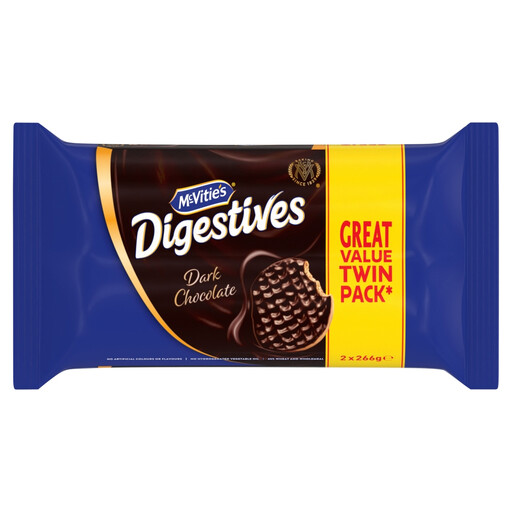
A dark-chocolate biscuit option if a digestive is acceptable instead of shortbread. The twin pack contains 2 x 266g; check the exact pack’s ingredients and allergen information before serving.
 No image available
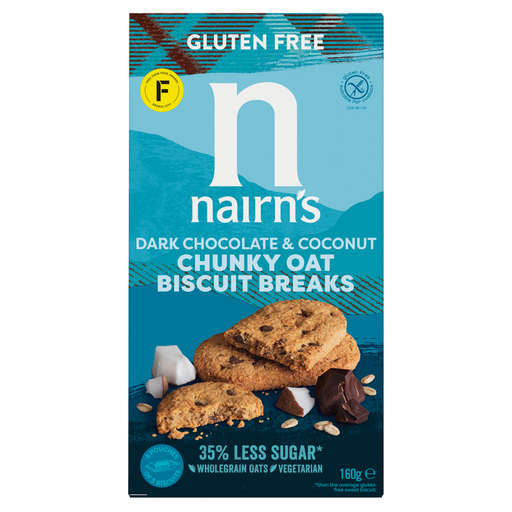
A gluten-free oat-biscuit option if shortbread is not essential. The pack is 160g; check its current ingredients and precautionary allergen information for your guests.
No particular cocoa-solids percentage follows from the word “dark”. Marks & Spencer and Sainsbury’s state 39% minimum cocoa solids for the chocolate in their cited chunk rounds; check the chocolate declaration on any other product you are considering.
Do not assume so from the vegan label. Farmhouse Biscuits labels its half-coated shortbread suitable for vegans but warns that it may contain milk; check the exact pack and the guest’s requirements before serving it.
Marks & Spencer and Sainsbury’s advise keeping their cited shortbread in a cool, dry place and using an airtight container after opening. Follow the storage instructions and best-before date on the pack you buy.
Ask for the allergen information provided for the specific bakery item before buying it. The Food Standards Agency says food businesses provide allergen information for both prepacked and non-prepacked food; for a prepacked biscuit, also read the exact pack’s ingredients and warnings.