Bonfire Night snackers limiting fat
If you want a packaged snack to take along, compare the nutrition figures on the exact bar rather than relying on words such as “light” or “wholegrain”.


For Bonfire Night, compare snack bars by total fat and saturated fat per 100g as well as per serving, then check the serving size and allergens on the pack. Weetabix Cereals lists 0.8g fat and 0.3g saturates for one 19g Alpen Light Summer Fruit bar, but a per-bar figure alone cannot settle a comparison with larger bars. If protein or dietary suitability matters more, check the exact variant rather than assuming its fat content from its name or ingredients.
If you want a packaged snack to take along, compare the nutrition figures on the exact bar rather than relying on words such as “light” or “wholegrain”.
If protein is your main consideration, check the bar’s fat declaration separately. A protein-focused name does not establish that it is lower in fat.
If you need a vegan, gluten-free or dairy-free product, or must avoid an allergen, check the specific flavour and pack. Suitability can differ within a brand.
Start with the amount you expect to eat, then compare nutrition figures on the same basis. Check dietary suitability on the exact pack before taking bars to a gathering.
| Priority | What to check | Your needs |
|---|---|---|
| Total fat and saturates | Read both figures per 100g and per stated serving. Compare like with like rather than judging a bar by one ingredient or a front-of-pack description. | I want to compare the fat in the finished bars, not assume that “light”, wholegrain or no added sugar means less fat. |
| Nutrition labels | Use any traffic-light colours alongside the numerical declaration; check which nutrients the colours refer to. In the Food Standards Agency and Ipsos Northern Ireland’s 2024 survey of 611 adults interviewed in Northern Ireland, 49% actively used traffic-light labelling when shopping for food. | I find colour labels useful for an initial look, but want the numbers before comparing two bars. |
| Serving size | Check the weight of one bar, how many bars make a serving and how many you plan to eat. Weetabix Cereals gives figures for one 19g Alpen Light Summer Fruit bar; Nature Valley UK gives figures for two 21g Oats & Dark Chocolate bars. | If I take a two-bar pack, I want to know whether the nutrition figures cover one bar or both. |
| Allergens and dietary suitability | Read the exact product’s ingredients, allergen statement and any “may contain” wording. Do not extend a range-level vegan or gluten-free statement to every flavour. | I need to know whether the particular bars I bring suit the people who will eat them. |
| Protein preference | Check the protein and fat declarations for the same serving. A protein-focused bar still needs a separate fat comparison if limiting fat is your aim. | Protein matters to me, but I do not want the product name to decide the fat comparison for me. |
Those descriptions refer to different product attributes. A fruit-and-nut or wholegrain bar is not necessarily the lower-fat choice.
Compare total fat and saturated fat on the finished products’ nutrition panels, using the same weight or serving basis.
Weetabix Cereals lists Alpen Light Summer Fruit figures for one 19g bar, while Nature Valley UK lists Oats & Dark Chocolate figures for a 42g serving of two bars. Per-serving figures therefore describe different amounts of food.
Check the per-100g figures as well as what you expect to eat from each pack.
Ingredients and allergen statements can differ between ranges and flavours, even when their packaging looks similar.
Check the specific pack’s ingredients, allergen statement and precautionary wording before buying or sharing it.
These ranges illustrate different reasons for choosing a bar; a brand name alone does not establish its fat content or dietary suitability.
Alpen Light Summer Fruit is a small-bar example with a stated fat amount.
Crunchy and Protein bars serve different preferences; check each product separately.
TREK’s protein-focused ranges are relevant when plant-based protein is the main consideration.
Its fruit-and-nut bars may appeal when ingredients and dietary suitability drive the choice.
Eat Natural offers fruit-and-nut bars and other formats for shoppers choosing by ingredients or texture.
These Grenade multipacks are options for taking protein bars to a Bonfire Night gathering. If limiting fat is your priority, compare their current pack declarations with other bars before choosing.
 No image available
A multipack of 50g bars for a protein-focused snack. Check the current pack’s fat figures and allergen statement if either affects your choice.
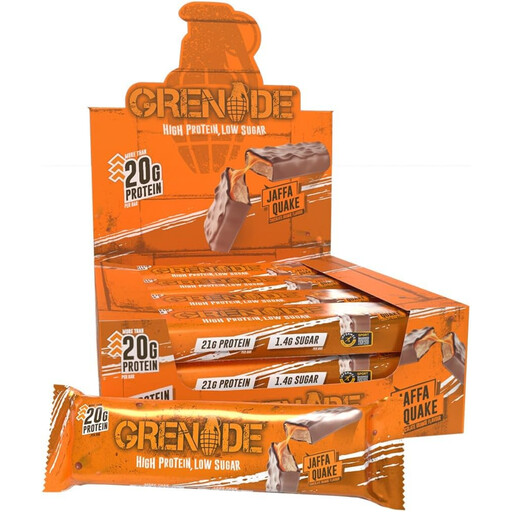 No image available
A multipack of 60g protein bars. The product name’s low-sugar wording does not establish a lower-fat result; compare the current fat declaration per 100g and per bar.
Compare total fat and saturated fat per 100g, then check the amounts per serving and how many bars that serving contains. Weetabix Cereals declares 0.8g fat per 19g Alpen Light Summer Fruit bar, while Nature Valley UK declares 8.3g per 42g serving of two Crunchy Oats & Dark Chocolate bars; those per-serving amounts describe different weights.
No conclusion about the whole bar follows from one ingredient. Nature Valley UK lists fat-reduced cocoa powder in Crunchy Oats & Dark Chocolate, but declares 8.3g fat per 42g two-bar serving. Use the finished bar’s nutrition declaration for the comparison.
Check each flavour’s ingredients, allergen statement and any “may contain” wording on its pack. Weetabix Cereals says Alpen Light Summer Fruit is not suitable for people with a nut allergy; dietary statements about a different product or range should not replace a check of the bar you intend to share.
Choose one on that basis only if its own fat declaration also fits what you are looking for. TREK states that its Protein Flapjacks contain 9g plant-based protein and its High Protein bars contain 15g, but protein amounts do not tell you how much fat is in the bar.