Who is each option for?

Clubs serving one familiar tea

If everyone is happy sharing one blend, a refillable container keeps the storage choice separate from the tea. For serving, choose a teapot infuser with room for the leaves or strain the tea as you pour, and measure the leaves for the number of cups.

Hosts planning a tea tasting

Several clearly labelled, smaller loose-leaf caddies let guests choose between blends. Check each product’s tea type and quantity, then allow for separate preparation when different teas have different brewing directions.

Shoppers replacing loose-tea packaging

If you already have the tea, look at empty jars or refillable caddies rather than buying another filled container. Check how much your chosen leaf style fits and where the container will stand between meetings.

What should you check before buying?

Empty jar or refillable caddy

Choose it when: You already buy a preferred loose tea and want to refill the same container.

Plan for: Buying the tea separately and checking how much of your chosen leaf style fits.

Filled loose-leaf caddy

Choose it when: One supplied blend suits the group and you want its container on the table.

Plan for: Checking the exact blend and tea format rather than choosing them separately.

Several smaller caddies

Choose them when: Comparing flavours is part of the book-club meeting.

Plan for: Labelling the teas and managing separate brews where their directions differ.

Priority What to check Your needs
Storage Check whether the container is empty or filled, its usable capacity for your tea, and the maker’s storage directions. Whittard describes its Fill-Me-Up Caddy as stackable and approximately 100g, depending on tea type; Ringtons advises airtight storage away from sunlight. I already have loose tea and want to identify and refill it easily between meetings.
Tea format Read the exact label for loose leaves, pyramid tea, teabags or infusions. Twinings lists empty jars and loose-tea caddies, while its filled-jar range includes other tea formats. If I’m making a pot of loose tea, a filled jar needs to contain the format I intend to brew.
Blend choice Compare the named blends and quantities in each caddy. Whittard lists English Rose, Earl Grey, English Breakfast and Mango & Bergamot Discovery Caddies; check each individual listing before planning the selection. Guests can choose a tea for themselves, but I want the number of options to remain manageable during the discussion.
Serving setup Check that the pot, infuser or strainer suits the number of cups, then follow the chosen tea’s directions. Whittard suggests around one teaspoon, or 2g, per cup as a starting point; its stated temperatures and times differ between black and green tea. For a shared pot, I want to measure enough leaves and separate them from the brewed tea before it sits through the discussion.
Ingredients Read the ingredients and allergen information on each specific product, particularly when choosing flavoured teas or a mixed selection. Before serving a guest with an allergy or intolerance, I need to check the actual tea being offered rather than assume every blend has the same ingredients.

What can catch you out?

  • Assuming a filled jar contains loose leaves

    Twinings’ filled-jar range includes different tea formats. A jar’s appearance alone does not tell you whether its contents suit your planned teapot brew.

    Read the individual product title and tea format. If you need loose leaves, choose an empty container or a tea explicitly identified as loose tea.

  • Planning a tasting around one gift set

    Fortnum & Mason’s three-caddy loose-leaf selection was listed as out of stock when checked, although its wider range included individual loose-leaf caddies. A range listing does not establish availability for a particular set.

    Check the individual product listing before deciding which teas to serve, and consider individual caddies if the set you wanted is unavailable.

  • Packing a small infuser for a whole pot

    Twinings notes that tea leaves expand during brewing and that leaving leaves in the drink can lead to over-brewing. Scaling up the leaf quantity without considering infuser space can make group serving awkward.

    Use an infuser with room for the leaves, or brew in a pot and strain as you pour. Measure for the cups you expect to serve.

  • Brewing every tea the same way

    Whittard gives different water-temperature and infusion-time guidance for black and green tea. One setting will not follow both sets of directions.

    Keep the product’s brewing instructions with each caddy, particularly if guests are choosing between tea types.

Tea brands and their options

These brand examples illustrate different ways to buy tea and storage; check the individual product rather than assuming every item in a range is loose leaf.

Twinings

An option for choosing an empty tea jar or buying loose tea in a caddy.

  • Twinings lists small and large empty ribbed glass jars, plus English Breakfast and Lady Grey loose-tea caddies in different quantities.
  • Its filled jars also include other tea formats, so check the contents of the particular jar.

Whittard of Chelsea

Offers a refillable loose-tea caddy and filled Discovery Caddies for different blends.

  • Whittard states that its stackable Fill-Me-Up Caddy holds approximately 100g, depending on tea type.
  • A filled Discovery Caddy comes with its named tea, rather than leaving the blend choice open for a first fill.

Fortnum & Mason

Lists decorative loose-leaf tins and caddies across several tea types.

  • Its range includes examples of 125g and 250g loose-leaf caddies.
  • Blend, quantity and availability depend on the individual product; check a chosen set before planning a tasting.

Bettys

Offers Tea Room Blend as loose black tea in a traditional caddy.

  • The supplied blend combines teas from Africa and India, providing one named tea for a shared pot.
  • A single black-tea blend does not provide the variety of a mixed tea selection.

Yorkshire Tea

An option for loose black tea to brew in a teapot.

  • Yorkshire Tea lists loose versions of Yorkshire Tea and Yorkshire Gold.
  • If you want to decant the tea for book-club storage, choose a container separately.

Ringtons

Offers loose tea with guidance for teapot brewing and storage.

  • Ringtons advises one teaspoon of loose tea per cup and an infusion of three to five minutes.
  • Its storage guidance calls for an airtight container away from sunlight, which matters when choosing where to keep a separate jar.

Tea storage on Joybuy

This tea canister is a separate-storage option for hosts who already have tea. Check its usable capacity and suitability for loose leaves against the quantity you intend to keep.
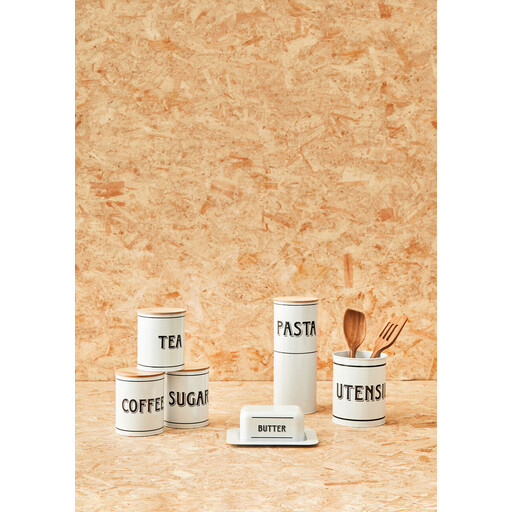
Maison by Premier Grocer White Metal Tea Canister

Maison by Premier Grocer White Metal Tea Canister

A metal tea canister for keeping tea in a separate container between book-club meetings. Check its usable capacity, closure and suitability for your loose tea before choosing it for repeated group use.

View on Joybuy

Questions about serving loose tea

Should I buy a glass jar or a refillable caddy?

Choose by the tea you already own and how you will store it: Twinings lists empty glass jars, while Whittard’s stackable Fill-Me-Up Caddy is specified for loose tea and approximately 100g, depending on tea type. Check the container’s capacity for your chosen leaves and follow the tea maker’s storage directions.

How much loose tea should I use for a book-club pot?

Follow the tea’s own instructions first. As starting guidance, Whittard suggests one teaspoon, around 2g, per cup for most teas, and Ringtons advises one teaspoon per cup; measure for the number of cups you plan to pour.

Do I need an infuser or a strainer?

Either can help you separate the leaves from tea served to the group: an infuser holds leaves while they brew, whereas a strainer catches them as you pour. Twinings advises against leaving leaves in the drink because the tea can become over-brewed and bitter.

Can every loose tea use the same water temperature and brewing time?

No. Whittard’s guidance gives black tea 95–98°C for three to five minutes and green tea 65–80°C for two to three minutes. Follow the directions for the particular tea you serve.

What should I check before offering several teas to guests?

Check each product’s tea format, brewing directions, ingredients and allergen information, especially for flavoured blends or guests with allergies or intolerances. Do not assume that the information for one caddy applies to every tea in a selection.