Choose powered speakers if an adult needs to start children’s songs easily from a phone or tablet without selecting a separate amplifier; for TV playback, check that the TV output matches a speaker input. Choose passive bookshelf speakers if you want to select the amplifier separately and are prepared for the extra components. In either case, check the space, cable route and stability of the intended position in your shared lounge.
Who each setup suits
Households playing music from a phone or TV
If an adult wants to start a song with few separate components, consider powered speakers with inputs that match the devices you use. Edifier lists Bluetooth, optical and other wired inputs for its R1280DBs, but connection options vary by model.
Households fitting speakers into a shared space
If the lounge furniture has limited room, measure the intended position and plan the cable route before choosing a pair. Q Acoustics describes its 3010i as a compact shelf- or stand-mount speaker, with dedicated optional mounting accessories.
Households building a component hi-fi system
If you already have a suitable amplifier or want to choose one separately, passive speakers allow that component-based approach. KEF identifies its Q1 Meta as passive; the amplifier and source connections remain part of the purchase decision.
What to check before buying
Decide whether you want built-in amplification or a separate amplifier, then check your playback devices and the position available in the lounge. A convenient connection is not a substitute for stable placement and safe electrical setup.
Powered speakers
Choose when: You want to play from everyday devices without selecting a separate amplifier.
Trade-off: Amplification is built into the system, so check its actual inputs before buying rather than assuming Bluetooth will cover every device.
Passive speakers
Choose when: You have, or want to choose, a compatible amplifier as part of a component system.
Trade-off: You also need to plan speaker cables and a way to connect your music sources to the amplifier.
| Concern |
What to check when buying |
Who this matters to |
| Easy playback |
Check the inputs against your phone, tablet or TV output, and consider how you will control volume. |
If I regularly start songs from a phone or TV, I want to connect the device without assembling a separate system. Around 36% of consumers put straightforward playback first. |
| Lounge placement |
Measure the surface, allow room for connections and confirm that any stand or bracket fits the exact model. |
When the media unit also serves other family activities, I need speakers that can sit securely without awkward cables. Roughly 29% of consumers make placement their primary concern. |
| Component choice |
For passive speakers, check the amplifier against the speaker requirements and your planned music sources. |
If I want to choose or change my amplifier separately, I am willing to take on more setup decisions. About 21% of consumers prioritise that flexibility. |
| Shared-room safety |
Plan stable positioning and cable routing; for mains-powered equipment, check the supplied plug and avoid damaged leads or overloaded sockets. |
With children using the lounge, I need a position where speakers and cables are unlikely to be disturbed. Approximately 14% of consumers put safe setup first when choosing. |
Common buying mistakes
-
Assuming a passive pair is a complete wireless system
Passive speakers need an external amplifier before they can play music. A speaker pair alone does not provide the full connection from a phone or TV.
List the equipment you already own, then check the amplifier, source inputs and speaker connections required for the pair you choose.
You may also need speaker cable and a suitable position for the amplifier.
-
Assuming any shelf will do
A crowded or unstable surface can make a speaker arrangement impractical in a room used for several activities. Connections and ventilation also need space.
Measure the position and use stands or mounting accessories confirmed for the exact speaker and installation surface.
Optional stands, brackets or cable management can add to the installation work.
-
Relying on a travel adapter for unsuitable mains equipment
Electrical Safety First advises checking for a UK three-pin fused plug and warns against treating a UK travel adapter as the solution for an unsuitable product.
Check that mains-powered equipment is appropriate for UK use before purchase. Do not use damaged plugs or leads, or overload sockets and extension leads.
Brands to consider
These examples illustrate different system choices; the listed characteristics apply to the named models, not every speaker made by each brand.
Edifier
Consider its powered R1280DBs pair if direct wireless and wired connections matter more to you than selecting a separate amplifier.
- Edifier lists Bluetooth, optical, coaxial and dual RCA inputs, a remote and a subwoofer output for the R1280DBs.
- Check that the inputs match your particular TV and other sources; the model’s listed connections do not establish compatibility with every device.
Q Acoustics
Consider the compact 3010i pair when the available shelf, stand or suitable wall position shapes the choice.
- Q Acoustics describes the 3010i as a slim-line bookshelf or stand-mount model and offers dedicated optional stands and brackets.
- Confirm the amplification and source connections needed for your setup, as well as which placement accessories you would need.
KEF
Consider the passive Q1 Meta if you intend to build a system around a separately chosen amplifier.
- KEF specifies a 10–150 W amplifier requirement for the Q1 Meta and describes stand and wall-mount options.
- A separate compatible amplifier is necessary; plan how your phone, TV or other source will connect to it.
Joybuy product choices
These choices include powered speakers for direct music playback and a passive bookshelf pair for a separate-amplifier system. The powered tabletop models are not interchangeable with a conventional bookshelf pair, so check the form and connections you want.
 No image available
Edifier M60 Bluetooth 5.3 Multimedia Speakers
Consider these for music from a Bluetooth device where compact desktop-style speakers suit the intended lounge position. The product name lists Bluetooth 5.3, USB-C and AUX inputs, and 66 W RMS. Check that the intended surface is suitable and that your TV, if used, has a matching audio connection.
View on Joybuy
 No image available
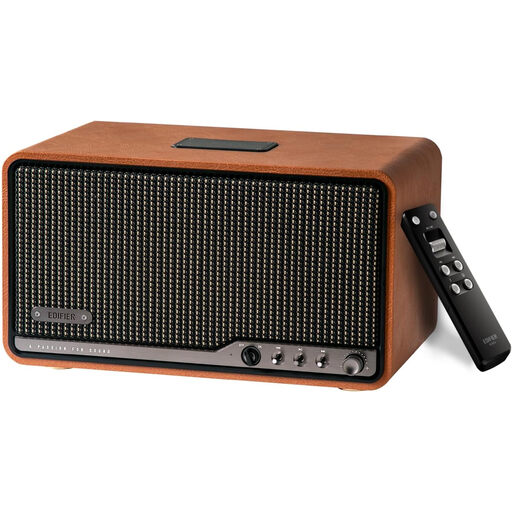
Edifier S300 Wireless Multi-Room Tabletop Speaker, Brown
Consider this if a tabletop speaker suits your lounge rather than a conventional bookshelf pair. The product name identifies a wireless multi-room model; if you want left and right stereo speakers, confirm the number of units required. Check the connection needed for your TV before buying.
View on Joybuy
 No image available
HiVi-Swans D3.1MKII Passive Bookshelf Speakers
Consider this pair if you intend to use a separate amplifier for children’s music and other listening. The product name specifies a two-way design, 8 ohms and a 10–120 W amplifier range. Check amplifier compatibility, the source connections and the cabinet’s fit on your chosen surface before buying.
View on Joybuy
Questions about choosing and setting up speakers
Should I choose active or passive bookshelf speakers for children’s songs?
Choose active speakers if you want built-in amplification and a simpler route from your usual music device, provided the model has a matching input. Choose passive speakers if you are prepared to use a compatible external amplifier; KEF, for example, specifies a 10–150 W amplifier requirement for its passive Q1 Meta.
Can bookshelf speakers go on any shelf in a shared lounge?
No: choose a surface that supports them securely and leaves room for connections and any required ventilation. For a stand or wall installation, confirm that the accessory suits the exact model and the installation surface; Q Acoustics offers dedicated optional stands and brackets for its 3010i.
How can I set up speakers more safely in a family lounge?
Use a stable position, keep cables and plugs in good condition, and avoid overloaded sockets or extension leads. Electrical Safety First also advises keeping ventilation areas clear and following the manufacturer’s instructions; check that mains-powered equipment is appropriate for UK use before purchase.


