Choose passive bookshelf speakers if you have, or want to build, a stereo system with a compatible amplifier; choose an active system if direct connections and fewer separate components matter more. For choral recordings, leave room to position the left and right speakers properly, and compare familiar recordings where possible rather than treating wattage as a verdict on vocal clarity. Check the intended shelf or stand space before committing to either route.
Who is this for?
Vocal-detail listeners
If you want to follow separate soprano, alto, tenor and bass lines through dense passages, prioritise a stereo pair you can position properly. Listen for whether the voices remain easy to follow rather than choosing by wattage alone.
Large-ensemble listeners in living rooms
If your recordings include orchestra, organ or low choral parts, consider the scale you want alongside the space available for the speakers. Compare cabinet size and placement without assuming that a larger model will suit every room.
Convenience-first streamers
If you mainly listen through a streaming service, television or computer, an active system may reduce the number of separate components. Check its actual inputs, network requirements and stereo-pair setup against your sources.
What matters when choosing?
The main system choice is between separate amplification and built-in electronics. Either way, plan where two speakers can sit before comparing specifications.
Passive stereo speakers
Choose when: You want to use an existing compatible amplifier or assemble a conventional stereo system.
Allow for: An amplifier, speaker cable and space to connect and position both speakers.
Active streaming speakers
Choose when: Direct connection to your usual sources matters more than selecting a separate amplifier.
Check first: Inputs, mains-socket positions and any network or app requirements for the features you intend to use.
| Concern |
What to check |
Who this matters to |
| Vocal lines and stereo image |
Plan enough separation for the left and right speakers. If possible, compare familiar choral passages at a comfortable listening level. |
I want to follow individual voice parts when the choir becomes dense, so I need a stereo arrangement that makes them easy to locate. Around 33% of consumers would put vocal-line separation first. |
| Ensemble scale |
Compare the exact model’s cabinet dimensions and stated frequency response, then consider the space available in your room. |
With choir and orchestral accompaniment, I want the lower parts to have enough presence without choosing a cabinet too large for my room. Ensemble scale would lead the choice for roughly 25% of consumers. |
| Source connections |
List the sources you use. Check an active model’s inputs and network requirements, or a passive model’s amplifier compatibility. |
I mainly play recordings from my TV, computer or streaming services and want a straightforward way to connect them. About 25% of consumers would make connection simplicity their primary need. |
| Space and complete setup |
Measure the intended position, including connection space, and account for any amplifier, cable, stands or brackets needed. |
My shelf space is limited, and I need to know what the whole setup requires before deciding whether it fits. For approximately 17% of consumers, compact fit and setup needs would come first. |
Buying pitfalls
-
Expecting passive speakers to work like wireless speakers
A passive pair needs a compatible amplifier or AV receiver and speaker cable; the speakers alone cannot connect directly to a phone.
Check which components you already own. If you do not want a separate amplifier, compare active systems with connections for your sources.
The setup may also need stands or brackets to place the pair where you want it.
-
Choosing by wattage alone
A power figure helps with amplifier matching but does not, by itself, tell you how clearly a system will present individual choral parts.
Use the figure for compatibility, then consider placement and compare familiar recordings where you can.
-
Assuming any bookshelf position will do
A cabinet may fit on a shelf while leaving too little space for connections or for useful separation between the left and right speakers.
Measure the full intended position and check the model’s placement guidance before ordering.
Achieving suitable positions may mean using stands, brackets or a different furniture arrangement.
-
Overlooking an active system’s network needs
Streaming and setup features can depend on the home network. For the KEF LSX II LT, KEF says home Wi-Fi is required for its full feature set.
Check your network and the way you normally play music against the requirements of the active model you are considering.
Brands and product lines to consider
KEF
KEF offers both passive Q Series standmount speakers and compact active LS Wireless systems, so the relevant choice is partly about how you want to connect your sources.
- KEF specifies a 15–150 W amplifier requirement for the passive Q3 Meta. The active LSX II LT lists streaming, HDMI ARC, USB-C and Bluetooth connections.
- The Q3 Meta needs separate amplification. KEF says home Wi-Fi is needed for the LSX II LT’s full feature set.
Wharfedale
The Diamond standmount range gives listeners a choice between smaller and larger conventional speaker cabinets.
- Wharfedale lists a 130 mm driver for the Diamond 12.1 and a 150 mm driver for the Diamond 12.2, which it positions for larger rooms and more powerful two-channel systems.
- A larger cabinet is not automatically the right choice for your room or your preferred choral recordings; compare placement and listen where possible.
Q Acoustics
The passive 3000c standmount range is relevant if you are assembling a separate-amplifier stereo system.
- Q Acoustics positions the 3020c as a mid-size standmount and describes cabinet bracing intended to reduce low-end reverberation and improve stereo imaging.
- Those imaging descriptions are the manufacturer’s claims, not a promise of how the speaker will sound in every room. A passive setup also needs compatible amplification and cable.
Joybuy products to consider
These choices include two passive bookshelf-speaker listings for a separate-amplifier setup and a compact wireless tabletop speaker. If you need left and right speakers for choral recordings, check the supplied quantity and stereo-pair requirements for each listing.
 Image unavailable
HiVi-Swans DIY3.1 passive bookshelf speakers, 6.5-inch, one pair
The stated pair quantity makes this a starting point for a passive stereo setup. The title specifies a 6.5-inch driver; check amplifier compatibility and the cabinet dimensions against your planned positions.
View on Joybuy
 Image unavailable
HiVi-Swans D3.1MKII passive bookshelf speakers, 6.5-inch
Consider this model if you want a passive, separate-amplifier system. Its title specifies a two-way design, 28 mm soft-dome tweeter, rear bass-reflex port, 8 Ohm impedance and 10–120 W power range. Check the supplied quantity, amplifier match and space behind the cabinet before planning a stereo pair.
View on Joybuy
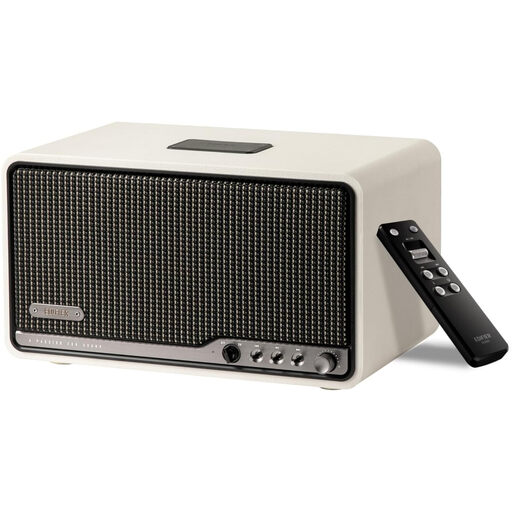 Image unavailable
EDIFIER S300 wireless multi-room tabletop speaker, Ivory
This wireless tabletop model is worth considering if you prefer a compact setup. The listing identifies one item, so check what is required to make a left and right stereo pair before choosing it for choral recordings.
View on Joybuy
Common questions
Can passive bookshelf speakers play directly from my phone?
No. Passive speakers need a separate amplifier or AV receiver and suitable speaker cable. If direct streaming is your priority, check an active system for the connection or streaming method you use.
What should I measure before ordering speakers for choral recordings?
Measure both speaker positions, including space for connections, and check that you can place the pair apart as left and right channels. Follow the chosen model’s placement guidance rather than assuming that any shelf position will work.
What network does the KEF LSX II LT need for streaming?
KEF says home Wi-Fi is required for the LSX II LT’s full feature set and system updates. Its FAQ recommends 5 GHz Wi-Fi and a router transmission speed of at least 1300 Mbps for better stability with high-resolution music files; check your network before choosing it for that use.
What should I do with an active speaker at the end of its life?
Check your local electrical-recycling route and any take-back information from the retailer or manufacturer. Hampshire County Council includes audio and AV equipment in its guidance on electrical items, so do not assume an active speaker belongs in general waste.


