
24/7 Customer Support

Free returns

Same-day & Next-day Delivery

Quality Guaranteed

Unlock Your Welcome Offers: FREE Delivery | Up to 80% OFF | Free 30-day JoyPlus trial
Download the APP
As your child grows, so do their travel safety needs. The transition from a harnessed toddler seat to a booster car seat is a significant milestone, but it can also bring a wave of questions. With terms like i-Size, ISOFIX and Group 2/3 to navigate, finding the right fit for your child and vehicle can feel complicated.
This guide is designed to cut through the clutter. As the Joybuy Product Recommendation Officer, my role is to provide clear, practical information to help you understand your options and make a confident choice for your family's safety and convenience. We will explore the key features to consider and highlight a few standout options for 2026.
Before diving into specific products, let's clarify a few essential points. Understanding these will help you narrow down the choices to what truly suits your needs.
The most visible difference in booster seats is the presence or absence of a back.
You will see two main safety standards mentioned for car seats in the UK.
How the seat connects to your car is another key consideration.
Based on features, safety standards and user convenience, here are our recommendations for different family needs.

Why It Stands Out: For families on the move, the Mychild Brundle is a model of convenience. Its standout feature is its incredibly low weight, making it an exceptionally portable car seat that can be moved between vehicles with zero fuss.
Pros:
Who is it for? This is an ideal solution for parents, grandparents or childminders who need a simple, affordable and lightweight booster seat for short journeys, school runs or as a reliable spare.

Why It Stands Out: This seat combines the latest R129 safety standard with the simplicity of ISOFIX installation. It offers a secure fit and peace of mind, knowing it meets enhanced side-impact protection requirements.
Pros:
Who is it for? A great choice for safety-conscious parents looking for a primary car seat for a 4 year old (and up) that offers modern protection and an easy, foolproof installation method.
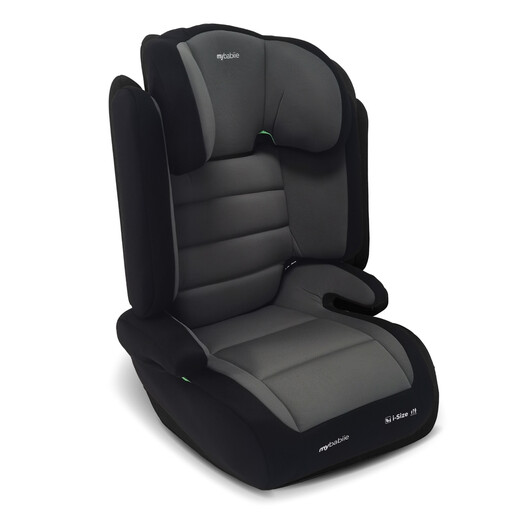
Why It Stands Out: This high back booster seat delivers R129 i-Size safety with the universal flexibility of a seatbelt installation. It’s an excellent option that prioritises both modern safety standards and enhanced comfort, thanks to its memory foam headrest.
Pros:
Who is it for? This seat is perfect for families who want the protection of an i-Size booster seat but need the versatility to install it in vehicles without ISOFIX points. It's also a top contender for those who prioritise comfort on longer drives.
The recommendations above cover a range of common needs, but every family is different. If you're looking for a different style or have a specific colour scheme in mind for your car's interior, you can explore our full collection of black car seats for more choices.
1. When can my child use a booster car seat in the UK? In the UK, children must use an appropriate car seat until they are 12 years old or 135cm tall, whichever comes first. Booster seats are designed for children who have outgrown their forward-facing harnessed seats. This is typically from around 15kg (for R44 seats) or 100cm in height (for i-Size seats), which often corresponds to about four years of age.
2. Is a high-back or backless booster safer? A high back booster seat is widely considered the safer option. It provides vital head, neck and side-impact protection that a backless booster cannot offer. The integrated shoulder belt guides also ensure the seatbelt is positioned correctly and safely across the child's body.
3. What is the difference between a Group 2/3 car seat and an i-Size booster seat? The main difference lies in the safety regulation they adhere to. A Group 2/3 car seat is approved under the older ECE R44/04 standard and is classified by child weight (15-36kg). An i-Size booster seat is approved under the newer R129 standard, which uses child height for classification (e.g., 100-150cm) and includes mandatory side-impact testing for improved protection.