
24/7 Customer Support

Free returns

Same-day & Next-day Delivery

Quality Guaranteed

Unlock Your Welcome Offers: FREE Delivery | Up to 80% OFF | Free 30-day JoyPlus trial
Download the APP
Borosilicate glass drinkware appeals to shoppers who want reusable products without the lingering taste sometimes associated with plastic. It is available as mugs, bottles, straws, travel cups and measuring cups, making it suitable for kitchens, offices, commuting, school and the gym.
However, product listings can make similar items appear interchangeable. A low price may hide poor cleaning access, while “heat-resistant” does not mean shatterproof. Before buying, focus on the construction, care instructions and suitability for your daily routine rather than relying on marketing language alone.
Borosilicate glass is designed to handle temperature changes more effectively than many ordinary glass types, but it can still break if dropped, struck or exposed to a sudden extreme temperature change. A glass bottle with a silicone base may have some protection, but it should still be carried carefully.
Avoid moving a cold glass item directly into very hot conditions unless the manufacturer’s instructions allow it. Inspect drinkware regularly for chips, cracks or hairline damage, particularly around rims, handles, lids and the base.
A reusable item only offers practical value if you can clean it properly. Narrow bottle necks, fixed seals and decorative straw shapes can trap residue. Check whether the product includes a cleaning brush, whether its components separate and whether it is explicitly dishwasher-safe glassware.
Dishwasher suitability may apply to the glass body but not necessarily to silicone sleeves, valves, lids or straps. Follow the care instructions for each component.
A large mug may be comfortable at home but unsuitable for a small office shelf. A 500ml bottle may work for a commute but take up too much space in a school bag. Similarly, glass straws can be useful for smoothies and cold drinks, but you should check their length and diameter before pairing them with a particular tumbler.
For UK commuters, a secure lid and leak-resistant seal are more important than decorative styling. For home use, capacity, handle comfort and microwave compatibility may matter more.
Look for a listing that clearly identifies borosilicate glass rather than simply “glass”. This material is commonly selected for drinkware and kitchenware because it is suitable for a broad range of hot and cold applications. It is still glass, so avoid assuming that it is unbreakable or suitable for direct heat unless the product information specifically says so.
For hot drinks, check the stated temperature limits. For example, the Bodum BISTRO Jumbo Mug Set is listed as oven-safe up to 180°C, as well as microwave-, freezer- and dishwasher-safe. These instructions apply to that product and should not be generalised to every glass mug.
Capacity affects portability, refill frequency and compatibility with cup holders. Common practical choices include:
Check the full dimensions, not only the millilitre capacity. A tall bottle may not fit beneath a kitchen tap or inside a backpack pocket.
For a glass water bottle or glass travel mug, inspect the lid design, gasket and carrying features. A silicone base can help protect the bottle from everyday knocks, but it does not eliminate breakage risk. For a reusable glass straw set, check whether cleaning tools are included and whether the straws are straight, curved or shaped.
Where a product has a silicone valve or pressure-regulating component, do not remove it unless the care instructions specifically permit this. The Bodum double-walled glass mugs, for example, include a silicone vent at the base that should remain in place.
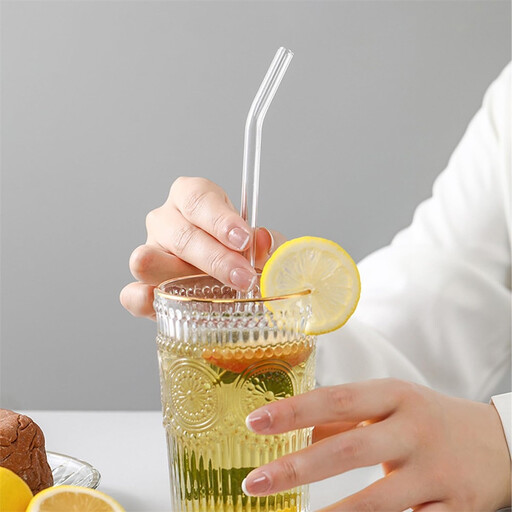
Why This Fits Their Persona: A five-piece household set gives shoppers a straightforward way to introduce reusable glass straws at home or share them with family members.
The set format makes the quantity clear, reducing the risk of paying a set price for a single decorative straw.
Five-piece format; borosilicate glass construction identified in the product name.
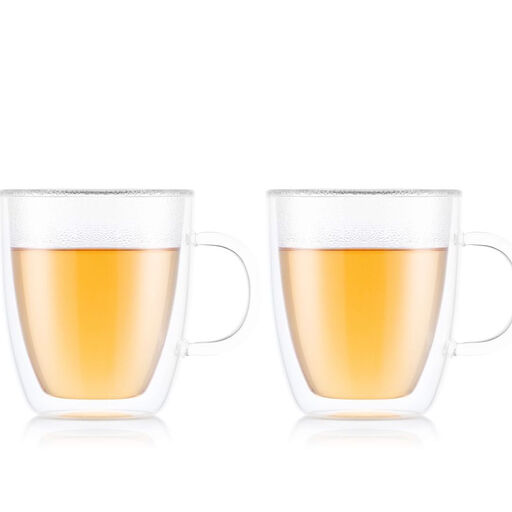
Why This Fits Their Persona: The 450ml double-walled design suits coffee drinkers who want two coordinated mugs for home, entertaining or gifting.
The listing specifies dishwasher, microwave, freezer and oven suitability up to 180°C, rather than leaving care expectations unclear.
Double-walled borosilicate glass; 450ml capacity; handles; listed dishwasher-safe.
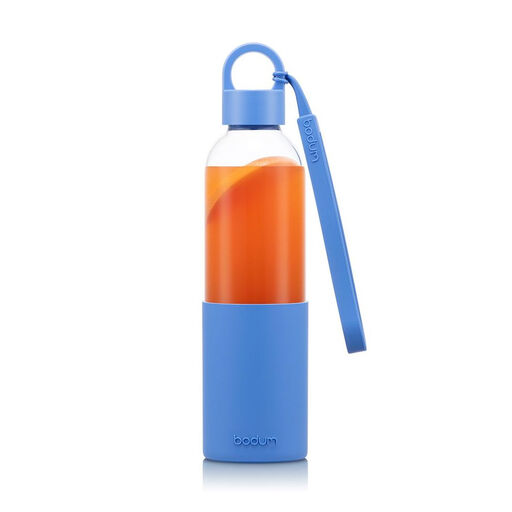
Why This Fits Their Persona: Its 0.5-litre capacity, carrying strap and screw cap are suited to commuting, school, the gym and everyday errands.
The listing identifies a leakproof screw cap, silicone gasket and removable silicone base, addressing common carrying and protection concerns.
0.5-litre capacity; silicone carrying strap; dishwasher-safe glass body; removable silicone base.
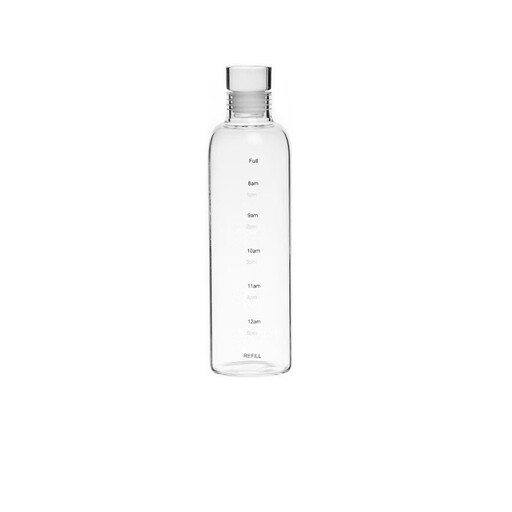
Why This Fits Their Persona: The 500ml travel format is appropriate for users who want one reusable drink container for workdays, journeys and regular refills.
The stated time scale provides a visible feature beyond appearance; buyers should still confirm lid, cleaning and temperature instructions before use.
500ml capacity; borosilicate glass construction; time-scale feature.
If your requirements are more specific, consider the Huacan heart-shaped or bow-shaped borosilicate glass straws for decorative serving, the seven-piece transparent straw set for a larger household collection, or the BJ 350ml and BJ 500ml borosilicate measuring cups for kitchen preparation. Check each product page for dimensions, included accessories and care guidance before ordering.
We have compiled a complete, real-time list of products that fully satisfy these strict selection criteria and UK safety regulations.
It can be suitable for hot drinks when the product is specifically designed and labelled for that purpose. Check the manufacturer’s temperature and heating instructions, and avoid sudden temperature changes. Heat-resistant glass drinkware can still break through impact or thermal shock.
Reusable glass straws can be used daily when they are intact and cleaned after use. Inspect them for chips or cracks, especially before consuming hot drinks. A straw-cleaning brush is useful for narrow interiors; if one is not supplied, check whether the diameter accepts a suitable brush.
The main ongoing costs are washing, water and any replacement parts. Dishwasher-safe glassware can simplify cleaning, although silicone lids, straps and sleeves may require separate care. Reusing a bottle, mug or straw also reduces the need to repeatedly buy single-use alternatives, but the practical value depends on how often you use and maintain the item.