
24/7 Customer Support

Free returns

Same-day & Next-day Delivery

Quality Guaranteed

Unlock Your Welcome Offers: FREE Delivery | Up to 80% OFF | Free 30-day JoyPlus trial
Download the APP
Buying bottled water seems straightforward until you compare spring water, natural mineral water, sparkling water, flavoured water, cans and large-format packs. Packaging can make one product appear more suitable than another, while important details such as sugar content, bottle size and storage instructions are easy to overlook.
For UK households, offices and on-the-go shoppers, the right choice depends less on eye-catching branding and more on practical information. Use this guide to avoid common purchasing traps and identify bottled water that matches your routine.
Flavoured water is not always the same as plain water with fruit added. Some products contain sugar, while others use sweeteners. Check the ingredients and nutrition panel rather than relying on the front label.
For example, Highland Spring Apple & Blackcurrant Still Flavoured Water 1.25L contains sucralose and lists 0g of sugars and 1 kcal per 100ml. That makes it a sugar-free option, but it is not sweetener-free. If you prefer sparkling water without sugar or sweeteners, Dash Raspberry Sparkling Water lists 0g sugars and uses natural flavourings and raspberry extract.
Water multipacks can reduce the need for frequent shopping, but the lowest shelf price does not necessarily mean the lowest cost per litre. A six-pack of 1-litre bottles, a 12-pack of 500ml cans and a 24-pack of 330ml bottles all suit different routines.
Before ordering, divide the total price by the total volume. Also consider storage space, delivery weight and whether smaller bottles will be used quickly enough to justify the packaging.
“Recyclable” describes the material’s potential for recycling, not necessarily what happens after disposal. Local council collection rules vary, and caps, labels and inner packaging may be handled differently.
Look for clear information about the main packaging material. Recycled PET bottles, aluminium cans and recyclable cardboard formats each have different practical advantages. A product that is easy for your household or workplace to separate and dispose of may be more suitable than one with a complicated pack.
Still water is usually the simplest choice for desks, family meals and everyday use. Sparkling water contains carbon dioxide, creating bubbles that work well with food or as an alternative to fizzy drinks. Flavoured options may provide a more interesting taste for people who find plain water unappealing.
Check whether the flavour comes with sugar, sweeteners or neither. Dash’s grapefruit and raspberry sparkling waters are listed as containing no sugar, sweeteners or calories, while some sugar-free still flavoured water products use sucralose.
Spring water and natural mineral water are not interchangeable descriptions. Natural mineral water comes from a recognised underground source and has a consistent mineral composition stated on the label. Spring water also comes from an underground source but may have different regulatory requirements for treatment and composition.
Mineral figures can help explain taste, although they do not automatically indicate that one product is more suitable for everyone. Highland Spring sparkling formats list calcium at 40.5mg/L, magnesium at 10.1mg/L and sodium at 5.6mg/L. San Pellegrino sparkling natural mineral water lists zero calories and zero sugar per 100ml, while FIJI Water provides mineral details including silica, calcium, magnesium and bicarbonates.
Choose 330ml or 500ml bottles and cans for lunch bags, commuting, gym sessions or events. A 1-litre bottle may work better for meals and office fridges, while a 5-litre format is designed for home use.
Resealable packaging is useful if you do not finish the drink immediately. Always check the seal before opening, refrigerate products as instructed and follow the stated consumption period after opening. Carbonated water may lose its fizz more quickly once opened, even when resealed.
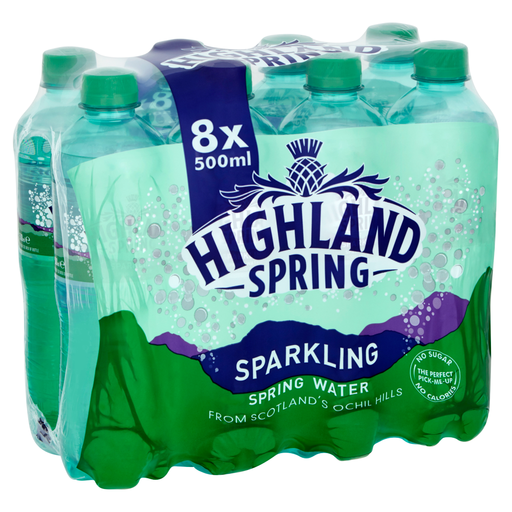
Why This Fits Their Persona: Eight 500ml bottles provide a practical format for packed lunches, shared fridges and occasional sparkling water at home.
The pack quantity and 500ml size are clearly stated, making it easier to compare total volume and cost per litre.
Sparkling spring water; 8 x 500ml format; mineral composition is provided on the product listing.
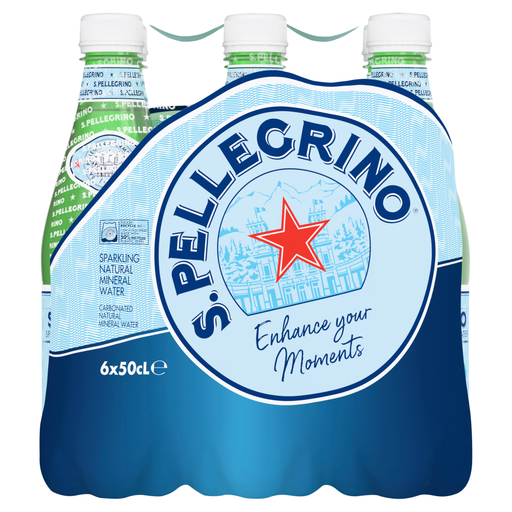
Why This Fits Their Persona: The 500ml glass-style dining format is convenient for serving with meals, hosting guests or stocking a drinks fridge.
It is identified as natural mineral water and lists natural mineral water and carbon dioxide as ingredients, rather than relying only on premium-style presentation.
0 kcal and 0g sugar per 100ml; six 500ml bottles; suitable for serving chilled.
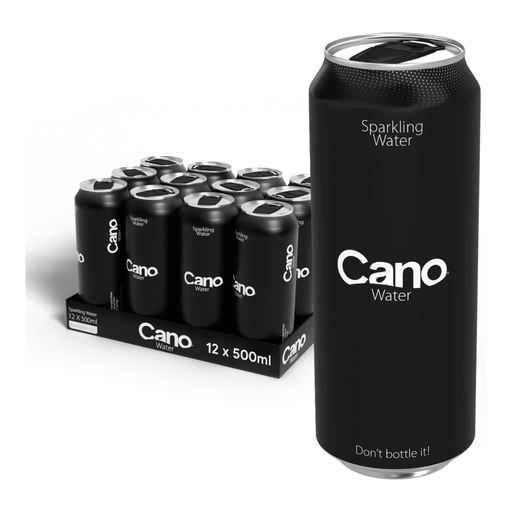
Why This Fits Their Persona: Resealable 500ml cans suit commuting, outdoor activities, gym bags, offices and events where a drink may not be finished at once.
The resealable design addresses the inconvenience of single-use cans, while the aluminium format gives shoppers a clear packaging alternative to PET.
Sparkling spring water; 12 x 500ml; resealable aluminium cans; 0 kcal and 0g sugar per 100ml.
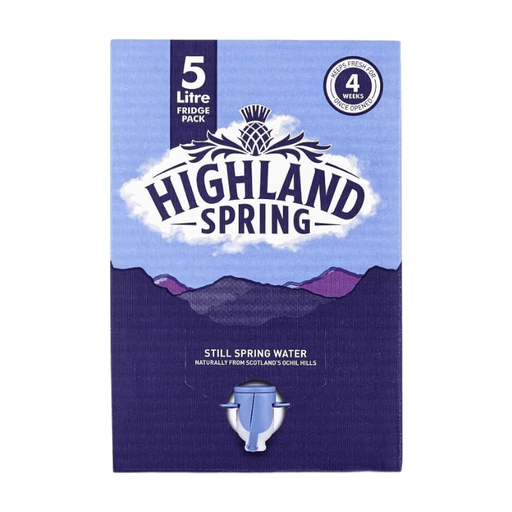
Why This Fits Their Persona: The large format is suited to kitchens, shared households and occasions where individual bottles would create more packaging and storage effort.
The 5-litre capacity and tap design are clearly specified, so buyers can judge placement and dispensing before ordering.
Still spring water; recyclable cardboard outer; use within four weeks after opening according to the listing.
We have compiled a complete, real-time list of products that fully satisfy these strict selection criteria and UK safety regulations.
Plain sparkling water contains carbon dioxide and typically has no sugar. Some flavoured versions also contain no sugar, but check whether sweeteners or other ingredients have been added. Dash sparkling water products listed above provide flavoured options without sugar; nutrition and ingredient details should always be checked on the packaging.
Store it away from direct sunlight, strong odours and excessive heat. Refrigerate it when the label instructs you to do so. Opened sparkling water should generally be kept sealed and consumed within the stated period, as carbonation and taste can change. Follow the individual product’s storage guidance rather than applying one rule to every format.
A 330ml or 500ml bottle is convenient for travel and individual use. A 1-litre bottle suits meals and office fridges, while a 5-litre container is more practical for home dispensing. Compare total litres, storage requirements and packaging material before choosing a multipack.