
24/7 Customer Support

Free returns

Same-day & Next-day Delivery

Quality Guaranteed

Unlock Your Welcome Offers: FREE Delivery | Up to 80% OFF | Free 30-day JoyPlus trial
Download the APP
Buying bottled water for a home, office, gym or event can seem straightforward. Yet the wrong format may create unnecessary cost, storage problems or avoidable packaging waste. Marketing language can also make similar products appear very different, even when the practical distinction is simply still or sparkling water, bottle size and source category.
Before choosing bottled water, watch for three common pitfalls:
Still water contains no added carbon dioxide and is generally the most versatile option for homes, offices, travel and fitness. Natural spring water is sourced from an underground spring and bottled at source or through an approved process, subject to applicable UK food regulations.
Natural mineral water comes from a protected underground source and has a stable mineral composition. San Pellegrino water is one example of sparkling natural mineral water, containing natural mineral water and carbon dioxide. Its carbonation makes it suitable for meals, mixers and hospitality settings.
Sparkling spring water has added or naturally occurring carbonation, depending on the product. Check whether the product is labelled “sparkling spring water” or “sparkling natural mineral water”. Flavoured options, such as sugar-free strawberry still water, are not the same as plain water and may contain flavourings, preservatives or sweeteners. Always check the ingredients and allergen information.
Compare the total volume, not only the number of bottles. A bottled water multipack of 500ml bottles may be convenient for meetings or events, while 750ml bottles can be more practical for commuting or gym use. Larger 5L and 10L formats reduce the number of individual containers but need a suitable cupboard, utility area or worktop position.
For household stock, bulk bottled water can be convenient, but calculate the price per litre and consider whether you can lift and store it safely. A 4 x Highland Spring Still Water 10L pack provides a substantial total volume, whereas a single 5L hydration box may be more manageable for smaller households.
Packaging affects convenience as much as sustainability. Sports caps are useful when walking, commuting or exercising, while a tap design can make a large water box easier to dispense. Cans may provide an alternative to conventional plastic bottles, but check whether the design is resealable.
For recyclable bottled water, look at the actual packaging information rather than relying only on broad environmental wording. The Highland Spring 5L and 10L boxes use a recyclable cardboard outer, with the plastic inner and tap also identified as recyclable in the product information. Cano Water uses resealable aluminium cans, while some bottled formats use recycled PET. Local recycling facilities can vary, so check your council’s guidance before disposal.
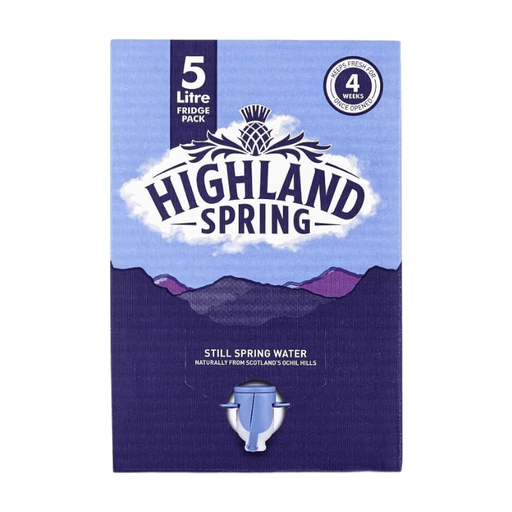
Why This Fits Their Persona: A 5L format offers a practical way to keep still water at home without committing to a larger multi-box purchase. It is also suitable for small offices, family use or occasional gatherings.
The total 5L volume is clearly stated, helping buyers compare cost per litre instead of judging value by bottle appearance or branding.
Natural spring water from the Ochil Hills; cardboard outer, plastic inner and tap are identified as recyclable in the product information.

Why This Fits Their Persona: The 1L bottle size and sparkling format suit dinner tables, hospitality settings and buyers who want carbonated water for meals or mixers.
The product listing specifies natural mineral water and carbon dioxide, so shoppers can distinguish it from still water or sweetened sparkling drinks.
Six 1L bottles provide 6L in total; the product information lists zero calories and recommends keeping bottles sealed to maintain carbonation.
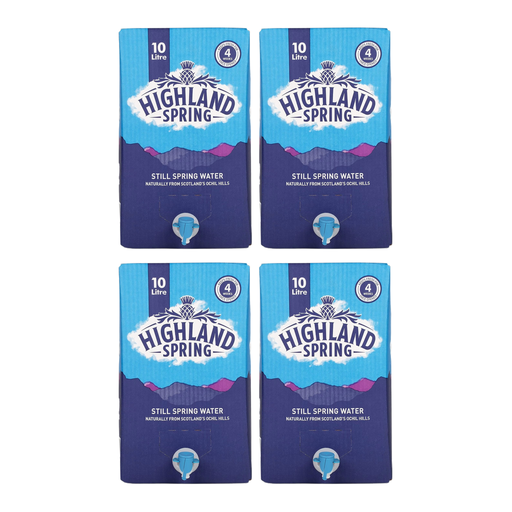
Why This Fits Their Persona: Four 10L hydration boxes are suited to larger households, offices, events and organisations that need substantial still water stock on hand.
The large-volume pack reduces repeated individual purchases and includes a tap design, avoiding a cupboard full of small bottles.
The pack contains 40L in total; the listed mineral composition includes 40.5mg/L calcium, 10.1mg/L magnesium and a pH of 7.8.
We have compiled a complete, real-time list of products that fully satisfy these strict selection criteria and UK safety regulations.
It can be, but not automatically. Compare the price per litre, delivery charge and storage requirements. A larger pack may offer a lower unit cost, while small premium bottles can cost more because of packaging, transport and brand positioning.
Follow the product label. For example, the Highland Spring 10L listing advises refrigeration and use within seven days once opened. The 5L listing gives different opening guidance, so the instructions for the specific format should take priority. Keep water away from direct sunlight, strong odours and chemicals.
Natural spring water comes from an underground spring and must meet applicable requirements for source and handling. Natural mineral water comes from a protected underground source with a stable mineral composition. The label should identify the category, source and composition. Choose still or sparkling according to how you intend to serve it, rather than assuming one type suits every occasion.