
24/7 Customer Support

Free returns

Same-day & Next-day Delivery

Quality Guaranteed

Unlock Your Welcome Offers: FREE Delivery | Up to 80% OFF | Free 30-day JoyPlus trial
Download the APP
Buying bottled water multipacks can make office kitchens, family homes, gyms and dinner parties easier to manage. However, pack size, water classification, packaging and storage requirements can all affect whether a product is suitable for your routine.
A low shelf price does not always represent good value. A large multipack may contain more water than you can store, while small bottles can create more packaging and cost per litre. Use the following guide to compare bottled water multipacks with greater confidence.
The terms on the label describe different categories. Natural mineral water must come from a recognised underground source and retain its characteristic mineral composition. Spring water also comes from an underground source but may have different permitted treatment and labelling requirements. Sparkling versions may be naturally carbonated or have carbon dioxide added.
Check the exact product description rather than assuming that every premium bottled water product has the same mineral profile or taste.
A 30-pack may appear economical, but the total volume and cost per litre provide a clearer comparison. For example:
Large still water multipacks can suit households and workplaces, while 330ml cans or 500ml bottles may be more practical for packed lunches, events and sports bags.
Not all packaging performs the same way in a British home, office or hospitality setting. PET bottles are light and stackable, cans are convenient for single servings and larger bottles reduce the number of individual containers but need refrigeration after opening.
Look for clear information about recyclable bottled water packaging, bottle material and storage. Keep sealed products in a cool, dry place away from direct sunlight and strong odours. Once opened, sparkling water and still water should generally be refrigerated and consumed within the period stated on the label.
Calculate the pack’s total volume before comparing prices. This helps distinguish a genuinely economical household supply from a small-format pack with a higher unit cost.
For regular consumption, 1L and 1.5L bottles can reduce replenishment trips. For individual use, 330ml, 500ml or 750ml bottles are easier to carry. If you are considering bottled water delivery UK services or online supermarket delivery, also check delivery charges, minimum order values and whether the pack can be stored safely on arrival.
Choose still water multipacks for everyday drinking, cooking, desks and sports bottles. Sparkling spring water may be more suitable with meals, after coffee or as an alternative to sweetened soft drinks.
Carbonation can soften after opening, so a large sparkling bottle may be less suitable for one-person use. Smaller bottles or cans can help reduce waste when each serving is consumed at once.
Mineral content can influence flavour, although taste preferences vary. Look for listed values such as calcium, magnesium, bicarbonate, sodium and dry residue. For example, the Highland Spring sparkling products listed below provide mineral composition per litre, including 40.5mg calcium and 10.1mg magnesium.
Terms such as alkaline water should be treated as a description of pH rather than a general health promise. Icelandic Glacial products include a stated naturally alkaline pH, but buyers should still compare the full label, ingredients and pack format instead of relying on one marketing term.
The following products match different shopping priorities, from compact personal servings to larger supplies for households and hospitality.
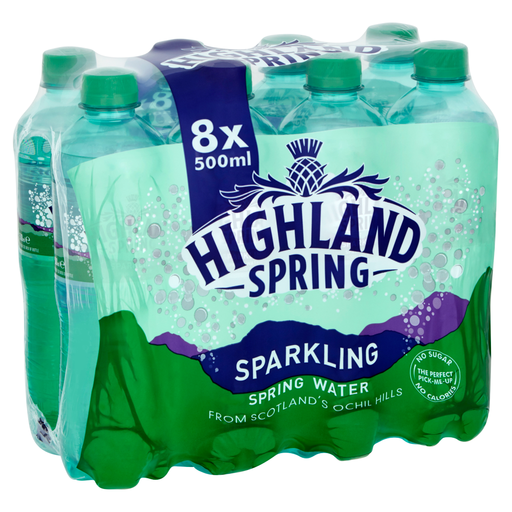
Why This Fits Their Persona: Eight 500ml bottles offer a manageable starting point for small households, desks or occasional entertaining without committing to a very large case.
The pack size is clear at 4 litres total, making it easier to compare cost per litre and storage needs.
Sparkling spring water; 500ml bottles are convenient for individual servings and are ready to drink chilled.
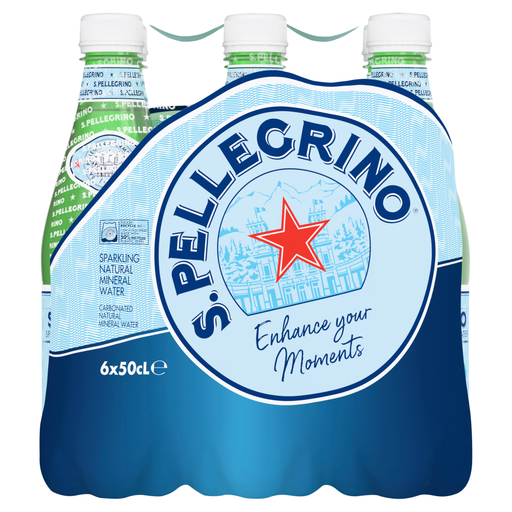
Why This Fits Their Persona: The Italian natural mineral water format suits dining occasions, dinner parties and hospitality settings where individual sparkling servings are useful.
The listing specifies natural mineral water, added carbon dioxide and a total net quantity of 3 litres, rather than relying only on premium positioning.
Six 500ml bottles; suitable for serving chilled or using as a mixer.
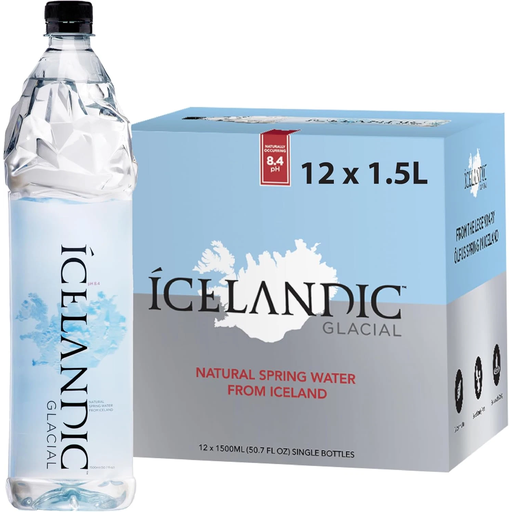
Why This Fits Their Persona: Twelve 1.5L bottles provide 18 litres for shared kitchens, office cupboards or households that prefer fewer shopping trips.
The total volume is stated clearly, while the PET format makes the case straightforward to organise and distribute.
Natural mineral water from Iceland; ready to drink and intended to be served chilled.
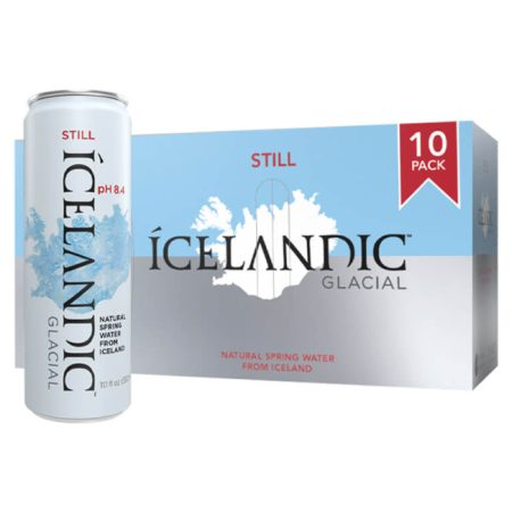
Why This Fits Their Persona: Compact cans work well for commuting, events, sports bags and workplaces where a single serving is preferable.
The 330ml portion helps avoid opening a large bottle that may lose freshness before it is finished.
Fully recyclable aluminium can; natural mineral water with zero calories, sugar and sweeteners listed per 100ml.
We have compiled a complete, real-time list of products that fully satisfy these strict selection criteria and UK safety regulations.
They can offer a lower cost per litre, but this depends on the pack price, total volume, delivery fee and format. Compare the total litres rather than the number of bottles. A large pack is only economical if your household or business can use it before storage becomes inconvenient.
Use the best-before date shown on the packaging and follow the storage instructions. Unopened products should be kept in a cool, dry place away from sunlight and strong odours. Once opened, follow the product’s guidance; Highland Spring advises refrigerating opened bottles and consuming them within seven days.
For shared kitchens, 1L or 1.5L bottles provide more volume with fewer containers. For meetings, hospitality and outdoor events, 330ml or 500ml servings can be easier to hand out and finish in one sitting. Select the format that matches expected use, available refrigeration and your packaging-recycling arrangements.