
24/7 Customer Support

Free returns

Same-day & Next-day Delivery

Quality Guaranteed

Unlock Your Welcome Offers: FREE Delivery | Up to 80% OFF | Free 30-day JoyPlus trial
Download the APP
Buying bottled water multipacks seems straightforward until you compare bottle sizes, water categories, pack quantities and packaging claims. A six-pack may suit a commute but offer poor value for a busy office, while a large case can take up valuable cupboard space and become difficult to move.
This guide explains the practical details UK shoppers should check before buying, from still bottled water and natural mineral water to sugar-free flavoured options and bulk bottled water.
“Spring water”, “natural mineral water” and “still water” are not interchangeable descriptions.
Check the ingredients and mineral information rather than relying on front-of-pack wording alone.
A 500ml bottle is easy to place in a handbag, lunchbox or gym bag, but a large household pack may offer more litres per purchase. Conversely, buying a 24-pack for occasional use can create storage problems and leave bottles exposed to heat or strong odours.
Calculate the total volume before comparing prices. For example, six 500ml bottles provide 3 litres, while 12 bottles provide 6 litres. A case with more bottles is not automatically better value if you cannot store or use it comfortably.
Terms such as “recyclable”, “recycled plastic” or “renewably powered” describe particular aspects of a product. They do not necessarily mean every part of the packaging is accepted in every local council collection.
Look at the bottle, cap, label and outer wrap separately. Follow UK recycling guidance in your area, and avoid storing plastic bottles in direct sunlight or near chemicals. If reducing single-use plastic is a priority, a resealable aluminium option may be worth considering.
For on-the-go hydration, 500ml bottled water is a practical size for lunch breaks, commuting, school bags and short journeys. It is also simple to distribute at meetings or events.
For bottled water for home and office, compare the total litres and the number of bottles per pack. A 12-pack or 24-pack can reduce the frequency of reordering, although the pack will be heavier to carry and may need a dedicated storage area.
Consider:
Mineral content can affect taste. For example, the listed analysis for Volvic Still Natural Mineral Spring Bottled Water includes 12mg/l calcium, 8mg/l magnesium, 12mg/l sodium and 74mg/l bicarbonate. Highland Spring lists 40.5mg/l calcium, 10.1mg/l magnesium and 150mg/l bicarbonate per litre. Buxton lists 55mg/l calcium, 19mg/l magnesium and 248mg/l bicarbonate per litre.
These figures are useful for shoppers who prefer a particular mineral profile, but they should not be treated as medical or therapeutic recommendations. If taste is your main concern, chilled samples or familiar household brands may make the choice easier.
Plain natural mineral or spring water normally has a short ingredient list. Flavoured products need closer inspection.
Volvic Touch of Fruit Lemon & Lime contains natural mineral water, citric acid, natural flavourings, potassium benzoate and sweeteners including acesulfame K and sucralose. It provides 1 kcal per 100ml and contains no sugar according to the supplied product information.
Sugar-free flavoured water can provide an alternative to sugary soft drinks, but sugar-free does not mean ingredient-free. Similarly, electrolyte water may include sweeteners, acidity regulators, vitamins or added salts. Check the label for allergens, especially in botanical or tea-based drinks.
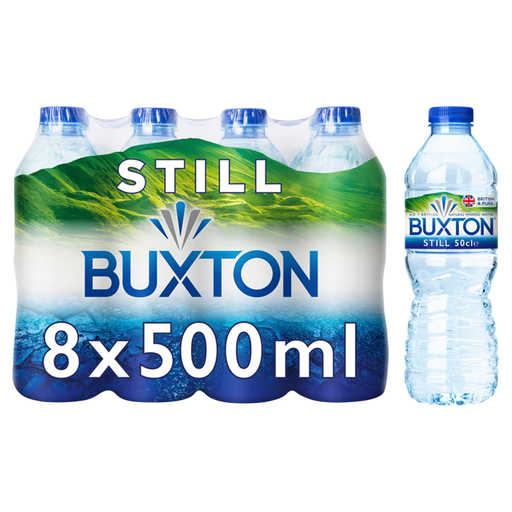
Why This Fits Their Persona: The eight-bottle format provides 4 litres of still natural mineral water without committing to a larger case. It suits lunch breaks, small households and occasional home use.
The pack size is easier to store than a bulk case, while the listed mineral analysis gives more information than vague taste-led wording.
Eight 500ml bottles; 4-litre total volume; UK country of origin is listed.

Why This Fits Their Persona: This six-pack contains 3 litres of natural mineral water, with a listed pH of 7.2 and mineral composition including calcium, magnesium and bicarbonates.
The product information sets out specific mineral values, bottle size and total quantity, helping shoppers compare substance rather than premium-sounding language.
500ml portable bottles; mineral analysis provided; bottles are stated to be recyclable, subject to local collection guidance.
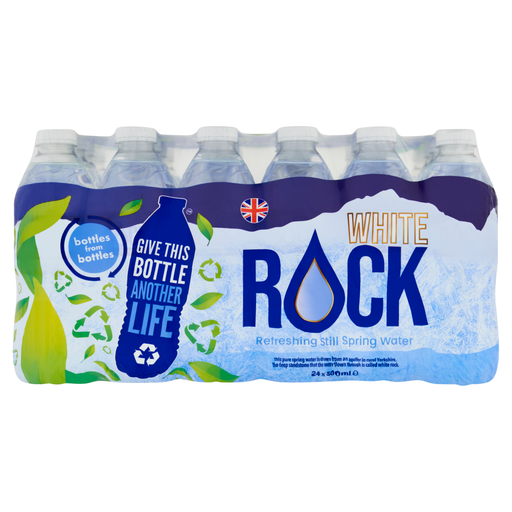
Why This Fits Their Persona: A 24-pack supplies 12 litres in portable 500ml bottles, making it practical for offices, schools, family cupboards and small events.
The quantity is clearly stated, so heavy users can calculate stock requirements and avoid repeatedly buying small packs at inconvenient times.
24 x 500ml format; sourced from aquifers in the Yorkshire countryside; mineral values are listed per 100ml.
We have compiled a complete, real-time list of products that fully satisfy these strict selection criteria and UK safety regulations.
Store unopened multipacks in a clean, cool and dry place, away from direct sunlight, strong odours and chemicals. Do not assume a best-before date means the water should be stored indefinitely; rotate older packs first and check the bottle neck or outer packaging.
Once opened, follow the product’s instructions. Flavoured water may need refrigeration and consumption within a specified period, while some still waters advise use within a few days. Do not freeze bottles unless the packaging specifically permits it, as expansion can damage the container.
For offices and events, compare the cost per litre and the cost per bottle. For households, also consider delivery weight, cupboard capacity and whether a 5-litre box or larger multipack would create less packaging per litre.
They can offer a lower cost per bottle, but this depends on the product, retailer and delivery charges. Compare the total pack price, number of bottles and total litres rather than the headline discount.
Check the best-before date printed on the bottle or outer pack. Store it in a cool, dry location away from sunlight and strong odours. After opening, follow the label’s refrigeration and consumption guidance.
No. Sugar-free flavoured water may contain sweeteners, acids, preservatives and flavourings, even when it has zero sugar. Read the ingredients and nutrition panel if you want plain water or need to avoid particular additives.