
24/7 Customer Support

Free returns

Same-day & Next-day Delivery

Quality Guaranteed

Unlock Your Welcome Offers: FREE Delivery | Up to 80% OFF | Free 30-day JoyPlus trial
Download the APP
Choosing bourbon whiskey in the UK is not simply a matter of picking the most recognisable label. Bottle size, alcohol strength, flavour style, intended use and allergen information can all affect whether a purchase suits your home bar.
Marketing language can also make comparison difficult. Terms such as “premium”, “handcrafted” and “smooth” may describe positioning rather than a measurable difference. This guide focuses on the practical details that help UK adults aged 18 and over choose with greater confidence.
A bourbon whiskey 1L bottle may offer more liquid for parties and cocktails, but it is not automatically better value than a 70cl bottle. Compare the price per 100ml, then consider how quickly the bottle will be used after opening.
Multipacks can also appear attractive, but only make sense if you already enjoy that particular bourbon or regularly entertain guests. A single 70cl bottle may be more suitable for occasional sipping or gifting.
Alcohol percentage changes the drinking experience. Standard bottles such as Jim Beam bourbon and Buffalo Trace bourbon are listed at 40% ABV, while Woodford Reserve bourbon is listed at 43.2% ABV and Knob Creek bourbon at 50% ABV.
Higher strength can provide a fuller, warmer profile, but it may also feel more intense when served neat. It is not a substitute for matching the bourbon to your own preferences.
Bourbon is made primarily from a grain mash, but labels may identify barley or other gluten-containing cereals. The product information for Jim Beam White Kentucky Bourbon Whiskey, Maker’s Mark bourbon and Knob Creek bourbon lists barley, wheat or other cereals containing gluten. If allergens are important to you, always check the current packaging before purchase.
Also consider how you plan to drink it. A bourbon for an Old Fashioned does not necessarily need the same profile as one chosen for slow sipping.
Common UK formats include 70cl and 1L. A 70cl bottle of 40% ABV bourbon contains approximately 28 UK units, while a 1L bottle at the same strength contains approximately 40 units. Exact figures can vary with ABV, so check the label or product listing.
For perspective, the UK Chief Medical Officers recommend that adults do not regularly drink more than 14 units per week. Alcohol should be enjoyed responsibly, and it is not suitable for anyone under 18 or during pregnancy.
Kentucky bourbon is associated with a long-established American distilling tradition, but the key product details remain more useful than heritage-focused wording. Look for terms such as Kentucky Straight Bourbon Whiskey, which indicate a defined bourbon category and ageing requirements under US regulations.
The mash bill also affects flavour. Rye often contributes more noticeable spice, while wheat can create a softer impression. Corn remains the primary grain required for bourbon production.
For a lighter, familiar style, look for descriptions featuring vanilla, caramel and gentle oak. Jim Beam White Kentucky Bourbon Whiskey is described as a medium-bodied 40% ABV bourbon aged for four years in new, charred American oak barrels.
For a richer sipping option, Woodford Reserve bourbon is listed at 43.2% ABV, with notes including dried fruit, orange, cocoa, cinnamon, toffee and dark chocolate. Knob Creek bourbon is bottled at 50% ABV, with caramel, vanilla, toasted oak and maple-sugar notes described in its product information.
Neat pours reveal more of the spirit’s character. Ice softens the alcohol sensation, while bourbon works well in classic cocktails including the Old Fashioned and Manhattan.
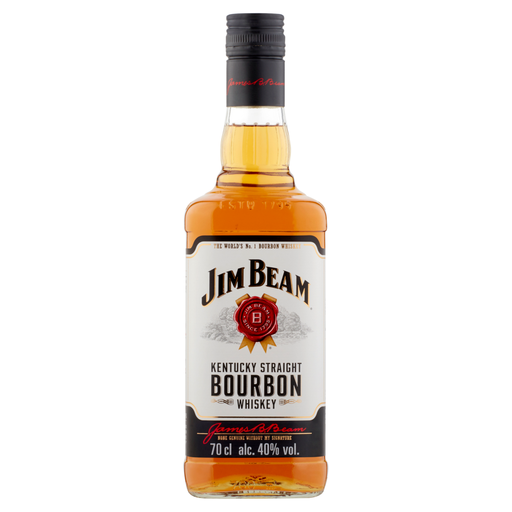
Why This Fits Their Persona: A 70cl bottle at 40% ABV is a practical starting format for shoppers discovering American bourbon whiskey without committing to a larger bottle.
The clearly listed 70cl quantity and 40% ABV make it easier to compare with other standard bottles rather than relying on vague value claims.
Kentucky origin; suitable for sipping, mixed drinks and familiar cocktails such as an Old Fashioned.

Why This Fits Their Persona: Its 43.2% ABV and listed flavour notes of fruit, citrus, spice, toffee and chocolate suit drinkers seeking a more layered sipping experience.
The product listing provides specific ABV, bottle size, origin and flavour information, allowing comparison beyond the term premium bourbon.
Kentucky straight bourbon; suitable for neat pours, ice and classic cocktails.

Why This Fits Their Persona: The 1L format is suited to home-bar owners, cocktail makers and hosts who expect to serve bourbon regularly.
The larger quantity is clearly stated, so buyers can assess whether it matches their consumption and entertaining needs before ordering.
40% ABV; aged for four years in new, charred American oak barrels according to the product description.
We have compiled a complete, real-time list of products that fully satisfy these strict selection criteria and UK safety regulations.
Store an opened bourbon bottle upright, tightly closed and away from direct sunlight, heat and extreme temperature changes. Refrigeration is generally unnecessary. Unlike wine, bourbon does not continue to mature in the bottle, so prolonged exposure to air may gradually affect its aroma and flavour.
For drinks served over ice, large cubes or spheres melt more slowly than small, irregular pieces. A whisky ice balls maker can be useful for home bars where presentation and controlled dilution matter. The Ecozy clear ice ball maker listed on Joybuy produces 60mm spheres, has a 0.85L water tank, an eight-hour timer and a stated output of up to 32 spheres per day. Follow the manufacturer’s cleaning and handling instructions.
Bourbon is an American whiskey category made using a qualifying grain mash and aged in new, charred oak containers. Kentucky bourbon refers to bourbon made in Kentucky. Kentucky is strongly associated with the category, but not every bourbon is produced there.
Either is suitable. Neat serving gives a direct impression of the spirit, while ice lowers the temperature and gradually dilutes the drink. Larger ice spheres can slow dilution, which may suit higher-strength bottles such as 50% ABV Knob Creek bourbon.
A properly sealed bottle stored upright and away from light can remain enjoyable for a considerable period. However, a bottle with a small amount of liquid and substantial air space may change more noticeably over time. Buy a size that matches your drinking habits, and always check the label for storage guidance.