
24/7 Customer Support

Free returns

Same-day & Next-day Delivery

Quality Guaranteed

Unlock Your Welcome Offers: FREE Delivery | Up to 80% OFF | Free 30-day JoyPlus trial
Download the APP
A reliable grater is one of the most versatile tools in any kitchen, yet it's often an afterthought. Many of us have struggled with flimsy models that bend, dull graters that mash food instead of cutting it or tools that slip dangerously on the worktop. Finding a durable, multi-purpose grater that handles everything from a block of cheddar to a firm courgette shouldn't be a challenge.
This guide is designed to help you navigate the options. We'll outline the key features to look for in a modern kitchen grater and present a few recommended models that stand out for their design, materials and practicality. Our goal is to provide clear, straightforward advice to help you choose a tool that will serve you well for years to come.
Before you decide, consider a few essential features that separate a dependable kitchen workhorse from a drawer-cluttering gadget.
The material of the grating surface is paramount. A stainless steel grater is often the preferred choice for good reason. It offers excellent durability, resists rust and corrosion and won't absorb odours or flavours from food. More importantly, high-quality stainless steel can be sharpened to a fine edge, ensuring clean, efficient grating rather than tearing or crushing. Look for a sturdy frame that doesn't flex under pressure.
Safety is a primary concern when using any sharp kitchen tool. A grater with a non-slip base, typically made of silicone or rubber, is a significant feature. It prevents the tool from sliding across your worktop, allowing you to apply pressure confidently. Additionally, a well-designed kitchen grater with handle provides a secure and comfortable grip, giving you better control whether you're grating cheese directly over pasta or shredding carrots into a bowl.
While it's often called a cheese grater, a good model should do much more. A classic 4 sided grater offers multiple grating textures in one tool: a coarse side for semi-hard cheeses and vegetables, a medium side for finer shreds, a fine side for hard cheeses like Parmesan or zesting citrus and a slicing side for cucumbers or potatoes. Alternatively, some modern designs, like a vegetable slicer or mandoline, offer adjustable thickness for perfect, uniform cuts.
Here are a few options that exemplify the qualities we've discussed, each suited to different kitchen needs and preferences.
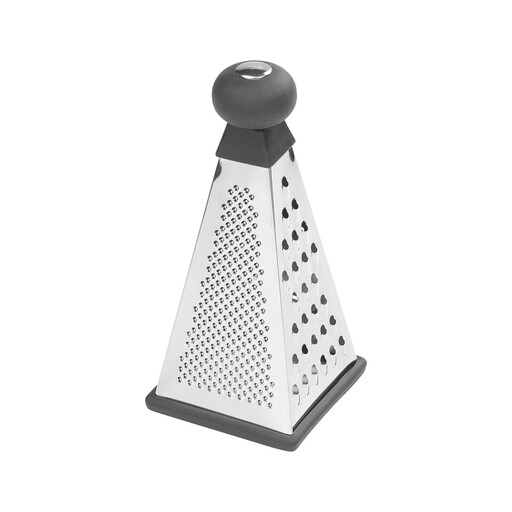
Why It Stands Out: This is the quintessential box grater, updated for the modern kitchen. The Tala Pyramid Grater combines a timeless four-sided design with practical features. Its durable stainless steel construction provides four distinct surfaces for fine, coarse, shredding and slicing tasks. The inclusion of a non-slip base adds a crucial layer of safety and stability during use.
Pros:
Who is it for? Home cooks looking for a single, reliable and traditional tool that can handle a wide variety of everyday food prep tasks without taking up too much space.
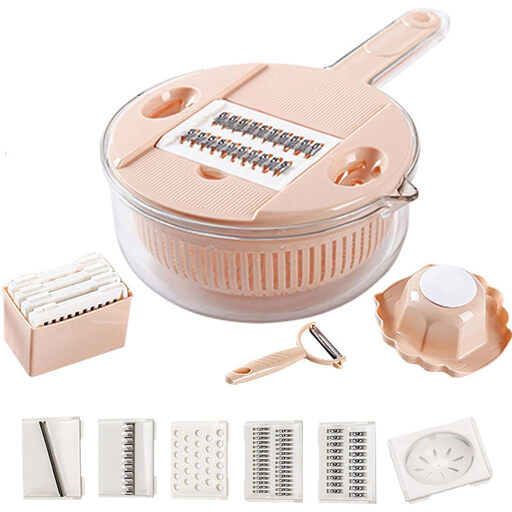
Why It Stands Out: For those who prioritise precision and uniformity, this adjustable mandoline is an excellent alternative to a traditional grater. It combines slicing, shredding and julienning functions into one compact unit. The key feature is its adjustable thickness, allowing you to create everything from paper-thin cucumber slices for a salad to thicker cuts for roasting.
Pros:
Who is it for? Culinary enthusiasts who want to achieve consistent, professional-looking results, especially when preparing salads, garnishes or stir-fries.
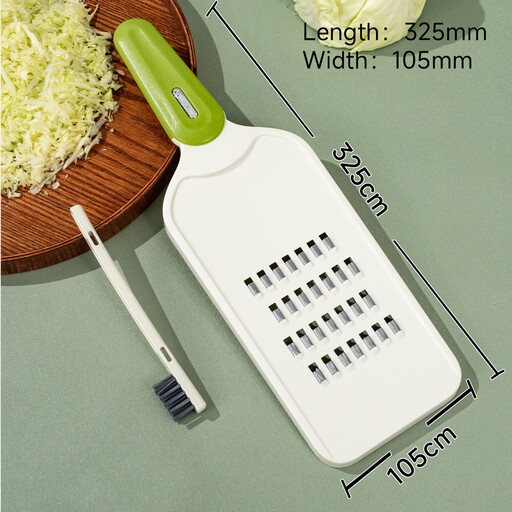
Why It Stands Out: This tool focuses on doing one thing exceptionally well: slicing. The YUPINK handheld vegetable slicer offers a simple, effective solution for creating uniform slices of vegetables like carrots, courgettes and potatoes. Its long, 36 cm design provides ample surface area and control, while the sharp stainless steel blade ensures a clean cut every time. It's a straightforward, no-fuss tool for quick prep work.
Pros:
Who is it for? Anyone needing a dedicated tool for quick, consistent slicing tasks, from preparing vegetables for a weeknight meal to batch-processing for canning or dehydrating.
If your primary need is shredding large quantities of vegetables for dishes like coleslaw or sauerkraut, you might benefit from a more specialised tool.
? Explore our full range of cabbage grater options to find the perfect fit for your kitchen.
1. What are the 4 sides of a box grater for? A typical 4 sided grater is designed for versatility. The largest holes are for coarse shredding of semi-hard cheeses or vegetables like potatoes. The medium holes are for finer shreds. The small, star-shaped holes are for fine grating of hard cheeses like Parmesan or for zesting citrus fruits. The fourth side is often a single blade for creating uniform slices of vegetables like cucumber.
2. Is a stainless steel grater better? For most kitchen applications, a stainless steel grater is a superior choice. It is more durable than plastic, less prone to staining or retaining odours and can be manufactured with much sharper cutting edges. This sharpness results in cleaner cuts, which improves the texture of your food. It is also generally easier to clean and sanitise.
3. How do you clean a box grater safely? To clean a box grater safely, wash it immediately after use before food particles dry on. Use a washing-up brush with bristles, moving it in the same direction as the blades to avoid shredding the sponge or brush and to protect your fingers. For stubborn residue, you can soak the grater in warm, soapy water. Many modern stainless steel graters are also dishwasher safe, which is a convenient and effective cleaning method. Always dry it thoroughly to prevent rust.