Hosts feeding a larger group
Compare can weights, pack quantities and stated servings before deciding how many tins to prepare. Allow for soup being one of several buffet dishes rather than assuming every guest will have a full serving.


For a Boxing Day buffet, choose ready-to-serve tins when straightforward portion planning matters, or a multipack when you need several cans of the same recipe. Condensed soup has a different preparation and recipe role, so check its stated yield rather than treating it as interchangeable with a ready-to-serve tin. Whatever you choose, check each recipe’s allergens and plan how to keep soup hot during self-service.
Compare can weights, pack quantities and stated servings before deciding how many tins to prepare. Allow for soup being one of several buffet dishes rather than assuming every guest will have a full serving.
Choose by the exact recipe rather than the brand or the word “vegetarian”. The checked Tesco cream-of-tomato soup contains milk, while Campbell’s condensed tomato soup lists milk and celery.
Decide how soup will stay hot while guests serve themselves. Food Standards Agency guidance for caterers specifies hot holding at 63°C or above; a household host can use that guidance to plan service without treating a pan left out indefinitely as a hot-holding method.
Start with the amount and type of soup you intend to serve, then check the exact recipe and your serving setup.
| Priority | What to check | Your needs |
|---|---|---|
| Quantity and format | Check can weight, pack count and stated servings. Follow the preparation directions for condensed soup rather than equating its can weight with a ready-to-serve tin. | I want enough soup for the guests likely to have a bowl, without assuming every tin serves the same number of people. |
| Recipe and allergens | Read the current ingredient and allergen information on every recipe. Check vegetarian or vegan labelling separately from allergen information. | Guests with dietary requirements need an identified recipe and its ingredient information, not an assumption based on the flavour or brand. |
| Salt information | Compare the label’s salt figures on the same basis, such as per 100g and per serving, and check the serving size. Tesco Groceries lists 1.12g salt per half-can of its 400g cream-of-tomato soup; its Heinz cream-of-tomato listing gives 1.1g per half-can. | If soup is one dish among several, I want to know what amount the label’s serving figure actually represents. |
| Hot service and leftovers | Plan suitable hot holding or time the period without it. Food Standards Agency caterer guidance specifies 63°C or above for hot holding and allows display without hot holding for up to two hours only once; follow the exact pack’s opened-soup storage directions. | Guests may return to the soup station throughout the buffet, so I need a serving plan rather than one large pan left out. |
Campbell’s checked 295g condensed tomato soup is described as a two-portion can that can also be used in recipes. Its preparation role differs from a 400g ready-to-serve tomato soup, so can weight alone does not establish how many bowls to plan.
Check each tin’s preparation instructions and stated portions before adding it to the buffet quantity.
The checked Tesco cream-of-tomato soup is vegetarian but contains milk. The checked Campbell’s condensed tomato soup lists both milk and celery, which the Food Standards Agency identifies among regulated allergens.
Read the current label for each recipe and keep its ingredient information available when serving guests.
Food Standards Agency guidance for caterers calls for hot food to be held at 63°C or above. Where hot holding is not possible, its allowance for display for up to two hours can be used only once; food left out longer should be discarded.
Use suitable hot-holding equipment where possible, serve smaller batches and keep track of any time outside hot holding.
These references describe particular listed soups and ranges; ingredients and serving information should be checked on the tin you choose.
Tesco’s own-label range includes a 400g cream-of-tomato soup for a straightforward tomato option.
Sainsbury’s lists an own-label 400g cream-of-tomato soup.
Heinz offers cream-of-tomato soup alongside other recipes and multipack formats.
The checked 295g condensed cream-of-tomato soup is described as suitable for use in recipes as well as soup servings.
M&S lists tinned soups in vegetarian, vegan and meat-based recipe styles.
These Heinz tins include individual 400g soups and six-can packs for a Boxing Day buffet. Compare their recipes, pack quantities and stated servings against your guest list; they do not represent every soup format discussed above.
 No image available
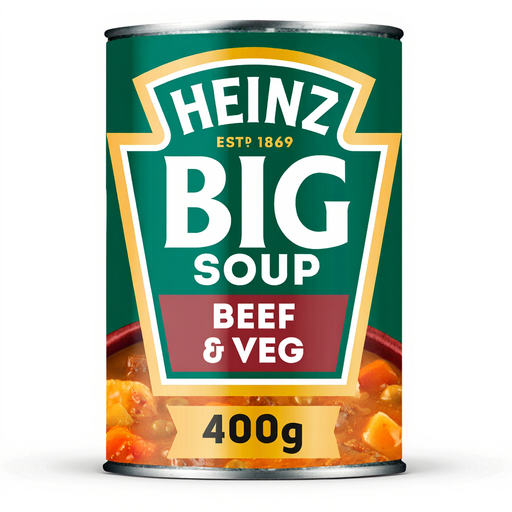
The stated yield of two servings per 400g can can help you estimate quantities when soup is one of several buffet dishes. The ingredients list beef, potatoes and vegetables, with 22% vegetables stated; check the current label for guests’ dietary requirements.
 No image available
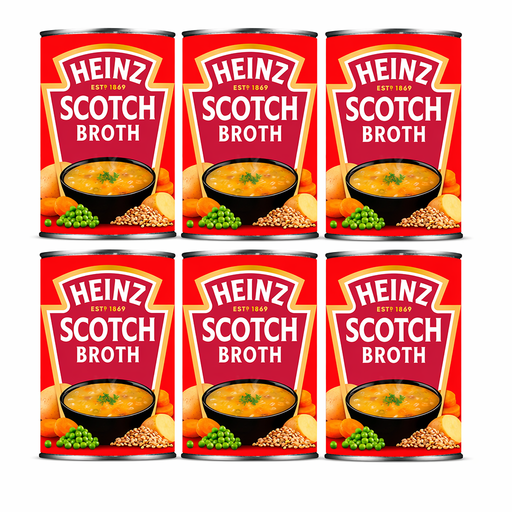
Six 400g cans provide a defined pack quantity for a group serving. The recipe lists mutton, pearl barley and 16% vegetables; it contains gluten from barley and wheat. Check the current label and servings per can when planning portions.
 No image available
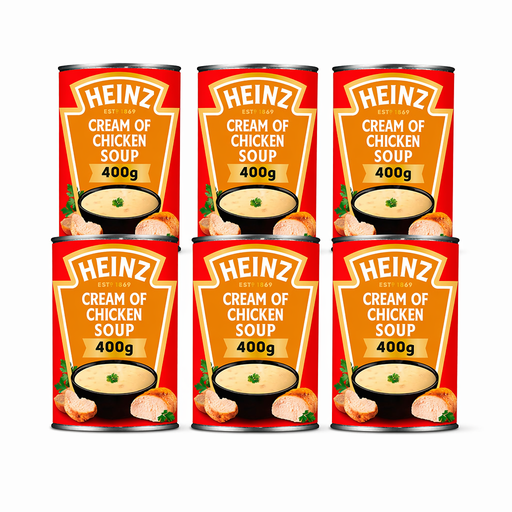
Six 400g cans give you a known pack quantity if chicken soup suits the buffet menu. This recipe lists chicken and contains milk and wheat; check the current label and servings per can before preparing it for guests.
 No image available
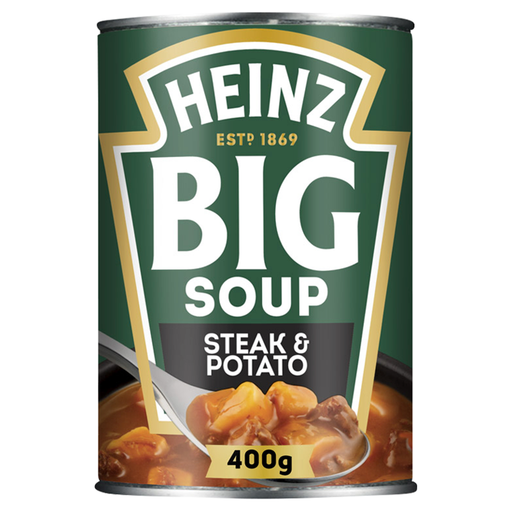
This 400g beef-and-potato soup offers a different recipe from the tomato and chicken options. Check its stated serving yield when estimating the number of cans, and read the current label for dietary requirements.
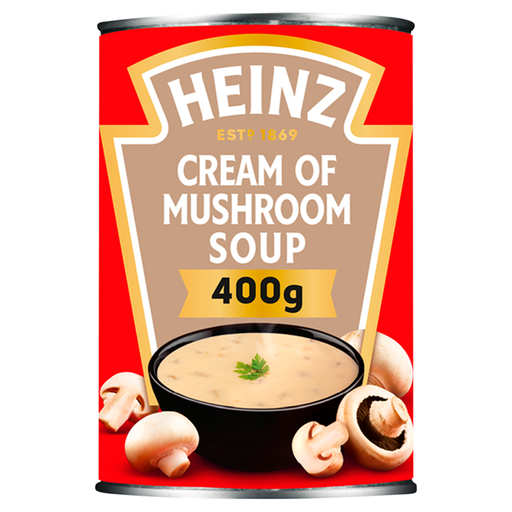 No image available
This 400g vegetarian mushroom soup provides a non-meat recipe option, but it contains milk and wheat. Check the current label for guests’ requirements and its stated serving yield when planning quantities.
Use the stated servings for each exact soup and consider how many guests are likely to have a bowl alongside the other dishes. Check pack count and preparation directions too: a condensed soup and a ready-to-serve tin should not be counted as equivalent solely because both come in cans.
No. The checked Tesco and M&S cream-of-tomato soups are vegetarian but contain milk, while Campbell’s checked condensed tomato soup contains milk and celery. Read the current label of every recipe before serving guests with allergies.
Plan suitable hot holding rather than leaving a pan out without a time limit. Food Standards Agency guidance for caterers specifies 63°C or above for hot holding; if that is not possible, its allowance for display for up to two hours can be used only once, and food out longer should be discarded. This is caterer guidance that a household host can use as a planning benchmark.
Check both salt per 100g and salt per serving, including the serving size used on each label. Tesco Groceries lists 1.12g per half-can for its checked cream-of-tomato soup and 1.1g per half-can for the checked Heinz cream-of-tomato soup; those figures should not be applied to other recipes.
Follow the storage directions on the exact tin. For its checked 400g cream-of-tomato soup, M&S instructs customers to transfer opened soup to an airtight container, refrigerate it and eat it within two days; do not assume every recipe has the same instruction.