Lunchbox-batch home bakers
You want the machine to knead and prove dough for several buns, leaving you to roll, fill, shape and oven-bake them. A dough programme is more relevant to that job than loaf-crust settings.


Choose a bread maker with a dough programme if you want it to knead and prove cinnamon bun dough before you shape, fill and bake the buns in an oven. A fixed programme suits a familiar recipe; manual timing or an ingredient dispenser becomes more useful if you regularly vary the dough or add mix-ins. Check the machine’s recipe limits before enlarging a batch, and do not assume a delay timer suits dough containing fresh milk.
You want the machine to knead and prove dough for several buns, leaving you to roll, fill, shape and oven-bake them. A dough programme is more relevant to that job than loaf-crust settings.
You want dough preparation to fit around a lunchbox routine. Delayed timing may help, but the recipe and appliance instructions matter when fresh milk is involved.
You change dough timings or add dried fruit or nuts. Manual kneading and rising settings, or a timed ingredient dispenser, may be worth considering if you will use those functions regularly.
Start with the dough cycle: it needs to do the preparation you want before you shape and bake the buns. Then decide whether timing flexibility, batch size or day-to-day simplicity matters most to you.
| Concern | What to check | Who this matters to |
|---|---|---|
| Kneading and proving | Look for a dough programme on the exact model. Check its recipe limits if you plan to use an enriched dough. | I want the machine to prepare the dough while I handle the filling and oven baking; around 36% of consumers put dough preparation first. |
| Make-ahead timing | Check the timer instructions and whether your recipe permits a delayed start, particularly with fresh milk or eggs. | Fitting the work around a lunchbox routine matters more to me than extra programmes. Make-ahead timing is the primary need for roughly 29% of consumers. |
| Batch size and space | Compare appliance dimensions and the manual’s dough or flour limits; a loaf-weight label is not a cinnamon-bun batch limit. | I need enough dough for several lunches without giving over too much worktop space to the machine; about 21% of consumers prioritise that balance. |
| Everyday simplicity | Check the controls and care instructions, including whether the pan or kneading parts require hand-washing. | If I will use it often, straightforward setup and cleaning matter most. Around 14% of consumers make ease of routine use their main concern. |
Cinnamon buns still need rolling, filling, shaping and oven baking after the machine prepares the dough. Crust settings do not replace that work.
Confirm that the exact model has a dough programme before weighing up its loaf-baking features. Consider manual timing if you expect to change recipes often.
Delayed starts need particular care with yeast activity and ingredients such as fresh milk; a timer alone does not make an enriched recipe suitable for an unattended delay.
Follow the appliance’s recipe and ingredient-temperature instructions. Morphy Richards advises chilling fresh milk when using its delay timer and avoiding warm liquids.
A machine’s stated loaf capacity does not establish how much of a particular cinnamon-bun dough it can handle.
Use capacity to narrow the choice, then check the model manual for ingredient and dough limits before scaling up your recipe.
Care requirements can affect how convenient the machine feels during a regular baking routine.
Check the instructions for the pan and kneading parts before buying. Morphy Richards specifies hand-washing for the Fastbake’s baking pan, measuring cup and kneading blades.
The Fastbake is a programme-led bread maker to consider when a fixed dough cycle meets your needs.
The SD-YR2540 offers more timing controls for bakers who expect to adjust their dough routine.
Its EasyUse and 14-in-1 Artisan models offer different levels of control for dough preparation.
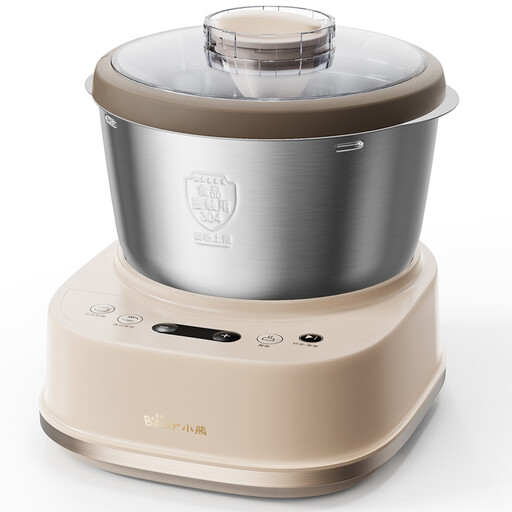
This option is a dough maker for preparation before you shape and oven-bake the buns, rather than a bread maker for baking loaves. Check its instructions against your cinnamon-bun recipe, particularly if the dough contains milk or eggs.
 No image available
Consider this dough maker if you want help kneading before shaping and oven-baking cinnamon buns, rather than a machine that bakes a loaf.
The product name states a 5 L capacity and a 2.5 kg dough-kneading quantity. Check the model instructions for suitable ingredients and the limit for your particular cinnamon-bun recipe before making a large batch.
No. For this use, choose a dough programme to knead and prove the dough, then roll, fill, cut and oven-bake the buns separately. Follow your recipe if it calls for another proving stage after shaping.
Not for cinnamon-sugar filling added when you roll out the dough. A dispenser is more relevant if your recipe calls for dried fruit or nuts to be added during mixing; check how the particular model’s dispenser works.
Only use a delayed start when the appliance instructions and your recipe permit it. Morphy Richards advises chilling fresh milk for its delay timer and avoiding warm liquids; do not assume the timer makes every enriched dough suitable for an unattended delay.
Start with the recipe’s measurements, yeast freshness, ingredient order and liquid-temperature instructions. Morphy Richards notes that fresh yeast matters particularly for the lift of sweet or enriched bread dough.