
24/7 Customer Support

Free returns

Same-day & Next-day Delivery

Quality Guaranteed

Unlock Your Welcome Offers: FREE Delivery | Up to 80% OFF | Free 30-day JoyPlus trial
Download the APP
Choosing breakfast cereal can look straightforward until you compare ingredient lists, portion sizes, allergens and pack formats. A colourful box may promise energy, wholegrains or added nutrition, yet the details can tell a different story.
For UK households, the right breakfast cereal depends on more than flavour. You may need something suitable for school mornings, a convenient instant oatmeal for the office, a filling oat cereal for active days or a family-sized cereal pack that offers practical value. Use the checks below to avoid common buying mistakes and narrow down the right option.
Wholegrain oats or wheat can be useful ingredients, but they do not automatically make a product low in sugar or calories. Granola is often baked with sugar, syrups, honey or oils to create crunchy clusters.
For example, Fuel 10K Chunky Granola Chocolate Loaded lists wholegrain oats at 55%, but its nutrition panel also shows 20g of sugars and 459 kcal per 100g. That does not make it unsuitable; it simply means it is more appropriate for shoppers who want a chocolate granola treat and are comfortable checking portion size.
Words such as “natural”, “protein”, “fruit” or “high fibre” need to be checked against the full label. A fruit and nut cereal may contain a modest quantity of dried fruit, while an apparently simple oat product may include added sugar, oils or flavourings.
Always compare the ingredients list and nutrition information per 100g. This provides a more consistent basis than the suggested serving size, which can differ between products.
Cereal products commonly contain or may contain oats, wheat, barley, milk, nuts, peanuts, soya and sesame. This is particularly important when buying muesli, fruit and nut cereal or protein granola.
Read the current packaging before purchase, especially if you have an allergy or are buying for children. A product can contain a specific allergen even when it appears to be a simple oat cereal.
Ingredients are listed by weight, so the first few entries show what makes up most of the product. Jordans Simply Granola contains 81% wholegrain oat flakes, while Alpen Original Muesli contains wholegrain wheat at 39%, wholegrain rolled oats at 35% and raisins at 16%.
For a more oat-focused choice, look for oat flakes or wholegrain oats near the beginning of the list. For crunchy granola, also check the position of sugar, oils, chocolate pieces and syrups.
Use the per-100g panel to compare:
Xiao Tian Fruit & Nut Oat Crunch lists 22.9g dietary fibre per 100g, while Fuel10K Peanut Granola lists 17.2g protein per 100g and 6.1g fibre. These figures are useful comparisons, but they do not replace a balanced diet or individual dietary advice.
A 750g or 950g bag can work well for regular home breakfasts, while single-serve sachets are practical for commuting, school routines or keeping at work. Instant oatmeal usually needs hot water and stirring, whereas granola, muesli and crunchy cereal are ready to eat with milk or yoghurt.
Also consider storage. Most products should be kept in a cool, dry place and resealed after opening. A smaller bag may stay fresher in a one-person household, while family-sized cereal packs can reduce frequent replenishment.
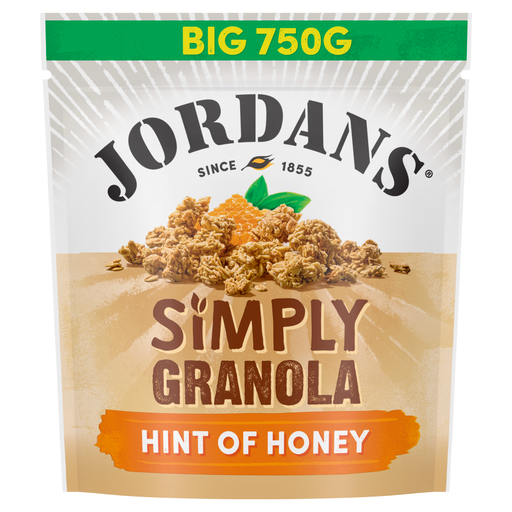
Why This Fits Their Persona: The larger pack suits regular home breakfasts and offers a straightforward honey-and-oat format for shoppers who do not need multiple flavours.
Its ingredient list clearly identifies wholegrain oat flakes at 81%, while the nutrition panel shows 17g sugars per 100g for an informed comparison.
750g pack; 11g protein and 6.3g fibre per 100g; suitable for vegetarians according to the supplied product information.
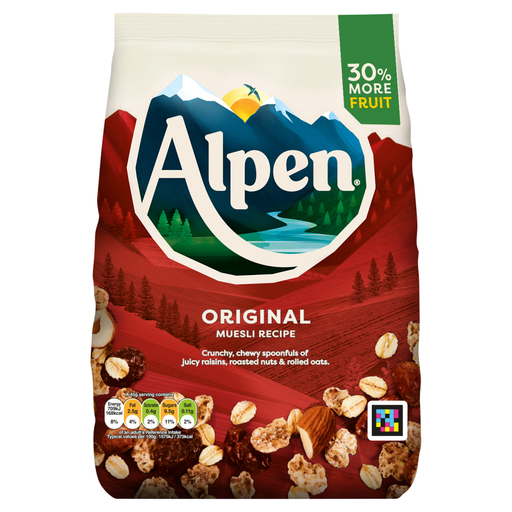
Why This Fits Their Persona: A large traditional muesli format for shoppers who prefer chewy raisins, rolled oats and roasted nuts rather than chocolate clusters.
The stated ingredient percentages make it easier to distinguish its grain-and-fruit composition from a heavily coated crunchy granola.
950g pack; 35% wholegrain rolled oats; 11g protein per 100g. Contains milk, almonds and hazelnuts.
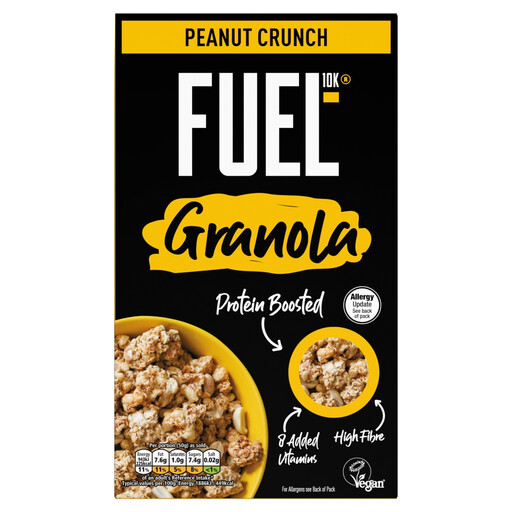
Why This Fits Their Persona: Suitable for shoppers wanting a protein granola with chunky clusters for breakfast, yoghurt topping or a portable snack.
The protein and fibre values are stated per 100g, helping you compare the product with other granola rather than relying only on “protein boosted” wording.
17.2g protein and 6.1g fibre per 100g; includes roasted peanuts and added vitamins. Contains peanuts, oats and wheat.
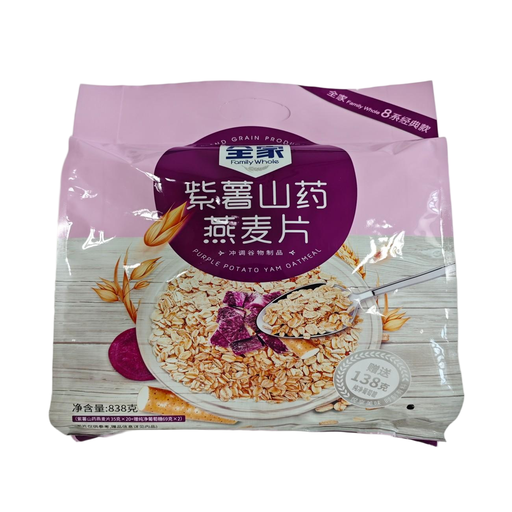
Why This Fits Their Persona: Twenty 35g sachets provide a measured, hot-water preparation for busy school mornings, travel or workplace storage.
The individual format reduces guesswork over serving quantity, while the ingredient list clearly identifies oats, wheat, soya and sesame.
20 individual sachets; ready in about 175ml boiling water; includes oat flakes, purple sweet potato and yam.
We have compiled a complete, real-time list of products that fully satisfy these strict selection criteria and UK safety regulations.
Granola can fit into an everyday breakfast, but compare its sugar, fat and calorie values with your preferred serving size. Pairing a smaller portion with plain yoghurt or fruit can provide variety without treating the granola as the only component of the meal.
Muesli is generally a mixture of grains, fruit, seeds or nuts that is not baked into clusters. Granola is usually baked with ingredients such as oil, sugar, honey or syrup, creating a crunchy texture. Always check the label because recipes vary.
Keep cereal in a cool, dry place and reseal the inner bag after opening. Follow the packaging’s best-before guidance. If the texture, smell or appearance changes, discard the product rather than consuming it.