What to check before buying
Start with unit price and the number of breakfasts the pack is likely to cover, then compare the exact nutrition and ingredient labels. The percentages below come from a 2023 Weetabix Food Company survey conducted by KAM among 300 UK adults with children aged 2–14, so they describe that parent sample rather than all UK cereal shoppers.
| Priority |
What to check |
Your needs and survey findings |
| Value across pack sizes |
Compare the displayed price per kg for similar cereals. Check the stated servings and whether the household will finish the pack before buying a larger size. |
I want the weekly cereal spend to stay predictable, without mistaking a larger box for better value. In the 2023 KAM survey for Weetabix Food Company, 65% of the 300 surveyed UK parents said price or value for money was the top reason encouraging one cereal purchase over another. |
| Fibre, sugars and salt |
Use the per-100g panel to compare cereals on the same basis. Then check fibre, sugars, salt, ingredients and any traffic-light labelling shown on the pack. |
I want to compare what is in the cereal rather than rely on a general wellness claim. In the same parent survey, 44% said health content influenced their breakfast-cereal choice. |
| Format the household will use |
Match flakes, wheat biscuits, porridge or muesli to usual preferences. Compare pack size, portions, storage space and preparation time. |
A cheaper large pack is not useful if it goes uneaten. In the 2023 KAM survey for Weetabix Food Company, 59% of surveyed parents said they generally chose what they knew their children would eat. |
| Allergens and dietary suitability |
Read the current ingredients, highlighted allergens and any “may contain” statement. Check any dietary-suitability statement on the exact product, not another cereal from the same brand. |
Everyone in the household needs to be able to eat the cereal safely. Wheat, barley, oats, peanuts and tree nuts can appear in different cereal formats. |
Joybuy cereal options
Joybuy options in the oat-porridge sachet and large plain wholegrain cereal formats for a weekly breakfast shop.
 No image available
Quaker Oat So Simple Big Bowl Original, 6 Pack 231g
A six-sachet option for a quick warm breakfast where fixed portions and a stated 2½-minute microwave method suit the routine.
Each sachet is 38.5g. The listed dry nutrition gives 9.0g fibre and 1.0g sugars per 100g.
Check whether six sachets cover the planned breakfasts, confirm current allergen and dietary suitability, and compare the displayed price per kg with larger packs.
Joybuy
 No image available
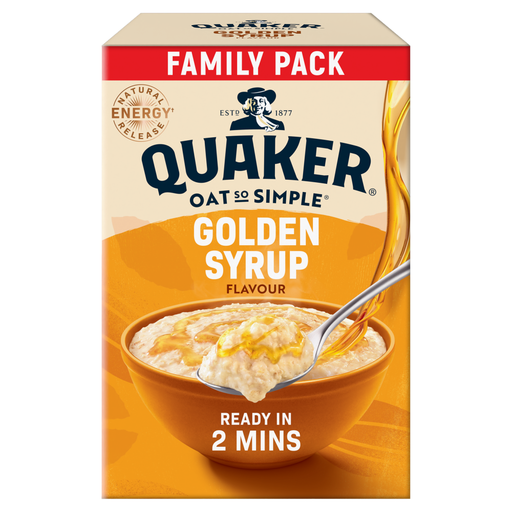
Quaker Oat So Simple Golden Syrup Family Pack, 20 Sachets 720g
A 20-sachet option for households planning repeat weekday breakfasts with individual portions and a stated two-minute microwave method.
The pack contains 20 portions of 36g and 720g in total. Listed nutrition gives 7.3g fibre and 18g sugars per 100g.
It contains oats and may contain barley, wheat and soya. It requires milk and microwave preparation, so check that this fits the household routine and compare price per kg.
Joybuy
 No image available
Weetabix Super Size 72 Pack, 1.52kg
A large plain cereal pack for households that regularly eat wheat biscuits and have space for a stocked cereal cupboard.
The pack contains 72 biscuits and weighs 1.52kg. The listing states 95% wholegrain wheat, 4.5g sugars per 100g and 0.27g salt per 100g.
Contains wheat and barley. Check the current pack label if fibre is a deciding factor, and compare the displayed price per kg before treating the larger pack as better value.
Joybuy
 No image available
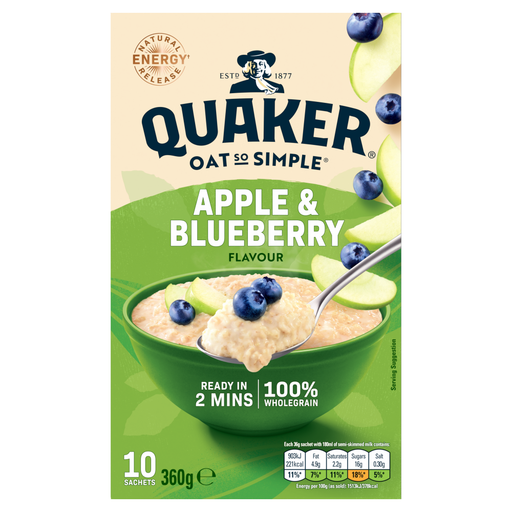
Quaker Oat So Simple Apple & Blueberry Porridge, 10 Pack 360g
A fruit-flavoured porridge option for ten planned breakfasts with individual 36g portions and a stated two-minute preparation method.
The listing states 77% wholegrain oats, apple and blueberry pieces, 7.2g fibre per 100g and 21g sugars per 100g.
It may contain wheat, barley and soya. Confirm allergy suitability, whether ten portions are enough for the week, and the displayed price per kg.
Joybuy
 No image available
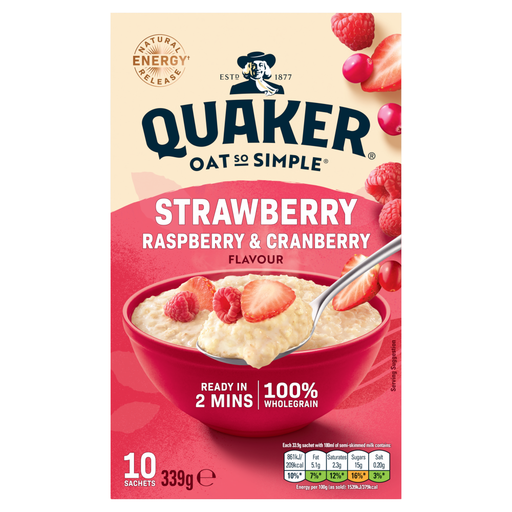
Quaker Oat So Simple Strawberry, Raspberry & Cranberry, 10 Sachets 339g
A ten-sachet berry-flavoured porridge option for households that want a quick hot breakfast with portioned servings.
The listing states 79% wholegrain oats, 33.9g sachets, 7.2g fibre per 100g and 19g sugars per 100g, with a stated two-minute microwave method.
It contains oats and cereals containing gluten, and may contain barley, soya and wheat. Check whether ten sachets match the weekly plan and compare the displayed price per kg.
Joybuy
Frequently asked questions
How do I tell whether a cereal value pack is actually better value?
Compare the displayed unit price, normally per kg, for the same type of cereal, then check how many realistic portions the household will use. GOV.UK price-marking guidance says unit pricing is intended to make packs of different sizes or quantities comparable, so a larger package is not automatically cheaper per kg.
Should I use the per-serving or per-100g nutrition figures?
Use per 100g to compare different cereals on a consistent basis, then use the stated serving figure to estimate the breakfast actually served. Where shown, traffic-light labelling indicates high, medium or low amounts of fat, saturates, sugars and salt.
Which common cereal styles can I compare for fibre?
NHS guidance identifies plain wholewheat biscuits, plain shredded whole grain and porridge as higher-fibre breakfast choices. Check the exact pack’s fibre grams, sugars and allergens because products within these broad formats are not identical.
Can a cereal with “no added sugar” still show sugar on the nutrition panel?
Yes. Dorset Cereals states that Tasty Toasted has no added sugar while listing 19g sugars per 100g, and its ingredients include dried fruit. Read the ingredient list and nutrition declaration rather than interpreting “no added sugar” as sugar-free.
What allergen checks matter most for a weekly cereal shop?
Read the current pack’s highlighted allergens and any “may contain” statement every time a recipe or pack changes. The examples discussed here include wheat and barley in Weetabix, wheat with possible peanuts and nuts in Shredded Wheat, possible wheat, barley and soya in Quaker Oat So Simple, and nuts with wheat and barley in Dorset muesli.


