
24/7 Customer Support

Free returns

Same-day & Next-day Delivery

Quality Guaranteed

Unlock Your Welcome Offers: FREE Delivery | Up to 80% OFF | Free 30-day JoyPlus trial
Download the APP
The breakfast aisle can be a confusing place. With shelves packed with boxes and wrappers all promising a healthy, convenient or delicious start to your day, it's easy to feel overwhelmed. Many of us have bought breakfast cereals & bars that looked great on the packet, only to be disappointed by the taste, texture or a glance at the nutritional information later on. As your Joybuy Product Recommendation Officer, my role is to help you see past the marketing and make choices that genuinely fit your lifestyle and budget.
Before you add anything to your basket, let's look at a few common pitfalls that can lead to a purchase you'll regret:
To avoid these traps, you only need to focus on a few key details on the back of the pack. This is where the real story of a product is told.
Always check the "per 100g" column in the nutritional table. This allows you to compare products like-for-like, regardless of the manufacturer's suggested serving size. In the UK, a common guideline for sugar content is:
Looking for low sugar bars and cereals using this metric is a reliable way to manage your intake. Also, check the ingredients list. Sugar can hide under many names, including glucose syrup, molasses, invert sugar syrup and dextrose. The higher up the list it appears, the more of it there is in the product.
For a breakfast or snack that keeps you feeling full, protein and fibre are crucial. A product marketed as one of the good protein bars should deliver a meaningful amount in a single serving—ideally 10g or more. Fibre, often found in whole grains like oats, is just as important for sustained energy and digestive health. A cereal or bar with at least 3g of fibre per serving is considered a good source, while 6g or more is high in fibre. This is particularly important for a satisfying on-the-go breakfast.
If you need gluten free snacks or vegan options, don't just rely on the front-of-pack claims. Always check the full ingredients list and the allergen statement (often in bold). Official certifications from bodies like The Vegan Society or Coeliac UK provide an extra layer of assurance that the product meets strict standards and is safe for your consumption.
Instead of a one-size-fits-all approach, the right choice depends entirely on your needs. Here are a few options matched to different lifestyles.

Why This Fits Their Persona: This person needs a substantial protein hit post-workout without a huge sugar load. This bar is designed for performance-oriented individuals who track their macros and want a snack that supports muscle maintenance while tasting like a treat.
It directly counters the "protein pretence" by delivering a significant 21g of protein in a single 64g bar, not just a high per-100g value. The sugar content is also exceptionally low at just 2g per bar.
A multi-layered, confectionery-style texture makes it more enjoyable than many dense protein bars. It is also formulated to be palm oil-free.
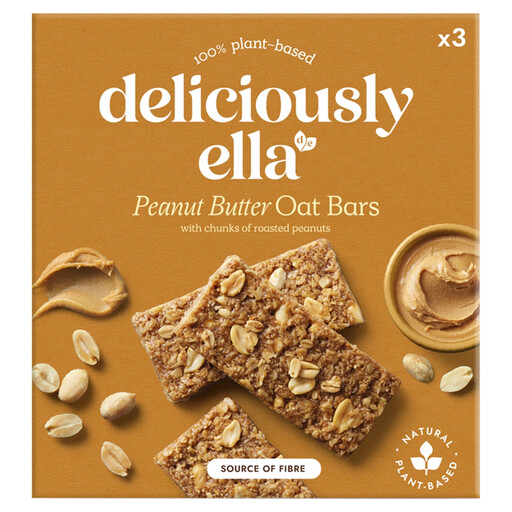
Why This Fits Their Persona: This person prioritises clean, plant-based ingredients and avoids refined sugars and artificial additives. They want a wholesome, satisfying snack for their commute or desk that aligns with a gluten-free lifestyle.
It sidesteps the "healthy halo" trap by being transparent. While not a low-calorie food, its energy comes from whole-food sources like gluten-free oats and peanuts, and it is sweetened with coconut and date syrup rather than refined sugar.
Made with gluten free oats and entirely plant-based ingredients. The texture is soft-baked and chewy, offering a more satisfying mouthfeel than many hard, dry cereal bars.

Why This Fits Their Persona: This shopper is looking for a quick, nutritious breakfast for the whole family. They need something that is low in sugar but still appealing, and that provides lasting energy for school and work days. It's a staple for a reason.
It avoids the "portion size illusion" common in sugary cereals. As a biscuit-based cereal, portion control is simple. It's also genuinely low in sugar (4.7g per 100g) and high in protein and fibre, making it one of the more robust healthy breakfast cereals.
High in protein (19g/100g) and fibre (9.9g/100g) from wholegrain wheat. It's also fortified with iron and vitamins, including Vitamin D, supporting family nutrition.
We have compiled a complete, real-time list of products that fully satisfy these strict selection criteria and UK safety regulations.
While individual dietary needs vary, a good rule of thumb is to check the "per 100g" value. A bar with under 10g of sugar per 100g is a solid choice for daily consumption. Those with over 22.5g per 100g are more of an occasional treat, similar to confectionery. Always check the ingredients to see where the sugar is coming from.
Most protein bars and cereal bars are designed as snacks to supplement your diet, not replace a full meal. They typically lack the full range of vitamins, minerals and macronutrients found in a balanced meal. Some products, like the Slimfast Meal Support Bars, are specifically formulated and fortified for meal replacement and will state this clearly. For general snacking, a standard protein bar is fine.
For a product to be safely considered gluten-free, it must contain less than 20 parts per million (ppm) of gluten. Look for an official "Crossed Grain" symbol from Coeliac UK on the packaging. Also, check the allergen advice for "may contain" warnings, as some products are made in factories that handle gluten, which can be a risk for those with high sensitivity. Oats, for example, must be certified gluten-free to be safe for coeliacs, as they are often cross-contaminated with wheat during processing.