People with little preparation time
An instant-coffee jar suits a routine built around a mug and hot water. Marks & Spencer describes instant granules as dissolving quickly; coffee bags and ground coffee require brewing instead.


Choose an instant-coffee jar if weekday breakfast calls for coffee made with hot water and no brewer. Coffee bags need time to infuse, while ground coffee needs a compatible brewing method; within the instant options, compare pack size, stated roast and whether you want decaf.
The preparation method is the clearest starting point for a weekday breakfast decision.
An instant-coffee jar suits a routine built around a mug and hot water. Marks & Spencer describes instant granules as dissolving quickly; coffee bags and ground coffee require brewing instead.
Compare pack weights with how often the household makes coffee. A larger jar may suit frequent use, while a smaller one may be more practical if it takes longer to finish.
A decaf instant product keeps the instant preparation method while offering a different caffeine choice. Check the particular product label when caffeine content matters.
Choose the preparation method first, then compare the pack and stated coffee characteristics that matter to your morning routine.
| Priority | What to check | Your needs |
|---|---|---|
| Preparation | Check whether the product is soluble instant coffee, a bag that needs infusion or ground coffee requiring compatible brewing equipment. Allow for the preparation each format needs. | I want to make coffee with a mug and hot water before leaving home, rather than wait for a bag to infuse or use a brewer. |
| Pack size | Compare the stated weights and consider how often you make coffee. Check any suggested serving size on the particular pack rather than assuming every jar makes the same number of cups. | Will I use this pack regularly, or would a smaller one fit my breakfast routine better? |
| Roast and beans | Read the stated roast and bean composition, keeping them separate from personal taste. Tesco describes Gold as a Robusta-and-Arabica blend; Marks & Spencer describes its Gold instant coffee as 100% arabica and medium roast. | I can use those descriptions to narrow my choice, but they cannot tell me for certain which cup I will prefer. |
| Caffeine choice | Check whether the specific product is labelled decaf and read its caffeine information if intake matters. Consider caffeine from other drinks and foods as well. | At breakfast, I would prefer a decaf instant option without changing to a brewed-coffee routine. |
Coffee bags need infusion, and ground coffee needs a suitable brewing method. Neither gives the same hot-water-only preparation as soluble granules.
Check the format on the pack before choosing it for a rushed morning.
Ground coffee may also mean allowing space for a brewer and time to prepare it.
Roast and bean information describes the product, but it does not establish which coffee an individual drinker will enjoy.
Use the stated characteristics to narrow the options; consider a smaller pack when trying an unfamiliar coffee.
Caffeine from coffee contributes to the total consumed from other foods and drinks. This matters particularly during pregnancy: the NHS advises no more than 200 mg of caffeine a day and estimates 100 mg in a cup of instant coffee.
Check the product label and account for other sources of caffeine when making a choice.
These examples illustrate different instant-coffee characteristics and brewed alternatives; a brand name alone does not identify the preparation method of every product it makes.
Tesco Gold is an own-label freeze-dried instant coffee sold in a 200 g jar.
Sainsbury's lists a 200 g Gold Roast instant-coffee jar in its own-label range.
Pure Gold is listed as a medium-roast instant coffee in a 190 g jar, with a separate 150 g refill.
Marks & Spencer describes its Gold instant coffee as 100% arabica and medium roast.
Taylors coffee bags are a brewed alternative to an instant jar. Tesco lists both Italian and Decaffe coffee bags.
Lavazza ground coffee is relevant when breakfast includes a compatible brewing method rather than an instant-coffee jar.
These coffee options include regular and decaf choices in different pack sizes for a weekday routine. Check each product's preparation instructions if making coffee with hot water alone is essential.
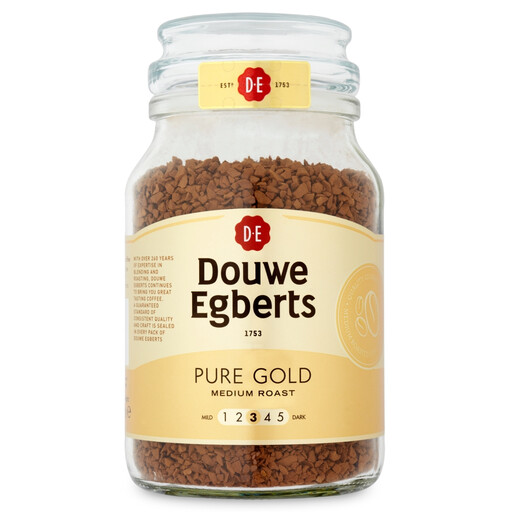 Image unavailable
For an instant-coffee breakfast, Sainsbury's identifies Pure Gold in this 190 g size as instant coffee. The product name specifies medium roast; check the label if caffeine content matters to you.
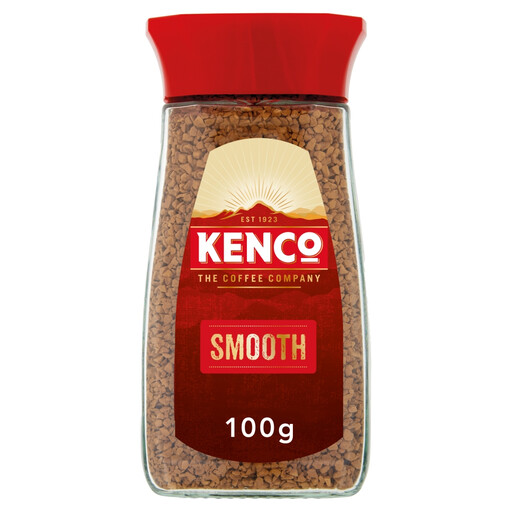 Image unavailable
This 100 g Kenco Smooth pack offers a smaller size to consider for a regular breakfast. Check its preparation instructions to confirm that it fits a hot-water-only routine.
 Image unavailable
The Decaff variant is a 300 g option for breakfast drinkers choosing decaf. Read the pack information for preparation and caffeine details relevant to your routine.
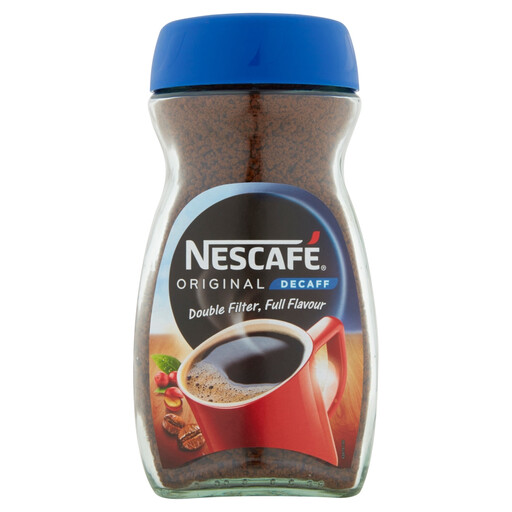 Image unavailable
This New Shape decaf variant is a 200 g alternative to the 300 g Decaff pack shown here. Check its preparation directions and caffeine information on the label.
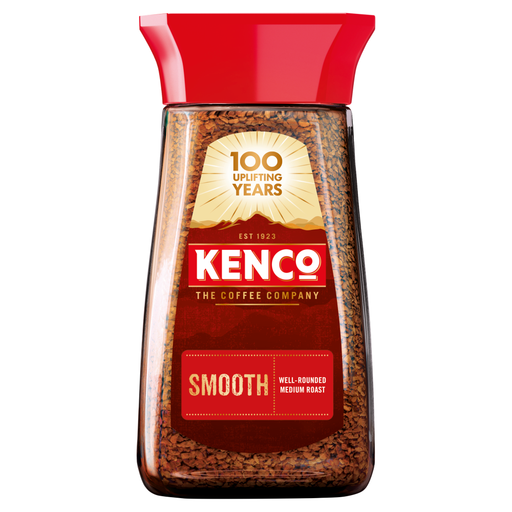 Image unavailable
This 200 g Kenco Smooth variant is labelled instant coffee, making its format relevant to a hot-water breakfast routine. Check the pack if its precise coffee composition matters to you.
No. Instant granules dissolve in hot water, whereas ground coffee needs brewing and coffee bags need infusion. For a breakfast made without a brewer or waiting for a bag, check that the jar is labelled instant or soluble coffee.
Compare the stated pack weights with how frequently you make coffee, and use a suggested serving size if the pack provides one. Do not assume that two jars of different weights provide the same number of cups.
Choose a jar if you also need a container; consider a refill if you already have one suitable for storing the coffee. Sainsbury's lists a 150 g Douwe Egberts Pure Gold refill with a suggested 1.6 g serving and 93 servings per pack.
A decaf instant product is an option for the same quick preparation routine, but the product label does not account for caffeine consumed elsewhere in the day. The NHS advises no more than 200 mg of caffeine a day during pregnancy and estimates 100 mg in a cup of instant coffee.