Breakfast cola drinkers watching sugar
If cola regularly accompanies breakfast, compare sugars per 100ml and the amount you intend to drink. A diet or zero-sugar label is a starting point; the nutrition panel tells you about the particular product.


If you have cola with a weekday breakfast and want to reduce sugar, choose a variety whose label shows no or very little sugar rather than a full-sugar cola. If you also want to avoid caffeine, choose one explicitly labelled caffeine-free. Check the serving size and ingredients: sugar-free fizzy drinks remain acidic, while water is a straightforward breakfast drink when you do not specifically want cola.
If cola regularly accompanies breakfast, compare sugars per 100ml and the amount you intend to drink. A diet or zero-sugar label is a starting point; the nutrition panel tells you about the particular product.
Choosing a diet cola does not necessarily avoid caffeine. Look for an explicitly caffeine-free variety, particularly if you are counting caffeine from other drinks during the day.
Switching to sugar-free cola does not remove its acidity. Northumbria Healthcare NHS Foundation Trust warns that sugar-free fizzy drinks can contribute to tooth erosion, so consider how often you sip them as well as which label you choose.
For a weekday breakfast, compare the sugar in the amount you will drink, then decide whether caffeine, acidity or particular ingredients change your choice.
| Priority | What to check | Your needs |
|---|---|---|
| Sugar | Read sugars per 100ml and the container size. Coca-Cola Great Britain lists 10.6g sugars per 100ml for Original Taste and 0g per 100ml for Zero Sugar; check the exact variety you buy. | I want cola at breakfast without choosing the sugar listed for a full-sugar version. |
| Caffeine | Check the product name and ingredients; zero sugar does not mean caffeine-free. The NHS advises no more than 200mg of caffeine a day during pregnancy, counting caffeine from other sources too. | If I am avoiding caffeine, I need a specifically caffeine-free cola rather than assuming a diet version has none. |
| Acidity | Consider both the drink and how often you sip it. Northumbria Healthcare NHS Foundation Trust notes that sugar-free fizzy drinks are still acidic and can cause tooth erosion. | When I have a drink throughout the morning, changing its sugar content alone does not address repeated exposure to fizzy cola. |
| Ingredients | Read the selected variety’s sweeteners and allergen information. Tesco lists barley malt extract and a gluten declaration for its Every Day Value Sugar Free Cola; its Diet Cola has a different ingredient list. | I need to check the precise product label when an ingredient, sweetener or allergen matters to me. |
Coca-Cola Zero Sugar, Pepsi Max and Tesco Diet Cola list caffeine, so a sugar-based choice may not fit a caffeine-limiting plan.
Choose a variety explicitly labelled caffeine-free and check its ingredients rather than relying on terms such as “diet” or “zero”.
Northumbria Healthcare NHS Foundation Trust says sugar-free fizzy drinks are still acidic and can cause tooth erosion.
If you have cola at breakfast, consider having it with the meal rather than repeatedly sipping it through the morning; keep water available as another drink.
Coca-Cola Great Britain lists 10.6g sugars per 100ml for Original Taste. The amount you drink determines its contribution alongside the rest of breakfast.
Compare the per-100ml figure with your actual can or bottle size. If reducing sugar is the aim, compare it with the nutrition panel of a diet or zero-sugar variety.
Tesco Diet Cola and Tesco Every Day Value Sugar Free Cola have different ingredient lists; the latter is labelled as containing gluten.
Check the current ingredients and allergen declaration when changing products or formats, even within the same retailer’s range.
These label examples show why the particular variety matters more than the brand name alone.
Coca-Cola Great Britain provides label information for Original Taste, Zero Sugar and Zero Sugar Caffeine Free, covering three distinct breakfast-cola choices.
Pepsi UK distinguishes caffeinated Pepsi Max from Pepsi Max No Caffeine for shoppers choosing between those formulations.
Tesco’s own-label examples illustrate why shoppers should compare individual diet and sugar-free cola labels.
These cola multipacks cover explicitly caffeine-free varieties and varieties for shoppers who are not avoiding caffeine. Compare the exact pack label before choosing one for breakfast.
 No image available
An explicitly no-caffeine option if you want cola with breakfast while avoiding caffeine. Check the current nutrition, sweetener and ingredient information for this exact pack.
 No image available
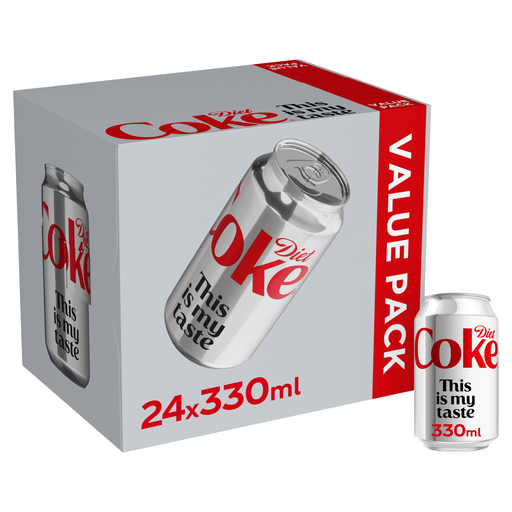
A diet-cola multipack to compare when reducing sugar is your breakfast priority. If you are limiting caffeine, check this variety’s ingredients rather than assuming “diet” means caffeine-free.
 No image available
An explicitly caffeine-free Pepsi Max variety for a breakfast-cola choice without caffeine. Check the exact pack’s sugar declaration and ingredients, including sweeteners, before buying.
 No image available
Pepsi UK lists Pepsi Max as a zero-sugar cola whose ingredients include caffeine. This 24 × 330ml pack therefore calls for a caffeine check if you are choosing your breakfast drink with your daily intake in mind.
 No image available
Coca-Cola Great Britain lists 0g sugars per 100ml for Zero Sugar and includes caffeine in its ingredients. This can format suits a sugar-focused comparison, but choose the separately named caffeine-free variety if avoiding caffeine matters.
If reducing sugar is the goal, compare the labels: Coca-Cola Great Britain lists 10.6g sugars per 100ml for Original Taste and 0g per 100ml for Zero Sugar. That difference does not make zero-sugar cola a replacement for breakfast food or remove the acidity of a fizzy drink.
No. Coca-Cola Zero Sugar, Pepsi Max and Tesco Diet Cola list caffeine. If you want to avoid it, choose a specifically labelled caffeine-free variety and check the ingredients of the exact product.
Caffeine in cola counts towards the daily total. The NHS advises no more than 200mg of caffeine a day during pregnancy, so check the drink’s caffeine information alongside other sources such as tea and coffee; a caffeine-free variety avoids caffeine from that cola.
No. Northumbria Healthcare NHS Foundation Trust says sugar-free fizzy drinks remain acidic and can cause tooth erosion. Consider how often you sip cola through the morning, not only what its sugar label says.
Check sugars, caffeine, sweeteners and the allergen declaration for the particular variety. Tesco Diet Cola lists caffeine, while Tesco Every Day Value Sugar Free Cola contains barley malt extract and is labelled as containing gluten; their ingredients should not be treated as interchangeable.