
24/7 Customer Support

Free returns

Same-day & Next-day Delivery

Quality Guaranteed

Unlock Your Welcome Offers: FREE Delivery | Up to 80% OFF | Free 30-day JoyPlus trial
Download the APP
For breastfeeding and pumping parents, the right breast milk storage bags can make expressing, freezing and organising milk considerably easier. However, a low price or a long feature list does not always mean better everyday value. A bag that is awkward to fill, difficult to label or prone to leaking may create unnecessary waste and mess.
This guide explains the practical details to check before buying, including capacity, closures, materials, freezer storage and temperature indicators.
Milk expands when frozen, so a bag can leak if it is overfilled or if the seal is not fully closed. Look for features such as a double zip-lock, reinforced seams or a double-seal system. These details can help, but they do not remove the need to leave expansion space and check each bag for damage.
A large bag may appear economical, but unused milk can lead to waste if your baby usually takes smaller feeds. Conversely, very small breastmilk storage bags may require several bags per pumping session. Common useful capacities include approximately 180ml to 220ml, while some parents may prefer smaller portions for early feeds.
Always check whether the advertised capacity is the maximum fill level. Do not fill beyond the marked line, particularly before freezing.
Pre-sterilised breast milk bags are convenient because they are supplied ready for use, but hands, pumps and work surfaces still need to be clean. Follow the manufacturer’s instructions and current NHS or other appropriate UK infant-feeding guidance for expressing, chilling, freezing, thawing and using milk.
Also check whether the bags are disposable breast milk storage bags or designed for repeated use. A single-use bag should not be washed and reused simply because it appears intact.
Look for clearly stated materials and product information. Many BPA-free breast milk storage bags use polyethylene or a polyethylene/polypropylene laminate. Some products also state that they are free from BPS and phthalates.
“BPA-free” describes a material characteristic; it does not by itself confirm that a product is suitable for every use. Check the packaging for instructions covering contact with breast milk, freezer compatibility, heating and disposal. Avoid microwaving or boiling storage bags unless the manufacturer specifically states otherwise. The products featured here instruct users not to heat milk directly in the bag using a microwave or boiling water.
A well-designed bag should be straightforward to fill without spilling. Consider:
Some leakproof breast milk bags stand upright in the refrigerator but lie flat in the freezer. This combination can be useful when freezer space is limited.
Certain temperature-sensing breast milk bags use a colour-changing strip. For example, the Momcozy options listed here indicate cold below 36°C, a stated feeding range between 36°C and 40°C, and hot above 40°C. This is a visual guide supplied as part of the bag’s design, not a replacement for safe food-handling procedures or a separate thermometer.
When thawing or warming expressed milk, follow the product instructions and applicable UK guidance. Check the milk before feeding rather than relying solely on a colour indicator.
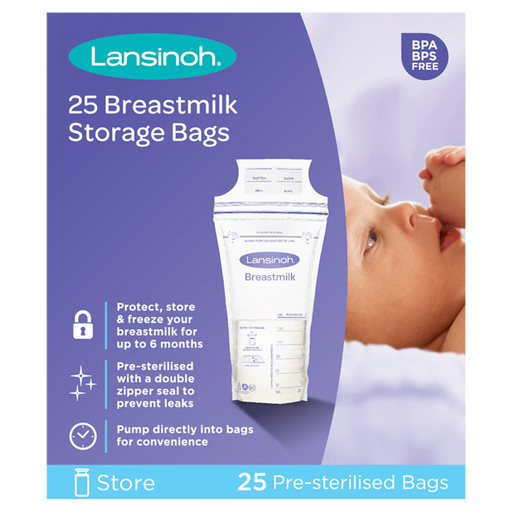
Why This Fits Their Persona: A 25-pack with 180ml capacity suits parents who are starting to express and want a manageable supply of disposable breast milk storage bags before committing to a larger pack.
The pre-sterilised polyethylene bags include a double zip-lock and writable area, addressing common concerns about sealing and date tracking.
180ml individual capacity; compact, stackable design; BPA-free, BPS-free and phthalate-free material information.
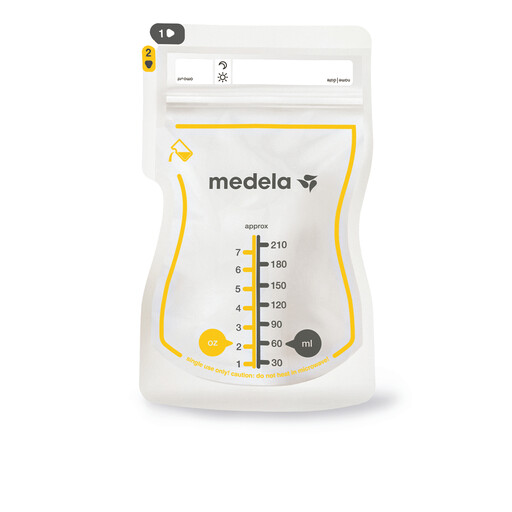
Why This Fits Their Persona: Suitable for parents who prioritise convenient transferring and organised storage during frequent pumping at home or while travelling.
The wide opening, separate pour spout and double zipper reduce reliance on improvised pouring and single-point closure.
50-pack; flat-freezing and self-standing storage; BPA-free material; included resealable transport pouch.
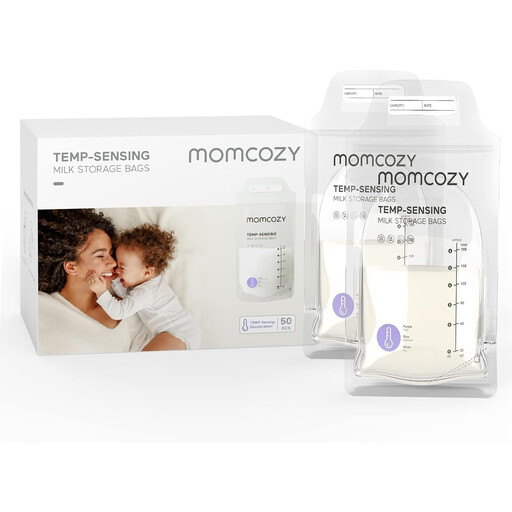
Why This Fits Their Persona: A larger pack is practical for parents expressing regularly and building a sizeable supply, while the colour indicator adds a quick visual reference during preparation.
The 6oz/approximately 180ml capacity, double zipper and separate import/export design address overfilling, leakage and transfer-handling concerns.
120 bags; pre-sterilised and BPA-free; can be stored flat or upright; temperature-sensing colour strip.
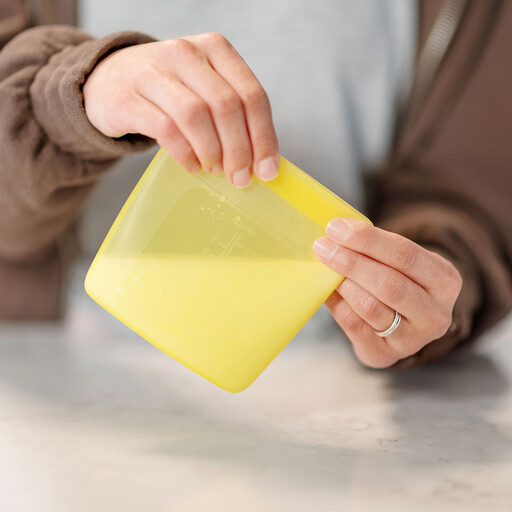
Why This Fits Their Persona: Parents who prefer reusable breast milk storage bags and are comfortable washing and sterilising after every use may value the silicone format.
Unlike disposable breast milk storage bags, these are intended for repeated use, with an inspection step for cracks, tears and loose seals before each use.
220ml capacity; platinum silicone construction; self-standing and stackable; stated support for up to 500 uses per bag.
We have compiled a complete, real-time list of products that fully satisfy these strict selection criteria and UK safety regulations.
It depends on the product. Disposable breast milk storage bags are intended for one use only. Reusable breast milk storage bags, such as silicone models, must be washed, rinsed and sterilised according to the instructions after each use. Replace them if the material or seal shows damage.
Many breast milk freezer bags are designed for freezing, but always check the label. Leave expansion room, remove excess air where instructed and seal the closure fully. A flat-freezing design can help maximise limited freezer space.
They are optional. A colour strip may provide a convenient visual indication, but it should not replace safe thawing, warming and handling practices. Parents who prefer a simpler format may find labelled pre-sterilised breastmilk storage bags sufficient for their routine.