
24/7 Customer Support

Free returns

Same-day & Next-day Delivery

Quality Guaranteed

Unlock Your Welcome Offers: FREE Delivery | Up to 80% OFF | Free 30-day JoyPlus trial
Download the APP
Expressing breast milk can make feeding more flexible, whether you are returning to work, sharing feeds with a partner or preparing milk for a childminder. The right breast milk storage bags should make storage straightforward rather than create extra cleaning, labelling or freezer-management problems.
However, product descriptions can make similar breast milk bags appear identical. A low price may hide single-use limitations, while features such as “leakproof” or “temperature sensing” still depend on correct filling, sealing and handling. Before buying, check the points below to avoid waste and unnecessary stress.
Terms such as “leakproof”, “secure” or “zero contamination” describe a design intention, not a substitute for careful use. Seals can fail if a bag is overfilled, damaged, poorly closed or compressed by other frozen items.
Look for practical construction details, including:
Even well-designed leakproof breast milk bags should be placed in a clean container or freezer tray during initial freezing. This helps contain spills if a seal is not fully closed.
A 120-pack may suit frequent expressing, but it can be wasteful if you only store occasional portions. Conversely, a small pack may become expensive when used every day.
Compare the cost per bag, capacity and intended lifespan. Disposable breast milk storage bags are convenient for quick storage, while reusable breast milk storage bags require washing and sterilising after each use. Reusable options may suit regular home use, but only if you are prepared to maintain them properly.
Storage and heating are separate steps. Many breast milk freezer bags should not be microwaved or placed in boiling water. Uneven heating can create hot spots, and heat may damage the bag material.
Follow the product instructions and your NHS, midwife or health visitor guidance for expressed milk storage, thawing and feeding. A bag that supports freezing is not automatically suitable for direct heating.
Choose a size that reflects your usual expressed milk portions. Common options range from compact bags for smaller feeds to approximately 180–220 ml capacities.
A flat-freezing design can make breast milk bags for freezing easier to organise. Check whether the bag can also stand upright in the fridge. Self-standing storage is useful when filling, while stackable or flat designs help make better use of a crowded freezer drawer.
Remember to leave room at the top when freezing. Liquid expands, so filling to the printed maximum may increase pressure on the closure.
Look for clear material information rather than relying only on broad marketing language. The products below list features such as BPA-free, BPS-free or food-contact materials, but you should still read the packaging and directions before use.
For single-use bags, confirm that the product is pre-sterilised if that is important to your routine. Reusable bags should state how to clean and sterilise them, and they must be checked regularly for cracks, weakened seals or other damage.
Avoid storing expressed milk in a bag with an unusual odour, visible defect or unclear usage instructions.
Breast milk storage bags with labels help you record the date and volume, making it easier to use older portions first. A writable area is particularly useful when several bags are stored together.
Wide openings and dedicated pour spouts can reduce spills during filling or transfer. Still, hold the bag securely and seal it from one end to the other. A temperature indicator may offer an additional visual reference, but it should not replace safe temperature handling or checking the milk before feeding.
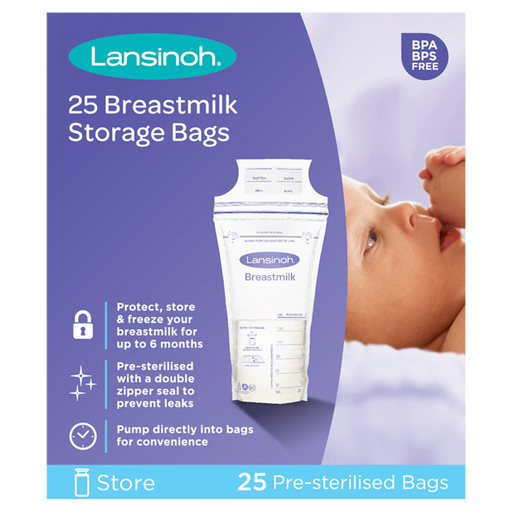
Why This Fits Their Persona: A 25-pack offers a manageable starting point for parents who express occasionally or want to establish a modest supply without committing to a large quantity.
The listed double zip-lock closure, writable tabs and pre-sterilised construction address common concerns about leaks, unidentified portions and preparation time.
180 ml capacity; compact, stackable format; listed BPA-free, BPS-free and phthalate-free polyethylene.
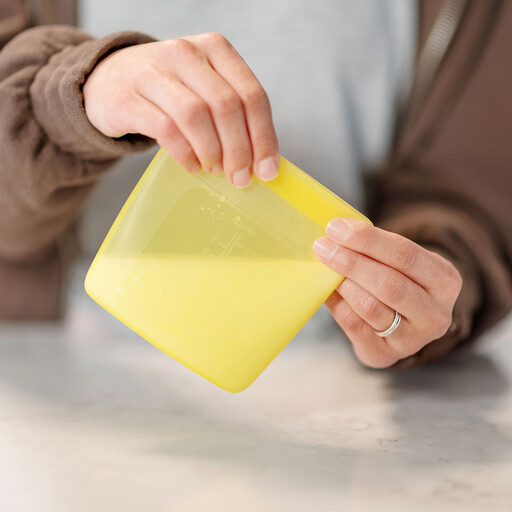
Why This Fits Their Persona: Parents who express regularly at home may prefer a reusable format with a defined capacity and a cleaning routine they can manage.
Its stated double-seal closure, self-standing shape and inspection guidance help counter leakage and awkward filling. Reuse is only suitable when bags are washed and sterilised as directed.
220 ml marked capacity; platinum silicone construction; writable labels; stated support for fridge and freezer storage.
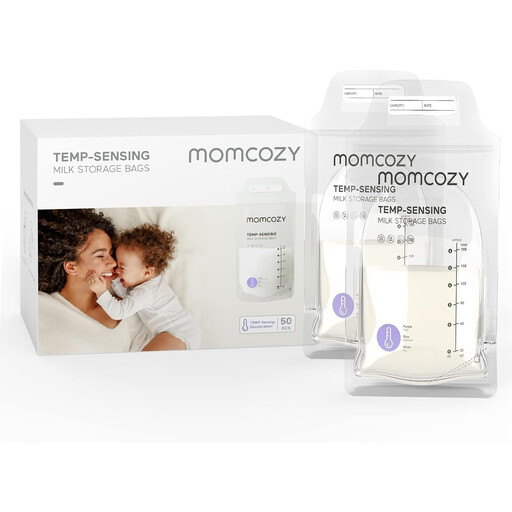
Why This Fits Their Persona: A larger pack suits frequent expressing, while the 6 oz capacity and flat-or-upright storage offer flexibility for freezer planning.
The double zipper, double-sealed side seams and separate milk import/export design address several handling and storage concerns. The colour sensor remains a guide, not a replacement for safe temperature checks.
120 disposable bags; BPA-free and BPS-free materials listed; temperature-indicator colour changes; flat or upright freezing.
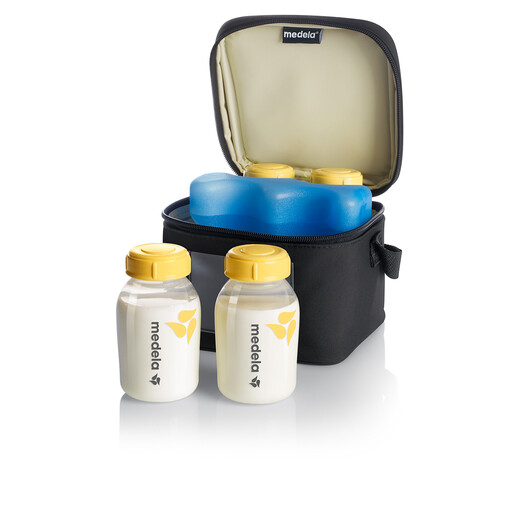
Why This Fits Their Persona: A practical option for commuting to work, travelling or taking expressed milk to nursery, with bottles and a cooling element included.
The insulated cooler bag and contoured ice pack provide a defined transport setup, while the warning makes clear that it is not a refrigerator or long-term storage solution.
Four 150 ml BPA-free bottles; removable cooling element; insulated tote format for transport.
We have compiled a complete, real-time list of products that fully satisfy these strict selection criteria and UK safety regulations.
It depends on the product. Disposable breast milk storage bags should not be reused. Reusable silicone bags are designed for repeated use but require thorough washing, rinsing, drying and sterilisation according to their instructions. Inspect the closure and material before every use.
Many breast milk freezer bags are designed for freezing, but check the individual product directions. Leave room for expansion, seal the bag securely and consider placing it in a tray or container while it freezes flat.
A breast milk cooler bag can be useful when transporting expressed milk from work, nursery or another location. It helps keep bottles or containers cool when used with the supplied ice pack, but it is not a replacement for a fridge or freezer. Move the milk into suitable refrigerated storage as soon as practical.