
24/7 Customer Support

Free returns

Same-day & Next-day Delivery

Quality Guaranteed

Unlock Your Welcome Offers: FREE Delivery | Up to 80% OFF | Free 30-day JoyPlus trial
Download the APP
Expressing milk can make feeding routines more flexible, but choosing the wrong breast milk storage bags may lead to leaks, wasted milk and a freezer that is difficult to organise. Packaging can highlight features such as “extra strong” seals or temperature indicators, yet the useful question is whether the design suits your pumping routine.
Three common purchasing pitfalls deserve attention:
For reliable everyday storage, look for double-zip closures, reinforced seams and a design that leaves room for expansion when milk freezes. No bag should be filled to its stated maximum if the instructions require additional space.
A flat-freezing shape is useful for UK fridge-freezers because it allows bags to stack neatly and thaw more evenly. A self-standing base can also make filling and short-term refrigerator storage easier. However, standing bags can take more shelf space, so consider whether you mainly freeze milk or use it within a short period.
Before storing, check that the seal is fully closed and inspect the bag for damage. Place frozen bags where they are unlikely to be crushed by heavier items.
Many parents search for BPA-free breast milk storage bags, but BPA-free wording should be considered alongside the complete material description and usage instructions. The products in this guide specify materials such as polypropylene, polyethylene or platinum silicone, with several also listed as BPS-free or phthalate-free.
Pre-sterilised breast milk bags can be convenient for direct use, particularly during night feeds, travel or busy pumping days. Reusable bags require a different routine: they must be washed, dried and sterilised according to the manufacturer’s instructions after each use. Disposable breast milk storage bags should not be washed and reused unless the product instructions specifically allow it.
Do not microwave breast milk inside a storage bag. Follow the product instructions for thawing and warming, and check the milk temperature before feeding.
Choose a capacity that reflects the portions you usually express. Smaller portions can reduce waste when a baby takes variable amounts, while larger bags may suit parents building a supply.
A wide opening helps prevent spills during filling. A dedicated pouring spout or separate dispensing outlet may also reduce the need to touch the inside of the bag. Write the date and volume on every bag, then organise stored milk so that the oldest suitable portion is used first, following current NHS or healthcare-professional guidance.
For parents who prefer containers rather than pouches, breast milk storage bottles can be useful for direct expression, refrigeration and repeated use. Check pump compatibility before ordering.
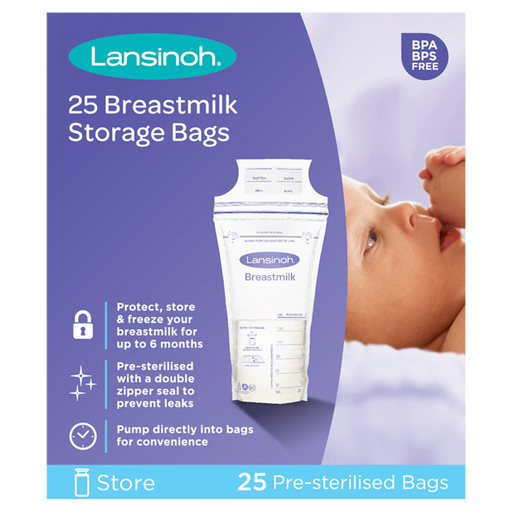
Why This Fits Their Persona: A smaller pack suits parents who are starting to express, want to try a format first or need disposable bags for occasional use at home.
The bags have a double zip-lock closure, writable tabs and a stackable shape, addressing common problems with labelling, leaks and freezer organisation.
180ml individual capacity; pre-sterilised, BPA-free, BPS-free and phthalate-free polyethylene construction.
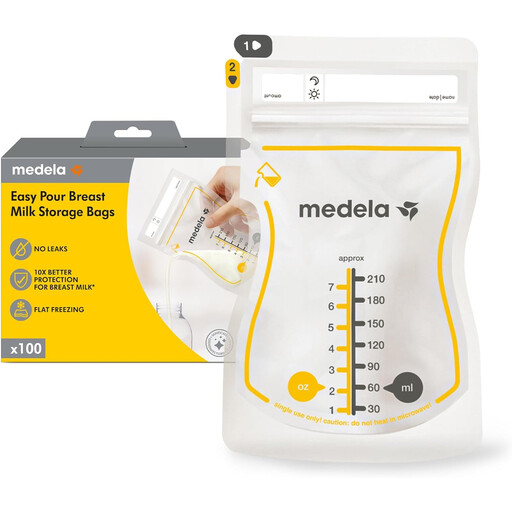
Why This Fits Their Persona: Suitable for parents who regularly pump and want a larger supply of disposable bags with storage and pouring features built into the design.
The double-layer and double-zipper construction is designed for added leak protection, while the wide opening and secondary spout help limit spills during transfer.
100-bag pack; BPA-free recyclable material; flat-freezing and self-standing options.
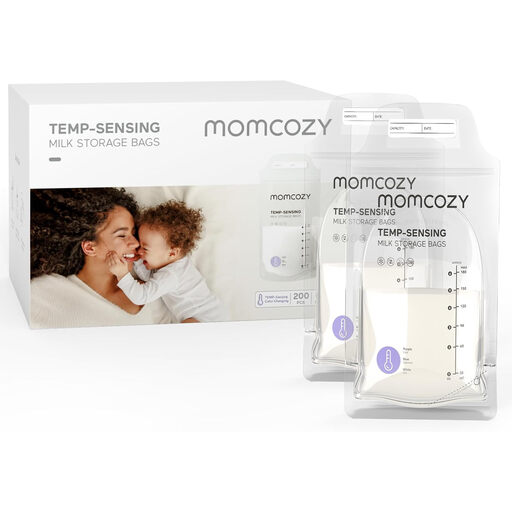
Why This Fits Their Persona: A high-volume option for parents building a milk supply, preparing regular portions or managing frequent pumping sessions.
A large write-on label, double zipper and separate inlet and outlet support organised, hygienic handling. The temperature strip should be treated as a visual guide, not a substitute for safe handling.
200 pre-sterilised bags; 180ml capacity; designed for flat freezing or upright refrigerator storage.
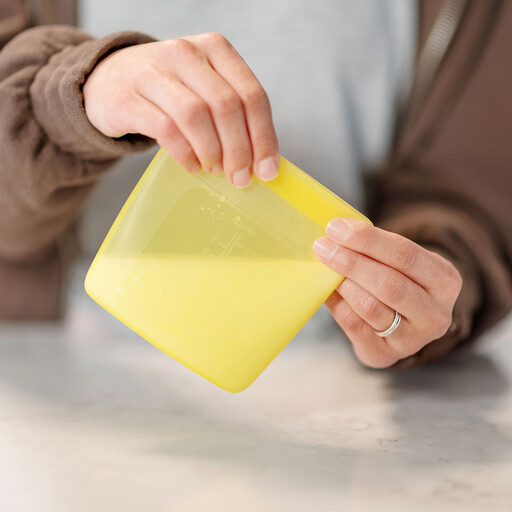
Why This Fits Their Persona: Practical for parents who express frequently at home and are prepared to clean and sterilise storage bags after every use.
Its reusable format avoids relying entirely on disposable pouches, while the double-seal closure and inspection instructions help address leakage and wear concerns.
220ml capacity; platinum silicone construction; self-standing and stackable design.
We have compiled a complete, real-time list of products that fully satisfy these strict selection criteria and UK safety regulations.
Storage bags are only one part of a workable setup. Breast milk storage bottles can be preferable for direct pumping and repeated fridge use, provided they fit your pump and are suitable for freezing. A breast milk cooler bag with a properly frozen cooling element is useful for commuting to work, nursery drop-offs or travel, but it is not a replacement for a refrigerator.
A wearable breast pump may suit parents who need cordless expression at home or while travelling. Check flange sizing, cleaning requirements, battery operation and whether the milk collector can be transferred easily into a suitable bag or bottle.
Most disposable breast milk storage bags are intended for single use only. Reusable breast milk storage bags, usually made from silicone, must be washed, dried and sterilised as directed. Discard any bag showing cracks, punctures, stretched seals or other damage.
Many are designed for freezer use, particularly those that can lie flat. Leave room for milk expansion, seal the bag securely and label it before freezing. Always check the individual product instructions, as not every storage pouch is suitable for freezing.
The answer depends on how often you express. Disposable bags usually require less washing and storage space, while reusable bags or bottles can reduce the number of single-use items over time. Compare the purchase price with cleaning time, available freezer space and your expected pumping frequency before choosing.