
24/7 Customer Support

Free returns

Same-day & Next-day Delivery

Quality Guaranteed

Unlock Your Welcome Offers: FREE Delivery | Up to 80% OFF | Free 30-day JoyPlus trial
Download the APP
Expressing and storing milk can make feeding more manageable at home, work, nursery or while travelling. However, buying the wrong combination of breast milk storage bags, bottles, cooling equipment and warming accessories can create unnecessary waste, leaks and extra cleaning.
The product description is not always the full story. A large pack may be unsuitable if each pouch is too big for your usual feeds, while a compact cooler may not meet your routine if you commute for several hours. This guide explains the practical specifications to check before choosing breast milk storage and feeding essentials.
A breast milk cooler bag or portable cooler is designed to keep sealed milk cool during transport. It is not a replacement for a refrigerator or freezer. Cooling performance also depends on fully freezing the ice pack or cooling tube, closing the bag securely and limiting how often it is opened.
Check:
A 200-pack may appear economical, but capacity and handling matter more than quantity. Smaller disposable breast milk bags can suit individual feeds and freezer organisation, while larger bags may be useful for parents who regularly express higher volumes.
Look for:
Do not fill bags or bottles to the top before freezing, as milk expands. Always follow the manufacturer’s instructions and current UK infant-feeding guidance for storage times and temperatures.
Some temperature-sensing bags use a colour-changing strip. For example, selected Momcozy bags indicate cold, an indicated feeding-temperature range or higher temperatures through different colours. This can help with quick visual checking, but it does not replace careful thawing, warming and checking the milk before feeding.
Never microwave breast milk or heat a sealed storage bag in boiling water. Uneven heating can create hot spots, and some bags are not designed for direct heating.
Choose products made from clearly stated, food-contact materials. BPA-free milk storage products are widely available, including polypropylene bottles, polyethylene storage pouches and silicone reusable bags. BPA-free does not remove the need for cleaning and inspection.
For reusable items, check:
Pre-sterilised disposable bags can reduce preparation before use, but they should still be handled with clean hands and stored according to the packaging instructions.
Match capacity to your typical expressed amount. Common options in this range include 150ml bottles, 180ml bags, 220ml reusable bags and 250ml bottles. Smaller portions can reduce waste when your baby does not finish a larger serving.
If you use a breast pump, check whether the bottle connects directly to the pump or requires an adaptor. Direct expression can reduce pouring steps, but compatibility is not universal. Also check whether the bottle warmer accepts the bottle shape and storage pouches you already use.
A breast milk bottle warmer should offer clear controls, stable placement and automatic shut-off or a timed warming function where specified. Water-bath warming is commonly used for gradual heating, but the milk still needs to be mixed gently and tested on the wrist before feeding.
For cooling products, compare the number of included bottles, cooling-element design and carrying format. A compact set may suit a short commute, while a larger cooler may be more practical for a full day away from home.

Why This Fits Their Persona: A 50-pack gives new pumping parents an opportunity to establish a storage routine without committing to a larger quantity. The 6oz capacity suits individual portions and the bags can stand upright or freeze flat.
The marked capacity, write-on area and double-seal design address overfilling, unidentified milk and avoidable leakage.
Pre-sterilised, BPA-free and BPS-free material; temperature-sensing strip and flat-freezing format.
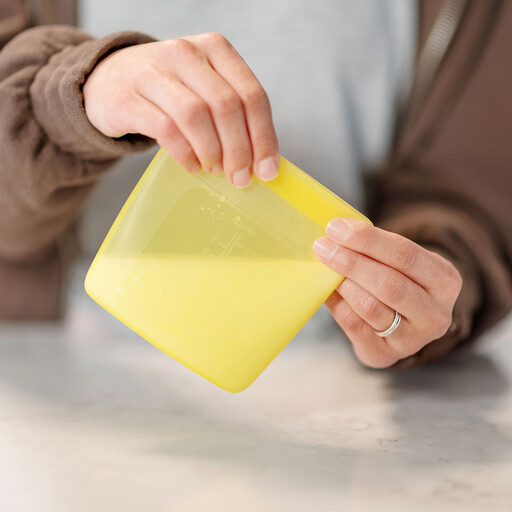
Why This Fits Their Persona: Parents prioritising reusable breastfeeding accessories may prefer platinum silicone bags with volume markings, labels and a self-standing shape for regular fridge and freezer organisation.
The reusable format reduces reliance on disposable pouches, while the 220ml limit makes portion planning clearer.
Supports repeated use according to the product description; suitable for refrigerator and freezer storage.
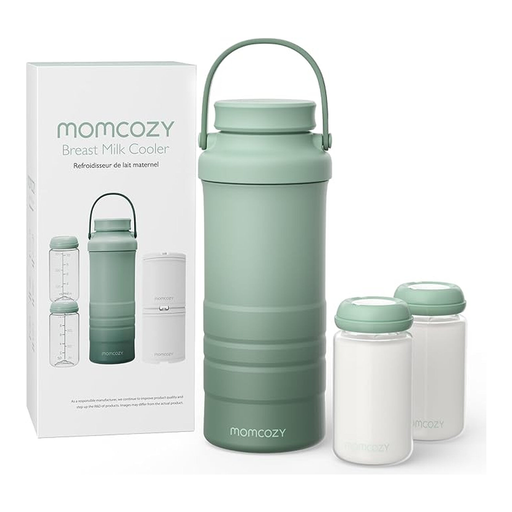
Why This Fits Their Persona: A larger-capacity portable cooler is suited to parents transporting expressed milk during outdoor trips, extended commutes or nursery journeys.
It includes two separate bottles and a pre-freeze cooling tube, making the cooling process clearer than relying on an unprepared insulated bag.
22oz/650ml stated capacity; food-grade BPA-free materials and a cooling tube designed for extended cooling.

Why This Fits Their Persona: Parents preparing feeds at night may value one-button operation, a built-in night light and a water-bath warming method.
The automatic shut-off and timed keep-warm functions provide clearer operation than improvised heating methods.
BPA-free construction; warming, keep-warm function and built-in night light.
We have compiled a complete, real-time list of products that fully satisfy these strict selection criteria and UK safety regulations.
Before using any item, make sure you:
Most disposable breast milk bags are designed for one use only and should not be washed or refilled. Reusable breast milk storage bags made from silicone can be cleaned and used repeatedly, but inspect the material and seal before each use. Follow the specific cleaning, sterilisation and replacement instructions.
Some bottle warmers are designed for breast milk and use a water bath. Check compatibility with your bottle or pouch, use the stated settings and test the milk before feeding. Do not heat breast milk in a microwave, even when using a BPA-free milk storage bottle.
A practical kit may include a breast pump, spare pump parts, storage bags or bottles, labels, a breast milk cooler bag and a suitable cooling element. If feeds will be prepared away from home, add a compatible bottle warmer and clean feeding bottles. Select quantities based on the length of your journey and access to refrigeration.