
24/7 全天候客户支持

免费退货

当日/次日达

品质保障

开启新人专享福利: 全场免邮 | 低至 2 折 | 免费试用 30 天 JoyPlus 会员
下载 Joybuy
Choosing between different brooms can seem straightforward until dust escapes around the bristles, pet hair stays embedded in carpet or an outdoor brush handle begins to loosen. The right design depends on the surface, debris and storage space available in your home.
This guide from the Joybuy Product Recommendation Officer explains the main buying pitfalls, the specifications worth checking and which broom types suit common UK households, renters, pet owners, gardeners and commercial users.
Soft bristles can be suitable for indoor dust and crumbs but may struggle with wet leaves, gravel and compacted soil. Conversely, a stiff outdoor broom can feel too harsh or unwieldy on delicate indoor flooring.
Check whether the product is intended for tiles, laminate, vinyl, carpet, patios, decking or driveways. A single broom may handle several surfaces, but its performance will still depend on the material and bristle structure.
A broom with a handle that is too short can encourage awkward bending, while a poorly connected long handle may wobble during use. Telescopic designs offer flexibility, but the adjustment mechanism should lock securely.
For example, the Vileda Duactiva Indoor Broom adjusts from 75cm to 130cm, while the emmama rubber broom extends from 84cm to 159cm. These ranges may suit different users, but buyers should still check the closed and extended lengths against their height and storage area.
A wide head covers more ground per pass, which is useful on patios and driveways. However, it may be less practical in narrow hallways, around furniture or inside small bathrooms. A 45cm outdoor broom can save time across a large paved area, but an indoor broom with an angled head may provide better control around skirting boards and corners.
For an indoor broom, look for bristles that collect fine dust without scattering crumbs. Foam barriers, rubber edges or multiple fibre types can help gather different sizes of debris.
For outdoor cleaning, polypropylene and nylon bristles are commonly used for their stiffness and resistance to regular sweeping of leaves, mud and gravel. A heavy-duty broom should also have a firm head-to-handle connection, particularly when used on uneven surfaces.
A rubber broom or silicone broom may be more suitable for collecting pet hair, lint and damp debris. Flexible rubber edges can also push liquid across smooth floors when combined with a squeegee design.
A wider head is useful for driveways, paths and commercial walkways. Angled heads can improve access along edges, under units and into corners. For indoor use, consider the balance between coverage and manoeuvrability.
A corner-cleaning broom may have tapered or angled bristles at the tip. This feature is particularly useful where dust gathers beside skirting boards, behind doors and beneath furniture.
Look for a handle that is long enough for comfortable sweeping and secure enough for repeated use. Multi-section metal handles can provide reach for outdoor work, while adjustable handles make it easier to share a broom between household members.
Storage features also matter in smaller UK homes. An integrated hanging hook can keep an outdoor brush off the floor and allow it to dry after wet cleaning. Always tighten connected sections before use and inspect the handle periodically for loosening or damage.
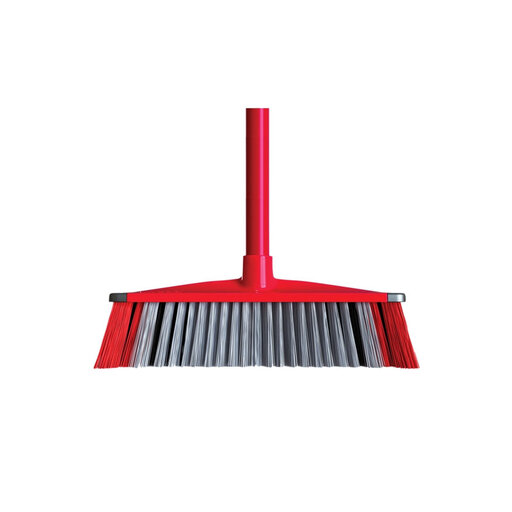
Why This Fits Their Persona: A practical choice for renters and households wanting one indoor floor brush for tiles, laminate, vinyl and sealed hard floors.
Its triple-fibre design is intended to handle fine dust, larger debris and stubborn dirt, while angled bristles address edges and corners.
100% recycled PET bristles; rubber bumpers help protect walls and furniture during everyday sweeping.
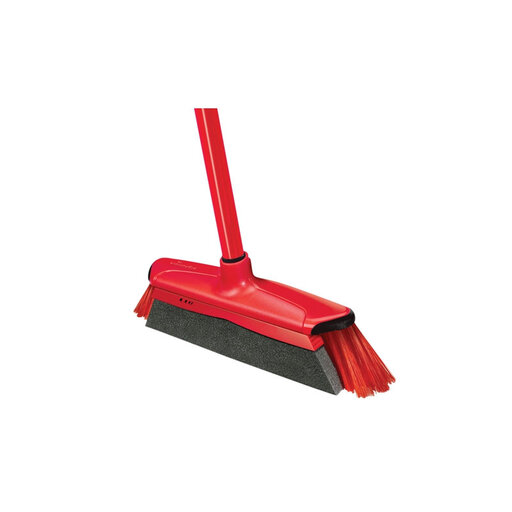
Why This Fits Their Persona: Suitable for households prioritising controlled dust collection and adjustable handling in living rooms, kitchens and hallways.
The foam layer is designed to reduce dust spread, while the removable anti-dust barrier makes cleaning the head more straightforward.
Adjustable 75–130cm telescopic handle; hardened angled bristles help reach edges and corners.
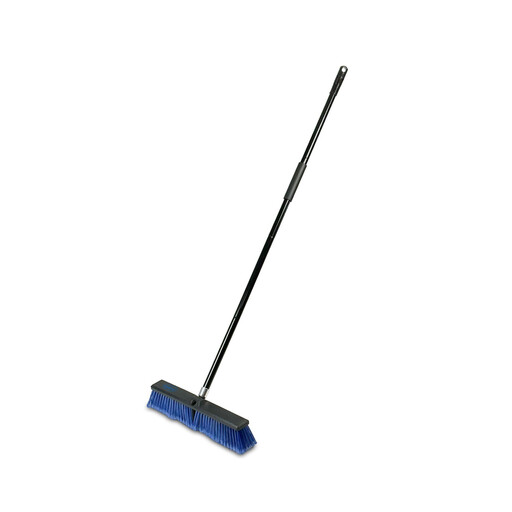
Why This Fits Their Persona: A practical match for gardeners, homeowners and commercial users clearing patios, paths, decking, garages and driveways.
The 45cm head provides broad coverage, while stiff polypropylene and nylon bristles are specified for leaves, soil, gravel, mud and stubborn debris.
136cm assembled height; four-piece metal handle and integrated hanging hook support outdoor storage and reach.
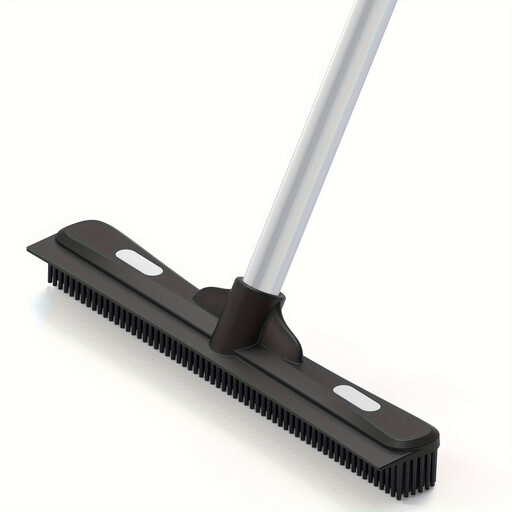
Why This Fits Their Persona: Designed for homes dealing with pet hair on carpets and hard floors, as well as liquid spills in kitchens and bathrooms.
The flexible rubber head is specified to lift hair, lint and dust, while the integrated squeegee edge handles liquid on smooth surfaces.
Adjustable 84–159cm handle; rubber head can be washed with water and mild soap.
We have compiled a complete, real-time list of products that fully satisfy these strict selection criteria and UK safety regulations.
A pet hair removal broom with flexible rubber bristles can gather hair and lint from carpets and hard floors. A rubber head may also be easier to wash than traditional fibre bristles. For larger amounts of hair, use short, controlled strokes and clear the head regularly.
A rubber broom with an integrated squeegee edge can push water across smooth bathroom floors. It is important to check that the surface is compatible and to use care on wet or slippery areas. Dry the head after cleaning to help maintain hygiene and storage condition.
Lifespan depends on frequency of use, surface type, storage and construction. Outdoor sweeping over gravel or rough paving can wear bristles more quickly than light indoor dusting. Regularly inspect the head and handle, avoid excessive force and replace the broom when bristles become permanently distorted or connections no longer remain secure.