
24/7 Customer Support

Free returns

Same-day & Next-day Delivery

Quality Guaranteed

Unlock Your Welcome Offers: FREE Delivery | Up to 80% OFF | Free 30-day JoyPlus trial
Download the APP
Changing your hair to a rich, vibrant brown should be an exciting prospect. Yet, the aisle of at-home hair colour can be a confusing place. With boxes promising flawless results, it’s easy to end up with a shade that’s too dark, a colour that doesn’t cover greys or hair that feels drier than before. Many find themselves disappointed when the glossy image on the packaging doesn't translate to their own mirror.
As the Joybuy Product Recommendation Officer, my role is to help you navigate these choices. We'll look past the marketing hype and focus on what truly matters for achieving a great at-home hair colour. Let's break down the common pitfalls UK shoppers face and how to avoid them.
To ensure you pick the right brown hair dye, it’s essential to understand a few core parameters. These details determine the longevity, appearance and impact on your hair's condition.
The first decision is how long you want the colour to last. This choice directly impacts your hair care routine and suitability for covering greys.
Permanent Brown Hair Dye: This type of colour is designed to last until your hair grows out. It works by using an oxidising agent to open the hair's cuticle, allowing colour pigments to penetrate deeply. This makes it the most effective option for a significant colour change or for achieving reliable, best brown hair dye for grey coverage. You will need to perform root touch-ups every 4-8 weeks as your natural hair grows in.
Semi-Permanent Brown Hair Dye: If you're looking for a lower-commitment option, a semi-permanent colour is ideal. It deposits colour onto the surface of the hair shaft and typically lasts for up to 28 washes. It's perfect for enhancing your natural shade, adding gloss or blending away the first signs of grey hair. Because it fades gradually, you avoid a harsh root line.
Ammonia has long been a standard ingredient in permanent hair colour for its effectiveness in opening the hair cuticle. However, it's also responsible for the strong chemical smell and can be irritating for some.
The numbers on the box are a universal code that tells you everything about the colour inside.
Based on these practical considerations, here are a few at-home hair colour options suited to different needs and preferences.
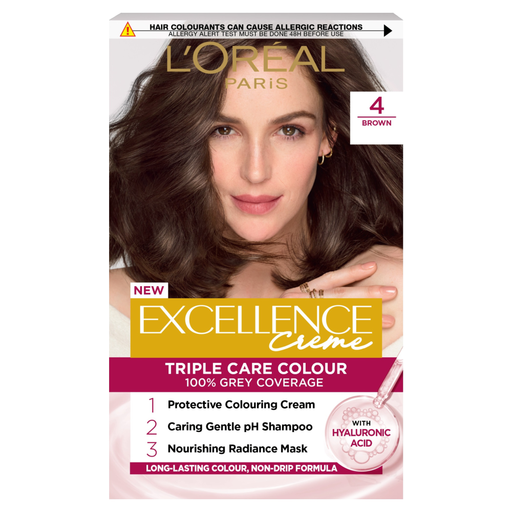
Why This Fits Their Persona: This user's primary goal is to achieve full, lasting coverage of grey hair. They need a reliable permanent brown hair dye that won't fade on resistant strands and provides a natural-looking, not-flat, finish.
It directly counters the "perfect coverage" trap by offering a formula designed for up to 100% grey coverage. The "Triple Care Colour Ritual," including a protective cream and nourishing mask, addresses the concern that effective dyes must be damaging.
The kit includes a protective colouring cream, a gentle pH shampoo and a nourishing mask. Its non-drip crème formula makes for a cleaner, more controlled at-home application.
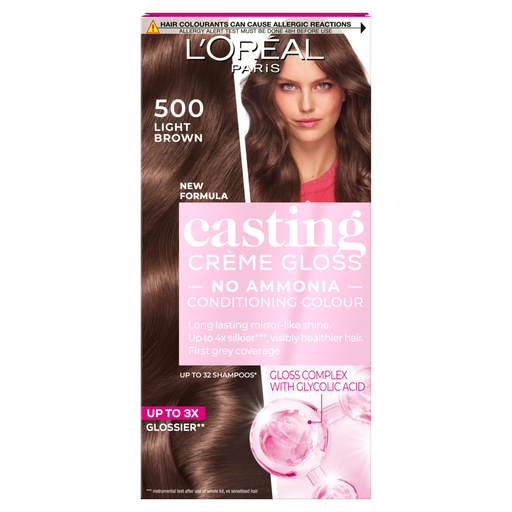
Why This Fits Their Persona: This individual wants to enhance their natural colour, add shine or blend first greys without the long-term commitment of permanent dye. They prioritise hair health and a gentle application process.
It avoids the harshness of permanent dye by being a semi-permanent brown hair dye. The ammonia-free formula directly addresses the "nourishing" promise trap, focusing on conditioning and shine rather than just colour deposit.
The colour lasts for up to 32 shampoos, fading gradually to prevent harsh root lines. Its formula includes a gloss complex with glycolic acid, designed to leave hair feeling silky and looking shiny.
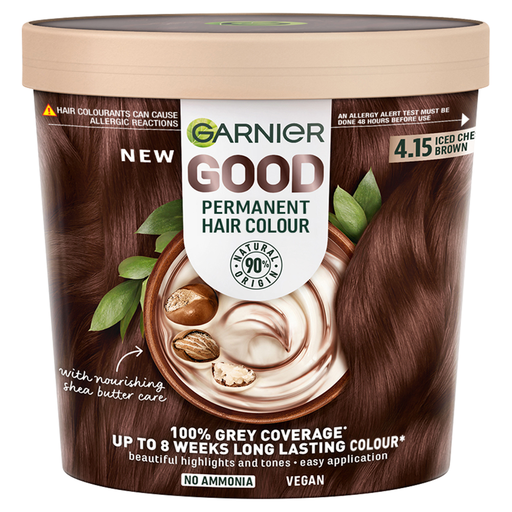
Why This Fits Their Persona: This user wants the longevity of a permanent colour but is conscious of ingredients. They look for formulas that are gentler on the hair and scalp, preferring those with a higher proportion of natural-origin ingredients.
This product avoids the harsh chemical trap by being an ammonia-free permanent dye with a stated 90% natural origin formula. It delivers on the "nourishing" promise with the inclusion of Shea Butter, while still providing 100% grey coverage.
The formula is vegan and designed for a pleasant application with a non-drip texture and gentle fragrance. It provides up to 8 weeks of colour and is enriched with Shea Butter for hair conditioning.
We have compiled a complete, real-time list of products that fully satisfy these strict selection criteria and UK safety regulations.
For permanent brown hair dye, it's generally recommended to touch up your roots every 4 to 6 weeks, depending on how fast your hair grows. Avoid reapplying permanent colour to the full length of your hair every time, as this can cause damage and colour build-up. For semi-permanent brown hair dye, you can reapply more frequently, perhaps every 3 to 6 weeks, as the colour fades. Always listen to your hair; if it feels dry or brittle, give it a break and use deep conditioning treatments.
Applying a dark brown hair dye directly onto bleached or very light hair can sometimes result in an undesirable muddy or greenish tone. This is because bleached hair has been stripped of its natural underlying warm pigments. To get a rich, natural brown, you may need to fill the hair first with a colour that has red or gold tones before applying your target brown shade. A strand test is absolutely essential in this situation to predict the final outcome.
Without question, the most critical step is the allergy alert test, also known as a patch test. You must do this 48 hours before you plan to colour your hair. Apply a small amount of the mixed dye product to a discreet patch of skin, such as behind your ear or on your inner elbow. Leave it for 48 hours without washing. If you experience any irritation, redness or swelling, do not use the product. It is vital to do this every single time you colour, even if you have used the same brand before, as formulas can change and allergies can develop unexpectedly.