
24/7 Customer Support

Free returns

Same-day & Next-day Delivery

Quality Guaranteed

Unlock Your Welcome Offers: FREE Delivery | Up to 80% OFF | Free 30-day JoyPlus trial
Download the APP
Buckwheat noodles can add a nutty flavour and firmer texture to soups, stir-fries, cold noodle salad and dipping-sauce dishes. However, the name alone does not tell you how much buckwheat a product contains, whether it includes wheat or how convenient it will be for regular meals.
For UK shoppers, three common buying traps are worth avoiding:
Ingredients are listed by weight, so the first ingredient usually makes up the largest proportion. Compare products carefully:
A higher percentage may produce a darker appearance and more pronounced earthy flavour, but it does not automatically make a noodle suitable for every diet or dish.
Many Japanese buckwheat noodles, Chinese buckwheat noodles and Korean buckwheat noodles are wheat-based blends. Products such as Sempio Buckwheat Noodles Soba, Sukina Buckwheat Soba Noodle and several large family packs contain wheat or cereals containing gluten.
If you need gluten-free noodles, do not assume that “soba” or “buckwheat” is sufficient evidence. Look for a clearly stated gluten-free product and check the packaging for cross-contamination information. Buckwheat flour itself is different from wheat flour, but the finished noodle is only suitable for a gluten-free diet when the complete formulation and production controls support that status.
Use the nutrition table per 100g to compare products consistently. Some buckwheat noodles are relatively low in fat, while others include seasoning sauces that increase salt and sugar levels.
For example, RISHIJI lists 0g fat per 100g and 14.2g protein, while Jin Sha He lists 1.8g fat and 5g dietary fibre per 100g dry product. These figures describe the product as sold; toppings, oil, dipping sauces and soup bases change the final meal.
Also consider preparation:
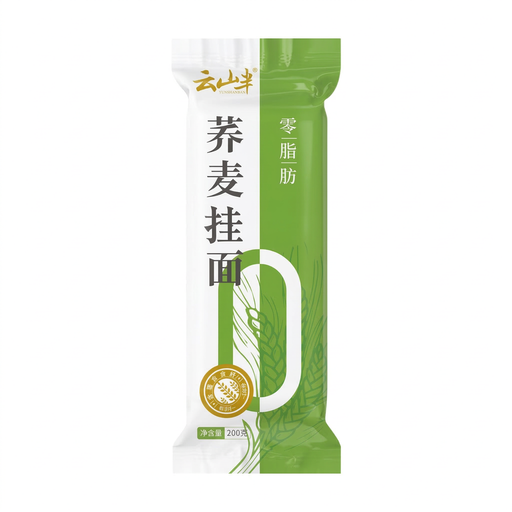
Why This Fits Their Persona: A 200g pack provides a manageable entry point for students, couples or shoppers trying buckwheat noodles for the first time.
The listed ingredients identify buckwheat flour and wheat flour, so shoppers can assess the blend instead of relying on the front label.
200g quantity; suitable for soup noodles, stir-fries and cold noodle salad.
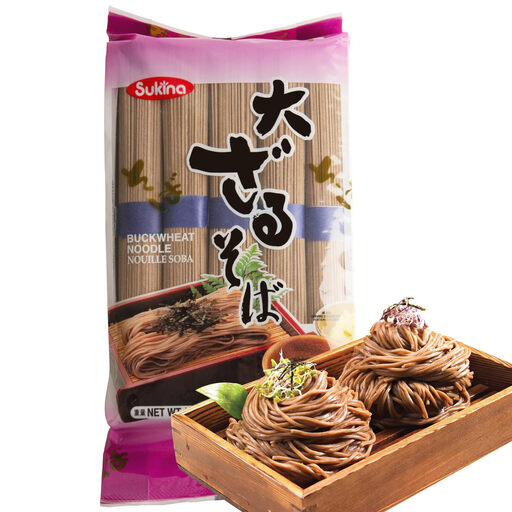
Why This Fits Their Persona: The stated 15-serving format suits households that regularly prepare Japanese-style cold soba, broth dishes or stir-fries.
The pack specification makes serving capacity clear, while the ingredients and allergen advice flag wheat, buckwheat and gluten.
15 stated servings; designed for both hot and cold dishes.
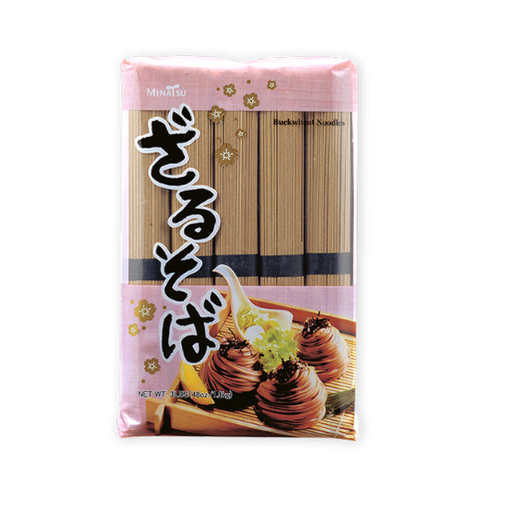
Why This Fits Their Persona: A 1.3kg pack is suited to families, meal-preppers and frequent noodle cooks who want a substantial dry cupboard staple.
Its large quantity is explicit, and the product information states that it contains cereals containing gluten, helping prevent unsuitable purchases.
1.3kg quantity; suitable for dipping-sauce soba, broths and salads.

Why This Fits Their Persona: Five individual portions work well for packed lunches, student kitchens, office cupboards and controlled meal planning.
The individual 60g portions make serving size clear, while the product information states that it is non-fried and must still be cooked thoroughly.
Five portions; 0g fat per 100g as listed; three-minute quick-soak method.
We have compiled a complete, real-time list of products that fully satisfy these strict selection criteria and UK safety regulations.
For dry soba noodles, use plenty of boiling water and follow the packet timing. Rinsing cooked noodles under cold water can remove surface starch and cool them for a cold noodle salad. For soup, drain first if you prefer a clearer broth.
Store unopened packs in a cool, dry cupboard away from moisture and strong odours. Reseal opened noodles tightly or use an airtight container. Instant noodle cakes should also be cooked thoroughly; “quick” refers to preparation time, not eating them uncooked.
Not necessarily. Buckwheat itself does not contain wheat gluten, but many products combine it with wheat flour. Check the full ingredients and allergen statement before buying, especially for Japanese buckwheat noodles and Korean buckwheat noodles.
Timing varies by thickness and format. RISHIJI noodles specify approximately five minutes, while the instant Yun Shan Ban product gives a three-minute boiling-water soak method. Always follow the instructions on the packaging.
A 200g pack suits occasional use or first-time purchases. A 500g pack can work for several meals, while 908g to 1.36kg family pack noodles are more appropriate for frequent cooking, meal preparation or larger households. Compare the best-before date and available storage space before choosing a bulk pack.