Hosts feeding four or more guests on a tight budget
Compare the current price per croissant across six- and eight-packs before paying more for premium branding, so there are enough portions without overspending.


For several guests, a standard six- or eight-pack can keep the cost per portion lower when you compare the displayed unit price rather than the pack price. Retailer listings checked on 30 September 2026 showed Sainsbury’s standard six-pack at 25p each, Tesco’s eight-pack at 28p each and Asda’s six-pack at 30.7p each; choose an all-butter or premium line when the croissant itself is a main feature of the spread.
Compare the current price per croissant across six- and eight-packs before paying more for premium branding, so there are enough portions without overspending.
All-butter or premium-range croissants can suit a spread where the pastry is a featured part of the table and a higher per-serving cost is acceptable.
Check the exact pack’s ingredients and allergen information rather than assuming that all-butter, bakery-counter or premium croissants are suitable.
Choose this when: You need several portions and will serve croissants alongside jam, clotted cream, fruit or other afternoon-tea foods.
Trade-off: Pack sizes, recipes, local availability and promotions vary, so compare the current unit price rather than relying on an old shelf label.
Choose this when: Buttery flavour and flaky pastry matter more than getting the lowest cost per guest.
Trade-off: Premium examples cost more per item than the lowest-priced standard multi-packs, and loyalty prices depend on membership and offer dates.
Choose this when: A guest needs a specifically labelled product and the exact pack can be checked before serving.
Trade-off: An all-butter croissant is not automatically gluten-free, and loose bakery items may need a separate allergen enquiry.
| Priority | What to check | Your needs |
|---|---|---|
| Cost per guest | Compare pence per croissant across packs with different counts. Check whether the displayed unit price is based on the standard or loyalty price. | I want enough pastries for a casual spread without paying extra simply because a pack looks cheaper at first glance. |
| Butter and serving style | Look for an all-butter recipe if that matters to the occasion. Check whether the product is intended to be warmed and follow its pack instructions. | The croissant is a central part of my table, so I am willing to pay more for a buttery, flaky style. |
| Allergen information | Read the exact ingredient and allergen declaration. A gluten-free claim applies only to the specifically labelled product. | I need clear information before serving guests who avoid particular ingredients or require a gluten-free product. |
| Pack timing | Choose a pack count close to the expected number of portions. Check the exact pack for freshness guidance and whether warming is practical. | I want pastries that fit the guest count and can be served at the right time, without a last-minute shortfall. |
A lower pack price does not always mean a lower cost per guest. Tesco listed an eight-pack at 28p each, while Waitrose listed a four-pack at 50p each on the retailer pages checked.
Read the per-item price, then multiply it by the number of guests. Recheck the figure on the day because prices and offers can change.
Tesco Finest was listed with both a standard price and a Clubcard price, while Sainsbury’s Taste the Difference also showed different Nectar and non-Nectar prices.
Plan around the non-member price unless you know the relevant account and offer will apply to your delivery, collection or shop date.
A loyalty discount may not be available if membership or the promotional dates do not apply.
All-butter croissants can still contain wheat, egg and milk. Lidl also lists possible traces of further allergens for its all-butter croissant, while Sainsbury’s gluten-free all-butter option is a separate product.
Check every current product label before serving and do not rely on a generic product name for allergen information.
Lidl directs shoppers to select a local store for offers and price information, while M&S says prices, promotions and availability can vary by store and online channel.
For a planned gathering, confirm local stock and price before relying on a particular bakery item. A prepacked multi-pack can provide a practical backup where availability matters.
A premium-leaning supermarket option with all-butter croissants and specialised variants, including reduced-fat, filled and Made Without products.
A premium all-butter four-pack route for shoppers who want a butter-led recipe for a smaller gathering.
Offers standard six- and eight-pack options alongside Taste the Difference all-butter croissants and a separately labelled gluten-free all-butter product.
A higher-priced route with standard, all-butter and No.1 croissants for smaller premium-oriented purchases.
A budget-oriented supermarket option with standard six-packs, all-butter four-packs and an Exceptional all-butter line.
An in-store bakery option for shoppers able to check their local store’s current range, availability and price.
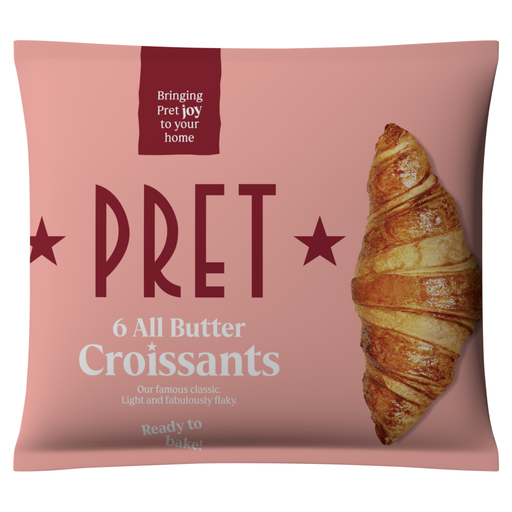
Joybuy product options for a smaller, pastry-led cream tea where frozen storage and oven preparation are practical.
 No image available
Suitable for a small, pastry-led gathering when frozen storage and baking shortly before serving are practical.
States 24% butter and a 20-minute bake-from-frozen preparation. Store at -18°C or below and do not refreeze after thawing. Contains wheat/gluten, milk and egg, and may contain nuts, sesame and soya; check the current pack label for guests with allergies or intolerances.
Use one croissant per planned guest as a starting point when croissants are one part of a spread with scones, cake, sandwiches or fruit. Choose a six- or eight-pack to suit the guest count, and compare the current per-item price rather than assuming the largest pack is cheapest.
They can be worth paying more for when buttery, flaky pastry is central to a small gathering. Tesco Finest, Sainsbury’s Taste the Difference, Waitrose No.1 and Asda Exceptional all-butter examples were listed at a higher per-item cost than the lowest-priced standard six- or eight-packs on the checked retailer pages.
Check the exact pack instructions first. M&S says its all-butter croissants can be warmed in the oven, while Sainsbury’s and Waitrose describe selected butter croissants as best enjoyed or served warm.
Check the exact product label or current product page before serving. The checked Asda listings contain egg, wheat and milk, while Lidl lists potential traces of multiple allergens; the Food Standards Agency says PPDS food in England, Wales and Northern Ireland must show the food name and a full ingredients list with allergens emphasised.
Do not assume that it is. Standard croissants commonly contain wheat, as shown by the checked Asda and Lidl listings; Sainsbury’s sells a separately labelled gluten-free all-butter option, but the exact current label should always be checked before serving.