Budget-conscious sharers
For a casual spread for several people, standard Tesco and Sainsbury’s eight-packs give a clear pack count before you add fillings or sides. Tesco and Sainsbury’s listed these multipacks at the time of publication.


For a low-cost sharing meal, standard eight-packs are the practical starting point when croissants will be filled or served with sides. Choose an all-butter pack when the pastry is a central part of the meal, a frozen bake-from-frozen pack when you have oven time, and a specifically labelled gluten-free option only where gluten-free food is required.
For a casual spread for several people, standard Tesco and Sainsbury’s eight-packs give a clear pack count before you add fillings or sides. Tesco and Sainsbury’s listed these multipacks at the time of publication.
If warm croissants are a main part of the meal, compare butter content, pack size and any loyalty conditions rather than choosing by pack size alone. Tesco, Sainsbury’s and Waitrose list all-butter options with different recipes and formats.
A specifically labelled gluten-free croissant can suit a gluten-free requirement, but milk, egg and other allergen information still needs checking for the exact product. Sainsbury’s Free From all-butter croissants contain butter, egg and milk.
Start with the number of guests and serving plan, then check the format, recipe and allergen information for the exact pack.
| Priority | What to check | Your needs |
|---|---|---|
| Pack size and value | Compare the number of croissants in each pack; distinguish standard prices from loyalty offers; check the live shelf label or listing. | I want enough croissants for everyone without making the pastry the largest part of the food budget. |
| Recipe and serving role | Check whether the pack is standard or all-butter; compare the stated butter percentage only for the exact products; look at warming instructions. | I want a simpler croissant for fillings and sides, or a richer pastry when it is a main feature of the meal. |
| Allergens and dietary needs | Read the current ingredients and allergen statement; check may-contain warnings; choose a specifically labelled gluten-free product where needed. | I need the exact pack to work for the people eating it, rather than relying on a vegetarian or bakery label alone. |
| Preparation format | Confirm whether the croissants are ready to eat, suitable for warming or raw and bake-from-frozen; check freezer and oven requirements. | I want a pack that fits the time, storage space and equipment available before serving. |
A meal budget can be thrown off when an offer requires a loyalty account or has ended before you shop.
Use the ordinary listed cost for planning, then treat a Clubcard or Nectar offer as a saving only after checking the current terms and date.
Frozen ready-to-bake croissants need freezer storage and oven time, while other packs may only need brief warming.
Before buying, check whether the product is ready to eat, ready to warm, or raw and required to be baked.
Many croissants contain milk, egg and wheat, and a gluten-free product can still contain butter, egg and milk. Bakery products may also carry trace warnings.
Match the current ingredients and may-contain statements to the individual’s allergy or intolerance, using the pack or bakery-counter information.
Tesco offers standard eight-packs alongside a Tesco Finest all-butter four-pack, giving shoppers a choice between a larger everyday pack and a more recipe-led option.
Sainsbury’s covers standard multipacks, Taste the Difference all-butter croissants and a separately labelled gluten-free all-butter option.
Waitrose offers an own-label butter croissant four-pack with declared butter content and French flour.
M&S offers packaged all-butter croissants and a frozen ready-to-bake eight-pack for oven-fresh serving.
Lidl provides an in-store all-butter croissant option for shoppers who can check their branch’s shelf display.
Joybuy options for a fakeaway night where frozen croissants can be baked shortly before serving.
 No image available
A plain frozen option for an oven-equipped meal where croissants will be served freshly baked.
Lists 24% butter, frozen storage at -18°C or below and approximately 20 minutes of baking from frozen. Contains wheat/gluten, milk and egg; may contain nuts, sesame and soya.
 No image available
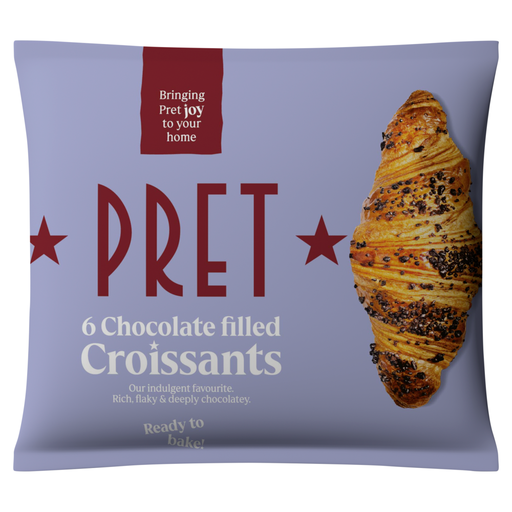
A sweet baked pastry option for sharing or serving as a dessert-style addition rather than as a savoury filled croissant.
Six frozen chocolate-filled croissants with 19% butter, requiring 22 minutes of oven cooking from frozen. Contains wheat/gluten, milk, egg and soya; the listing states it is unsuitable for nut and sesame allergy sufferers.
Use the pack count and the rest of the menu rather than treating croissants as a complete meal. An eight-pack can suit a group when each person has one with fillings and sides; buy more if croissants are the main carbohydrate or guests may want seconds.
No. An all-butter pack can suit a meal where pastry flavour matters, while a standard multipack can make more sense when croissants are being split, filled and served with other dishes. Compare pack count, ordinary listing details and any loyalty conditions.
Yes, if the instructions for the exact product allow it. Sainsbury’s Taste the Difference all-butter croissants list oven warming from ambient, and Waitrose lists a short warming time from chilled; M&S ready-to-bake croissants are raw and must be baked rather than simply warmed.
Ordinary croissants commonly contain wheat or gluten, so choose a specifically labelled gluten-free product where appropriate. Sainsbury’s Free From All Butter Croissants are described as suitable for coeliacs, but still contain butter, egg and milk; check the current label for the exact pack.
Check the retailer’s current allergen information for the exact item rather than relying on the product name. The Food Standards Agency says PPDS foods need a full ingredients list with allergenic ingredients emphasised; for other bakery goods, ask staff or use the displayed allergen information.