Parents serving several children at tea time
Choose a pack with enough portions for the children being served, while avoiding a larger pack that is unlikely to be used within its label instructions.


For a budget-focused kids’ tea time, start with a pack size your household is likely to use, then choose a ready-to-eat or frozen format that fits the time available. Check the current allergen information before serving or packing croissants, as wheat/gluten, milk and egg are common in the examples considered.
Choose a pack with enough portions for the children being served, while avoiding a larger pack that is unlikely to be used within its label instructions.
Check the current allergen label and the school’s own packed-lunch or allergy policy. Wheat/gluten, milk and egg appear in several of the retailer examples.
A frozen bake-at-home croissant can suit a planned tea time when there is freezer space, cooking time and time for the product to cool before serving.
Match the number of portions and preparation method to the occasion, then check the current label for allergens, storage and serving information.
| Priority | What to check | Your needs |
|---|---|---|
| Pack size and leftovers | Compare the pack count with the number of children being served. Check the storage instructions and whether the household can use any remaining portions. | A smaller pack can make sense for one occasion, while a larger pack may suit several children or repeat tea times. |
| Allergens and school packing | Read the highlighted allergens and ingredient list for wheat/gluten, milk and egg. Check any cross-contact information for loose bakery items and confirm the school’s local policy before packing. | I need to avoid sending a snack that conflicts with a child’s allergy plan or the school’s allergy-management arrangements. |
| Snack pattern | Use the current nutrition label and per-portion information rather than relying on the product name. NHS Healthier Families identifies pastries among foods high in saturated fat. | For everyday snack occasions, I may choose fruit or vegetables more often and keep croissants for an occasional tea-time pastry. |
| Ready-to-eat or frozen | Check whether the croissants are ready to serve or require freezer storage, oven cooking and standing time. Follow the preparation instructions on the pack. | A ready-to-eat pack suits a last-minute snack; frozen croissants suit a tea time that can be planned in advance. |
A pack that is much larger than the occasion can leave portions unused, while a very small pack may not cover everyone at tea time.
Count the likely servings first and check the storage guidance for any croissants that will not be eaten straight away.
Standard croissants commonly contain wheat/gluten, milk and egg. Lidl states that other allergens cannot be guaranteed absent from its loose bakery products, and a gluten-free product may still contain milk or egg.
Read the current pack or in-store allergen information each time. Where an allergy plan needs clear ingredient certainty, do not assume a loose bakery product matches a labelled prepacked item.
Frozen croissants need freezer storage, cooking and standing time, so they may not suit an unplanned after-school tea time.
Use ready-to-eat croissants when serving straight away and reserve frozen options for occasions with enough preparation time.
NHS Healthier Families identifies pastries among foods high in saturated fat and recommends fruit and vegetables as snack choices for children.
Use the current label’s per-portion information and vary snack choices across the week.
Relevant for standard multipacks and bake-at-home frozen croissants.
Relevant for a smaller all-butter four-portion pack.
Relevant for a ready-to-eat all-butter four-pack.
Relevant for households comparing standard four-packs, eight-packs and No.1 products.
Relevant when a household needs a particular format, including all-butter and Made Without Wheat croissants.
Relevant for shoppers choosing from an in-store bakery rather than a fixed prepacked multipack.
These Joybuy options are frozen bake-at-home croissants for planned warm tea times. Check the current product label, storage instructions and allergens before serving.
 No image available
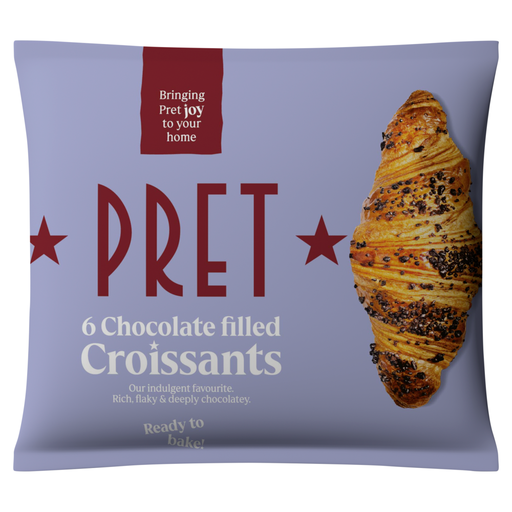
For a planned warm tea time, this six-croissant frozen pack requires 22 minutes of oven cooking.
Store frozen at -18°C or below. It contains wheat/gluten, milk, egg and soya, and is stated as unsuitable for nut and sesame allergy sufferers.
Do not reheat after cooling.
 No image available
For a planned warm tea time, these all-butter croissants are ready to bake from frozen in 20 minutes.
Keep frozen at -18°C or colder and do not refreeze after thawing. The listing identifies wheat/gluten, milk and egg, and notes possible nuts, sesame and soya.
 No image available
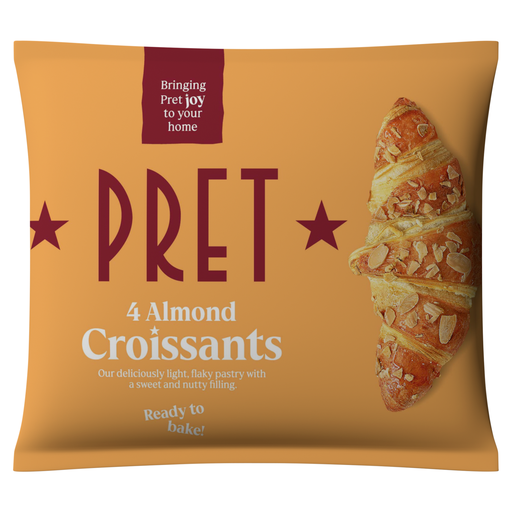
This frozen almond-filled option suits a planned warm tea time with freezer and oven access.
Store at -18°C or colder. It contains wheat/gluten, milk, egg and almonds, and may contain other nuts, sesame and soya.
The almond filling makes it a more specific choice than a plain croissant where nut avoidance is required.
Check the individual school’s allergy and packed-lunch policy first, then check the current product label. England’s Department for Education statutory allergy-safety guidance says food brought from home should be considered in allergy arrangements and that lunchboxes should be clearly labelled, prepared and stored safely.
Many do: the Tesco, Sainsbury’s, Asda, M&S and Lidl examples considered contain wheat or list wheat/gluten, with several also containing milk and egg. Do not assume every croissant has the same allergen profile; M&S has a specifically labelled Made Without Wheat gluten-free product, but it still contains milk and egg.
They can be suitable when tea time is planned ahead. Tesco Groceries states that its frozen all-butter croissants need oven cooking from frozen followed by standing time, so freezer storage and preparation time are needed before serving.
NHS Healthier Families identifies pastries among foods high in saturated fat and recommends fruit and vegetables as snack choices for children. Use the current nutrition label to compare portions and treat croissants as an occasional tea-time pastry.