Budget lunch shoppers who still check nutrition
You want a practical per-croissant cost without letting price override calorie and saturated-fat information.


A croissant can be an occasional part of lunch, but it is not a strong stand-alone choice when you are trying to make lunch healthier. NHS guidance identifies croissants as pastries containing saturated fat, so compare saturates as well as portion cost and treat the pastry as one part of a more balanced meal.
You want a practical per-croissant cost without letting price override calorie and saturated-fat information.
You need like-for-like nutrition comparisons, especially saturates per 100g and per portion. The NHS specifically includes croissants among pastries that contain saturated fat.
You need to check the current ingredient and allergen declaration rather than assuming all croissants use the same recipe. Verified examples contain wheat, milk and egg, and bakery products may also carry trace-allergen warnings.
Compare the actual portion you plan to eat, then check the label and the role the croissant will play in the rest of your lunch.
| Priority | What to check | Your needs |
|---|---|---|
| Saturated fat | Compare saturates per 100g where pack sizes differ, then check the amount in one croissant. The NHS classifies more than 5g saturates per 100g as high. | I want to see whether a pastry fits a lunch pattern focused on reducing saturated fat, rather than relying on a product name such as all-butter or reduced fat. |
| Portion value | Compare the price per croissant as well as the pack total. Check pack size and whether you can use or freeze the croissants before the best-before date. | I need an everyday lunch cost I can compare fairly across multi-packs and individual pastries. |
| Lunch balance | Check energy and protein per portion, but do not use these figures alone to judge the whole meal. The Eatwell Guide advises having foods high in fat, salt or sugar less often and in small amounts. | I do not want a lower-priced pastry to become the main nutritional anchor of my lunch. |
| Allergens | Read the current ingredient list and declared allergens on the exact pack. For loose bakery items, check trace-allergen information and ask the retailer when the information is not enough for your needs. | I need to confirm the current recipe when avoiding wheat or gluten, milk, egg, nuts or possible cross-contact. |
A low unit cost does not indicate low saturated fat. For example, Sainsbury’s eight-pack has a high saturated-fat label per croissant.
Use portion cost to manage spending, then compare saturates per 100g and per croissant. Keep croissants occasional rather than treating one as a complete lunch.
A comparison with another product can coexist with a high saturates figure. M&S states that its reduced-fat croissant has less fat than its own all-butter version, while its listed saturates are 12.3g per 100g.
Read the saturates line separately and compare products on a per-100g basis before making a decision from a reduced-fat claim.
Loyalty offers can be limited to stated dates and conditions, so they may not reflect the usual cost of a lunch portion.
Start with the standard per-item price and treat promotional or loyalty pricing as temporary unless your current basket confirms it.
Verified croissants contain major allergens, and Lidl warns that other allergens cannot be guaranteed absent from its bakery range.
For strict allergy avoidance, choose a product with a current readable ingredient and allergen declaration, and contact the retailer when cross-contact information is insufficient.
Relevant for an own-label eight-pack aimed at everyday value and portion comparison.
Relevant for shoppers considering a premium own-label all-butter four-pack rather than an everyday budget pack.
Relevant for shoppers considering a reduced-fat option within an all-butter croissant range.
Relevant for an individual all-butter croissant purchase when convenience matters more than pack economy.
Relevant for in-store bakery shoppers seeking an all-butter croissant, subject to local availability.
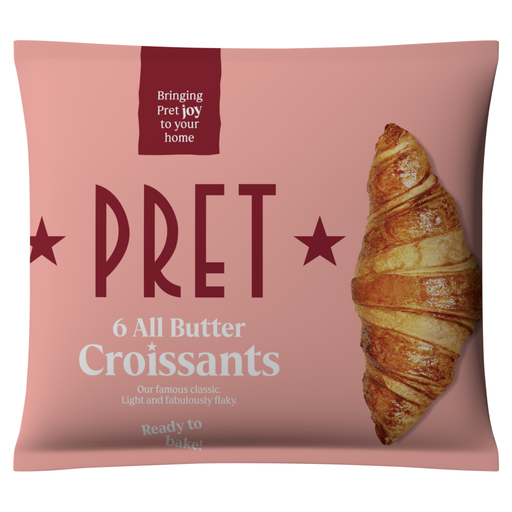
Joybuy product options for an occasional all-butter croissant component of lunch, where home freezing and oven preparation are practical.
 No image available
Consider this for an occasional lunch component when you have freezer space and an oven available.
These are frozen all-butter croissants with 24% butter and a stated 20-minute bake time from frozen.
The listed 15g saturates per 100g is above the NHS high threshold. It contains wheat, gluten, milk and egg, and may contain nuts, sesame and soya.
Not as a stand-alone routine lunch if you are aiming for a healthier eating pattern. NHS guidance lists croissants among pastries containing saturated fat, while the Eatwell Guide advises having foods high in fat, salt or sugar less often and in small amounts. A croissant can be an occasional component of lunch, but check the balance of the whole meal.
Compare the price per croissant, then compare saturated fat on the same basis, preferably per 100g because serving sizes differ. NHS guidance defines more than 5g saturates per 100g as high and advises choosing green or amber saturated-fat values where possible.
No. M&S states that its reduced-fat product has 30% less fat than its own all-butter croissants, but the listed product still has 12.3g saturates per 100g. Check the separate saturates figure instead of relying on a reduced-fat claim alone.
Wheat, milk and egg are common in the verified products, but recipes and trace-allergen warnings differ. UK food-labelling guidance requires prepacked food labels to include ingredients and allergens; for bakery products, read the current label rather than relying only on a previous online listing.
Follow the instructions on the individual product. Sainsbury’s says its eight-pack can be frozen as soon as possible after purchase and by the best-before date, then used within one month after freezing and within 24 hours of defrosting.