
24/7 Customer Support

Free returns

Same-day & Next-day Delivery

Quality Guaranteed

Unlock Your Welcome Offers: FREE Delivery | Up to 80% OFF | Free 30-day JoyPlus trial
Download the APP
As a tradesperson in the UK, you know that a reliable mark is the foundation of accurate work. Yet, finding a marker that can keep up with the demands of a busy construction site can be a frustrating task. A faded cut line on a damp piece of timber or a smudged drill point on steel can lead to costly mistakes and delays. The market is flooded with so-called "heavy-duty" markers that simply aren't fit for purpose.
Before you spend another pound on a marker that lets you down, let's look at the common pitfalls. Many tradespeople find themselves wasting money on markers with three specific failings:
To avoid these issues, you need to look past the marketing hype and focus on the core specifications that matter for professional use. These are the non-negotiable features that separate genuine builders markers from standard office supplies.
The ink is the most critical component. For site work, you need more than just a standard permanent ink.
The tip is the business end of the marker. Its shape and construction determine what and how you can mark.
A heavy duty marker should feel like one. The barrel should be made from tough plastic or metal that won't crack if dropped or stepped on. A secure cap is also vital to prevent the ink from drying out in your tool belt.
We've analysed the specifications of various site markers to match them with the practical needs of UK tradespeople. Here are our recommendations based on specific user profiles.
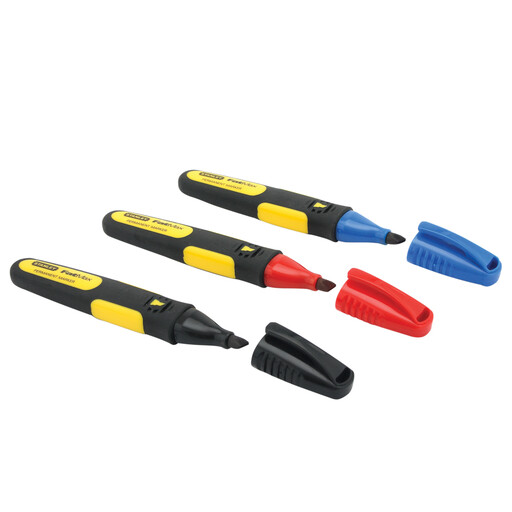
Why This Fits Their Persona: Ideal for the general builder, joiner or plumber who needs a reliable, all-purpose marker. The multi-colour pack is perfect for colour-coding different stages of a job, like marking for cuts, fixings and services.
The permanent, waterproof ink resists fading and wash-off, directly countering the "disappearing ink" problem. Its durable construction and robust chisel tip withstand marking on timber and plasterboard without fraying.
The versatile chisel tip allows for both broad and fine lines. The inclusion of three essential colours provides flexibility for complex layouts.
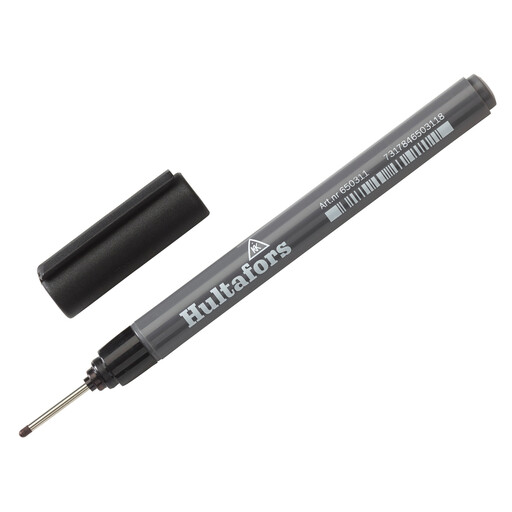
Why This Fits Their Persona: Essential for kitchen fitters, electricians, steel erectors and carpenters. This marker is specifically for marking fixing points through deep holes or in tight, hard-to-reach spaces where a standard marker simply cannot go.
Its purpose-built design solves the problem of inaccessible marking points. The extended, durable tip avoids the "fragile tip failure" by being strong enough to mark accurately without snapping or bending in a confined space.
The long, narrow tip is its primary advantage, enabling precise marking in deep holes. It features an ergonomic design for better control during these tricky applications.
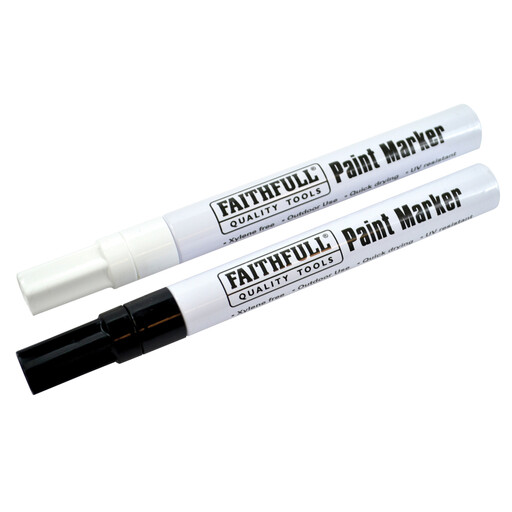
Why This Fits Their Persona: A must-have for metalworkers, fabricators and anyone working with dark materials. When a black marker is invisible on dark steel, black plastic pipe or roofing felt, the opaque white paint provides a clear, high-contrast mark.
This directly solves the "surface compatibility" issue. The oil-based paint formula provides an opaque, solid line that adheres properly to smooth metal and plastic, where standard inks can be transparent or fail to stick.
The pack includes a white paint marker for excellent visibility on dark surfaces. The quick-drying, oil-based ink resists smudging and creates a durable, long-lasting mark.
We have compiled a complete, real-time list of products that fully satisfy these strict selection criteria and UK safety regulations.
The two most important factors are storage and usage. Always replace the cap firmly immediately after use to prevent the tip from drying out. This is especially critical for paint and oil-based markers. Storing markers horizontally helps to keep the ink evenly distributed and the tip saturated, preventing it from drying prematurely.
This depends entirely on the marker's formulation. Standard permanent ink markers will fail on wet or oily surfaces. For these challenging conditions, you must use a marker specifically designed for the task, such as an oil-based paint marker pen. These pens deposit a layer of paint that can adhere to surfaces even with some moisture or grease present, though it's always advisable to wipe the surface as clean and dry as possible for the most durable mark.
A permanent ink marker works like a felt-tip pen, using a dye-based ink that soaks into porous surfaces and stains them. A paint marker pen contains actual liquid paint and works via a valve-action tip. When you press the tip, it releases a controlled flow of opaque paint that sits on top of the surface. This makes paint markers far more effective on non-porous and dark-coloured materials like metal, glass and plastic, where ink would either wipe off or be invisible.