
24/7 Customer Support

Free returns

Same-day & Next-day Delivery

Quality Guaranteed

Unlock Your Welcome Offers: FREE Delivery | Up to 80% OFF | Free 30-day JoyPlus trial
Download the APP
Building block sets can offer hours of creative play, but the box does not always tell the full story. A high piece count may look impressive, yet the set could be too difficult for the intended builder, lack useful play features or contain small parts that are unsuitable for younger children.
For UK parents, relatives and hobby buyers, the practical questions are straightforward: Is the age guidance appropriate? Are the pieces durable and easy to connect? Does the finished model justify the storage space and price?
This guide highlights common buying traps, explains the specifications that matter and matches several construction toys for children and adult builders to different needs.
A set with 800 or 3,000 pieces is not automatically more enjoyable than one with 300 pieces. Piece count can include many small, single-purpose elements, while a lower-count set may provide more moving features or greater scope for imaginative play.
Compare the theme, instructions, finished dimensions and intended use alongside the number of pieces. A 323-piece vehicle building set may be more suitable for a child who wants a manageable project, while a 3,057-piece display model is more appropriate for an adult collector with plenty of assembly time.
Small-granule construction toys can contain parts that present a choking risk. Never rely only on a child’s confidence or previous experience. Check the manufacturer’s stated age range and supervise assembly where required.
For younger children, look for larger pieces such as those supplied with LEGO DUPLO construction toys. Sets containing standard small bricks, model components or minifigure accessories should be kept away from children under three.
Some military tank model kits and collectible building sets are primarily intended for display. Others include wheels, opening sections, removable components or rebuild options for more active play.
Before purchasing, decide whether the finished item will be played with, displayed, rebuilt or used for parent-child interaction. A detailed model can be a suitable birthday gift for a hobby builder, but not necessarily the right choice for a child looking for quick, free-form play.
Look for the recommended age, small-parts warnings and supervision instructions. The product page should also provide manufacturer or responsible-person information. In the UK, check that the packaging and listing provide appropriate safety information and relevant conformity markings, such as CE or UKCA where applicable. Do not remove packaging and warnings before checking them.
For small-part building toys, choose a clear, well-lit table and keep unused pieces in a tray or storage box. Count and sort parts before starting, particularly with larger DIY model kits.
Piece count is useful for comparing project scale, but it does not reveal how difficult assembly will be. Consider:
For STEM construction toys, mechanisms and moving parts can make the building process more engaging, although younger builders may need adult assistance.
ABS is widely used for interlocking construction pieces. The listing should state the material and provide clear information about the parts included. Smooth edges and consistent connections are useful practical considerations, but buyers should still inspect pieces during assembly and stop using any damaged or sharp component.
Storage is often overlooked. A set with hundreds of parts can be difficult to manage without a divided organiser, reusable bucket or lidded box. Keeping the instructions and spare pieces together also makes future rebuilding easier.
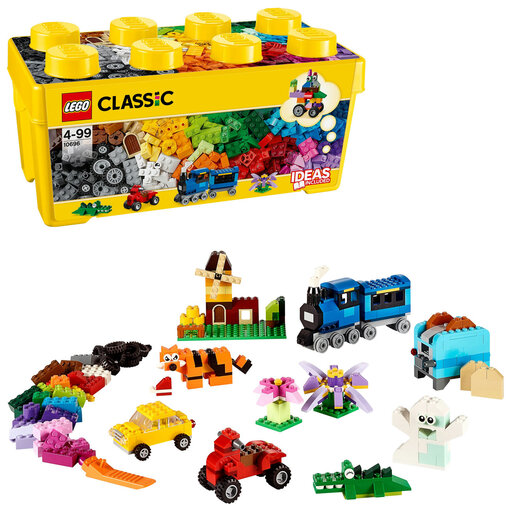
Why This Fits Their Persona: A practical starting point for families wanting open-ended building without committing to a single theme. It is suitable for children from age 4 and includes a storage box for tidier play at home.
The set is not limited to one finished model, so builders can create vehicles, houses and creatures instead of quickly outgrowing a fixed design.
Contains 484 pieces, bricks in 35 colours, wheels, wheel rims, a baseplate and a reusable plastic storage box.
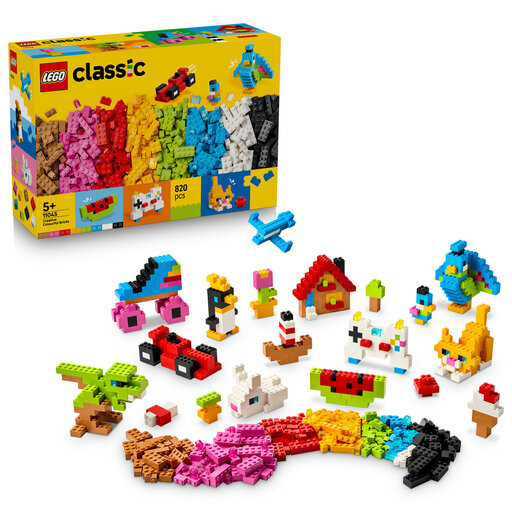
Why This Fits Their Persona: A colourful creative brick box for children aged 5 and above who enjoy both guided builds and free-form projects.
Its stated contents and model guidance make the play options clearer than a box promoted only by a large piece count.
Includes 820 pieces, instructions for 14 models and digital instructions for three larger builds.
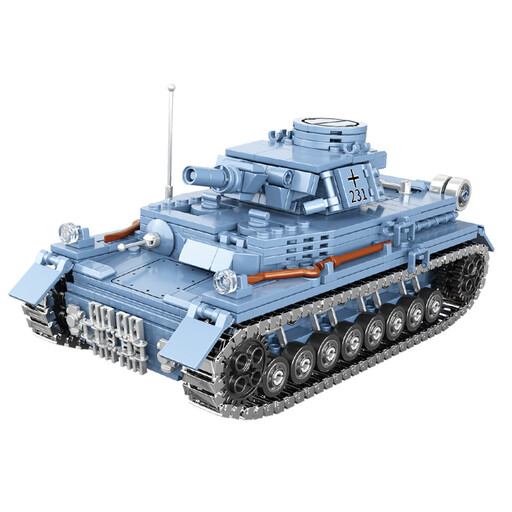
Why This Fits Their Persona: Suited to hobby builders and military vehicle enthusiasts seeking a substantial tank-themed project for home assembly or display.
The product listing states the piece count, ABS material and approximate dimensions, helping buyers judge project scale before ordering.
Contains 869 ABS pieces and measures approximately 45 × 7 × 30.5 cm according to the listing.
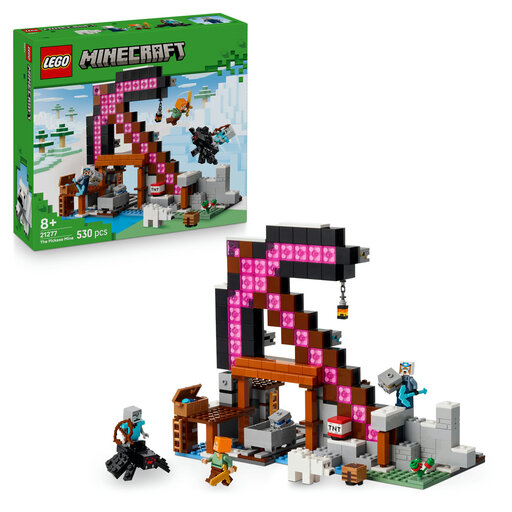
Why This Fits Their Persona: A themed choice for Minecraft fans aged 8 and above who want a build that also supports character-led play and display.
It combines construction with stated interactive functions, rather than being solely a shelf model with limited use after assembly.
Contains 530 pieces, three minifigures, a rideable spider, a polar bear figure and a minecart with a track.
We have compiled a complete, real-time list of products that fully satisfy these strict selection criteria and UK safety regulations.
Different interests call for different formats:
Some are, but suitability depends on the individual set. Look for products specifically marked for ages 4+, such as the LEGO Classic Medium Creative Brick Box. Sets with tiny components may be unsuitable for younger children, even if they have built simpler toys before. Always follow the packaging and product-page warning.
Use a lidded box or divided organiser, separating small specialist parts from standard bricks. Keep the instruction booklet or digital instructions accessible. For family projects, a shallow tray can help prevent pieces spreading across the floor during assembly.
Not necessarily. Price can reflect piece count, licensing, model size, specialised components or display detail. Compare the likely use: an open-ended creative brick box may support repeated rebuilding, while a themed model may offer more focused assembly and collecting value. The right choice depends on the recipient’s interests, available space and preferred difficulty.