
24/7 Customer Support

Free returns

Same-day & Next-day Delivery

Quality Guaranteed

Unlock Your Welcome Offers: FREE Delivery | Up to 80% OFF | Free 30-day JoyPlus trial
Download the APP
Building block sets can offer creative play, screen-free family time and attractive display models, but choosing the right kit is not simply a matter of counting pieces. A large box may contain many tiny parts, unclear instructions or a finished model that is too fragile for everyday play.
For UK parents, gift buyers and adult hobby builders, the main decision is whether the set matches the builder’s age, patience, available space and intended use. This guide explains the key details to check before buying, followed by selected options for different needs.
A 1,500-piece architectural kit may provide a longer assembly project, but it can be unsuitable for a young child or a casual builder. Piece count should be considered alongside the recommended age, model dimensions, instruction quality and whether the finished item is intended for play or display.
For example, the LEGO Harry Potter Hogwarts Castle: East Wing contains 2,164 pieces and measures over 42 cm high, 32 cm wide and 40 cm deep. It is designed for builders aged 10 and over, so it suits a committed fan more than a pre-school gift.
Architectural building blocks and landmark building models often use small parts and may create a stable finished ornament rather than a toy for frequent handling. WANGE landmark sets such as the London Eye, Elizabeth Tower and Buckingham Palace are aimed at hobby builders and display use, with piece counts ranging from 783 to 1,695.
Always check the recommended age and small-parts warning. A model can be visually appealing without being appropriate for a child who still puts objects in their mouth.
Loose pieces are easy to lose, especially when a set is assembled over several evenings. Before ordering, consider whether the box includes a storage solution, whether the model will fit on a shelf and whether there is a clear table space for sorting parts.
Magnetic building blocks also require particular care. Magnets must remain sealed inside their plastic casings, and damaged pieces should be removed immediately. Swallowed magnets can cause serious injury, so adult supervision and regular inspection are important.
Age guidance is a practical indication of part size, assembly difficulty and expected concentration. Options in this selection range from age 4+, such as the LEGO Disney Princess Village House & Boat and LEGO Bluey Bluey’s Family House, to more involved models for ages 7, 10 or 6+.
Age labels do not replace supervision. Children aged 3 and under should not use sets containing small parts. For older children, follow the manufacturer’s guidance, remove packaging before use and store unused components away from younger children.
Many sets in this guide use ABS plastic, a common material for interlocking construction pieces. Look for smooth edges, consistent connections and a finished structure that remains stable when moved carefully.
Magnetic sets use a different joining method. Check that magnets are fully enclosed and inspect the casing regularly. The XINQIYUAN Qiyuan set states that its magnets are sealed within ABS plastic using ultrasonic welding, but users should still stop play if a casing cracks or a magnet becomes loose.
Dimensions matter for both play and display. A large landmark model may need a dedicated shelf, while a smaller vehicle set can fit on a desk. Also check whether the design includes moving features, detachable rooms or interactive elements.
The K’Nex Creation Zone 50 Models Building Set, for example, has an assembled size of approximately 45 × 30 × 25 cm and can be rebuilt into different designs. By contrast, a landmark kit is generally selected for a particular finished appearance.
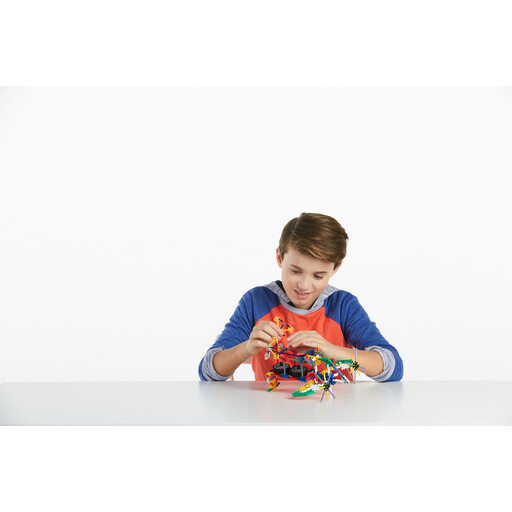
Why This Fits Their Persona: A practical starting point for children aged 5+ who want to build, dismantle and try another design without needing a single permanent display model.
Its instructions cover up to 50 models, reducing reliance on one complicated, single-use build.
Includes rods and connectors, requires no batteries and has reusable pieces for repeated building.
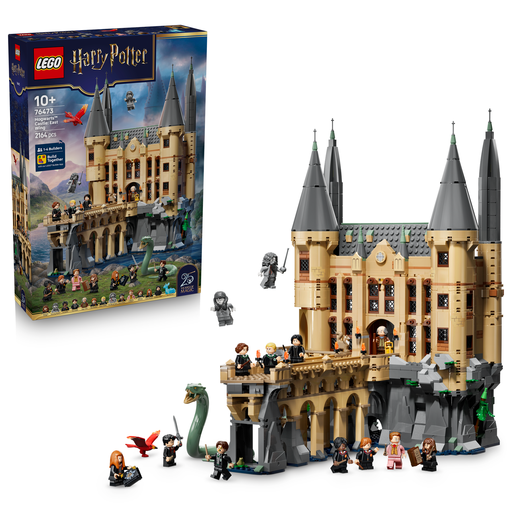
Why This Fits Their Persona: Suits Harry Potter fans aged 10+ and adult collectors seeking a substantial character-led model with display potential.
The product listing clearly states its age guidance, 2,164-piece count and finished dimensions before purchase.
Includes 13 minifigures, interactive castle areas and guided support through the LEGO Builder app.
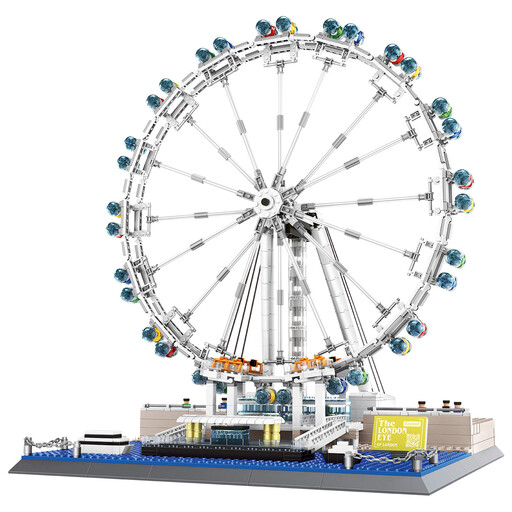
Why This Fits Their Persona: A suitable choice for adults, families and UK-based collectors interested in an instantly recognisable architectural display.
Its listed box dimensions, material and 1,528-piece count help buyers assess space and assembly commitment.
The finished design represents the London Eye and includes a rotating Ferris wheel detail.
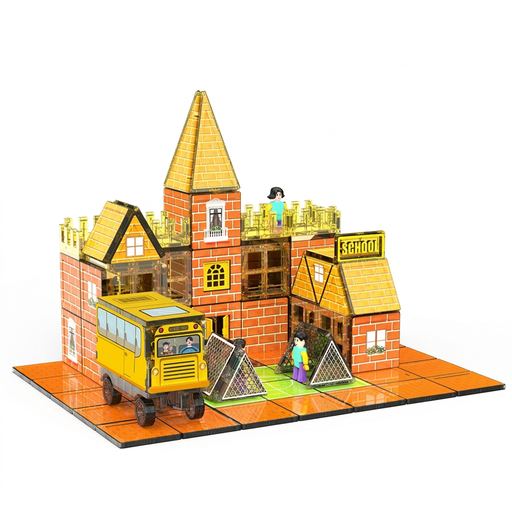
Why This Fits Their Persona: Designed for children aged 3+ with adult supervision, this option suits open-ended family building and users who want to expand a magnetic collection.
The listing identifies the magnetic construction, safety warnings, storage bag and the need to inspect damaged casings.
Includes 116 pieces, villa-specific parts and a portable storage bag; the set is designed to work with other 7.5 cm magnetic blocks.
We have compiled a complete, real-time list of products that fully satisfy these strict selection criteria and UK safety regulations.
Yes, provided the chosen set matches the youngest participant’s age and everyone has enough space to sort parts safely. Sets with character play, such as a Disney building set, may suit younger children, while landmark models and LEGO building sets with hundreds of pieces are more appropriate for older children or adults.
Lifespan depends on material quality, how often pieces are dismantled and whether parts are stored properly. ABS construction pieces can be reused, but connectors, hinges and magnetic casings should be checked for wear. Keeping parts dry, organised and away from heat can help maintain them.
Most construction toys, creative building kits and architectural building blocks do not require batteries. Their main ongoing cost is usually storage or additional expansion sets. Check the product details before buying if the model includes lighting, motors or other electronic features, as these may require batteries or a separate power source.