
24/7 Customer Support

Free returns

Same-day & Next-day Delivery

Quality Guaranteed

Unlock Your Welcome Offers: FREE Delivery | Up to 80% OFF | Free 30-day JoyPlus trial
Download the APP
Choosing building blocks for children can look simple until you compare piece size, age ratings, safety warnings, storage and play style. A colourful box with a large piece count may not suit a one-year-old, while a compact magnetic set can be unsuitable for younger children because of small parts and magnets.
As the Joybuy Product Recommendation Officer, I focus on separating useful product details from vague marketing language. Here are the main buying traps to avoid, followed by practical recommendations for different households.
A 120-piece set may sound more impressive than a 44-piece set, but piece count does not indicate how playable or age-appropriate the toy is. Some sets contain many small tiles, decorative parts or repeated shapes. For toddlers, a smaller collection of large, easy-grip pieces may offer more usable play.
Check:
Educational building toys can encourage fine motor movement, shape recognition, spatial awareness and storytelling. However, these benefits depend on the child’s age, interest and how adults support play. A themed set may encourage role play, while a basic construction set may offer more freedom to experiment.
Treat developmental descriptions as potential play benefits rather than guaranteed results.
Some magnetic building blocks are marketed for creative play but still contain small, strong magnets. A product may be colourful and easy to assemble while remaining unsuitable for children under three. Always read the specific warning on the product page and packaging.
For magnetic toys, inspect pieces regularly. If a tile cracks or a magnet becomes loose, stop using the set immediately. Swallowed magnets can cause serious internal injury and require urgent medical attention.
For babies and younger toddlers, look for larger blocks that are easy to grasp and less likely to be swallowed. The Mega Bloks ABC Learning Train is listed for children from 12 months to 5 years and uses large blocks designed for little hands.
By comparison, the 2.5 cm magnetic tile sets listed here are intended for ages 3 and above. Their compact format can support detailed builds, but it also creates a choking risk for younger children.
Look for clear information about the main material, cleaning instructions and relevant safety standards. Several soft play products in this selection refer to EN71-1, EN71-2 and EN71-3, which cover areas including mechanical and physical properties, flammability and migration of certain elements.
This does not remove the need for supervision. Check that:
Large foam blocks need floor space and are more suitable for indoor active play. Magnetic building blocks are easier to pack for travel, although small pieces can be difficult to keep track of. A storage pouch, case or box is particularly useful for households where toys are moved between the living room, nursery and grandparents’ home.
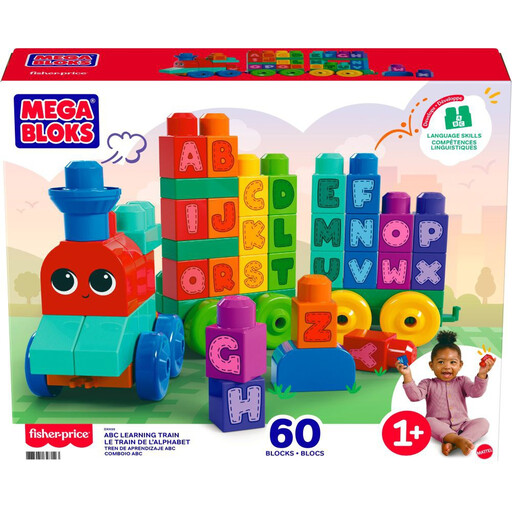
Why This Fits Their Persona: A practical first set for families wanting large toddler building blocks with an early alphabet theme. It is suitable from 12 months to 5 years and can be used at home or during supervised play at a grandparent’s house.
The large blocks and clearly stated age range make it easier to avoid choosing small-piece construction toys for a young toddler.
60 pieces, letter-printed blocks, three rolling wheelbases and the option to rebuild the train into a station.
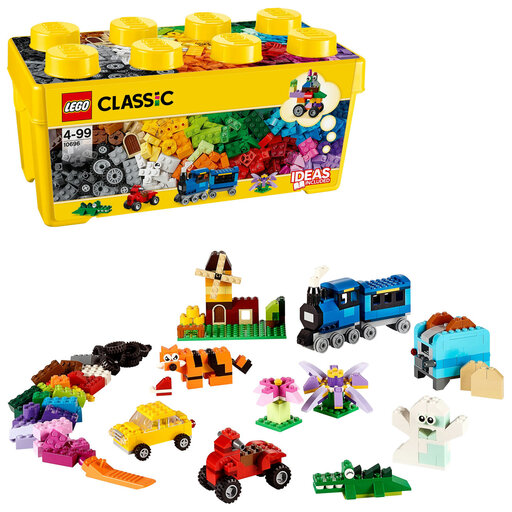
Why This Fits Their Persona: Suitable for children aged 4 and above who are ready for more detailed creative construction toys and families who want a set that can complement an existing collection.
Its stated 4+ age rating helps prevent a detailed small-brick set being bought for a child who still needs larger toddler pieces.
484 pieces, 35 colours, windows, eyes, wheels, a baseplate and a dedicated plastic storage box.
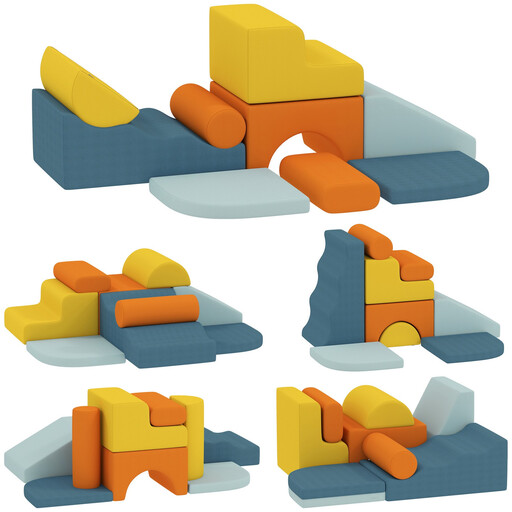
Why This Fits Their Persona: A choice for nurseries, playrooms and households prioritising climbing, crawling and active indoor play for children aged 1 to 3.
The soft format avoids the hard-piece issue during crawling and climbing, while the product information states indoor use, adult supervision and a 60 kg maximum load.
Six foam components, wipe-clean surfaces, stackable shapes and EN71-1-2-3 information supplied in the listing.
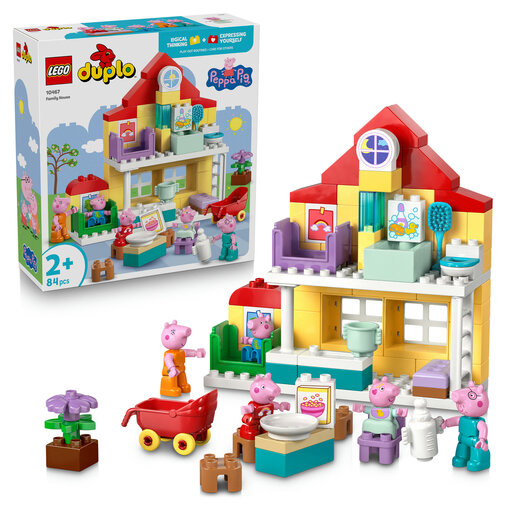
Why This Fits Their Persona: A themed option for children aged 2 and above who are more interested in familiar characters, family routines and guided imaginative play than free-form construction.
The larger DUPLO-style pieces are designed for little hands, with an age rating that is easier to match to a two-year-old than compact construction tiles.
84 pieces, five character figures, two levels and rooms including a kitchen, bathroom, bedrooms and lounge.
We have compiled a complete, real-time list of products that fully satisfy these strict selection criteria and UK safety regulations.
Some are. Choose products specifically marked for children from 12 months, with large pieces and no loose small parts. Soft play building blocks can also suit toddlers, provided they are used indoors under adult supervision and checked for tears or damage.
Lifespan depends on material, storage and frequency of use. Plastic blocks can remain usable for years if cleaned with a soft cloth and stored dry. Foam sets should be checked for worn covers, damaged seams and loss of firmness. Magnetic tiles require particular attention because damaged pieces may expose magnets.