
24/7 Customer Support

Free returns

Same-day & Next-day Delivery

Quality Guaranteed

Unlock Your Welcome Offers: FREE Delivery | Up to 80% OFF | Free 30-day JoyPlus trial
Download the APP
As a Joybuy Product Recommendation Officer, I see countless parents and gift-givers trying to navigate the vast world of building blocks for kids. It’s a category filled with fantastic opportunities for creative play, but also with potential pitfalls that can lead to disappointment and wasted money. The goal is to find a toy that engages, educates and endures. This guide will help you identify the key factors that matter and sidestep the common traps.
Before you add anything to your basket, be aware of these frequent issues that can turn a promising toy into a source of frustration.
To ensure you are making a sound purchase, focus on these core parameters. They are the non-negotiable checks that separate a quality toy from a disappointing one.
The material is the foundation of any good building block set. Look for products made from ABS (Acrylonitrile Butadiene Styrene) plastic. This material is known for its high toughness, impact resistance and stability. It ensures that blocks interlock securely and can withstand years of assembly and disassembly without losing their shape or colour.
For magnetic tiles, check that the magnets are securely sealed within the plastic casing. Reputable manufacturers often use ultrasonic welding to create a permanent, safe seal. Always check for UKCA marking and other safety certifications, which indicate the product has been tested to meet UK safety standards.
Pay close attention to the manufacturer's age recommendation, but also use your own judgement. These guides are based on two factors: safety (choking hazards from small parts for children under 3) and developmental appropriateness.
Consider what kind of play you want to encourage.
Here are a few options that align with different needs, each selected to avoid the common pitfalls.
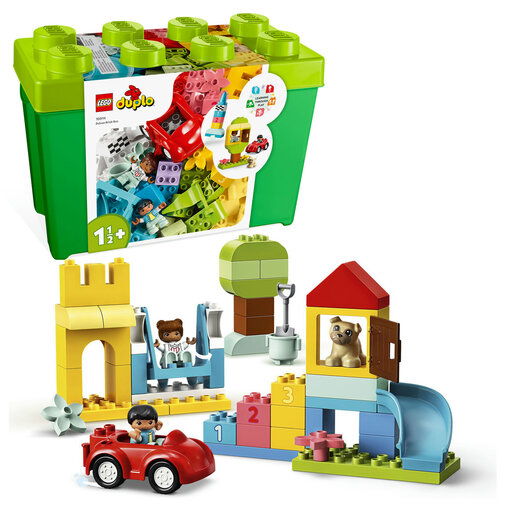
Why This Fits Their Persona: This set is specifically designed for the smallest hands. The large, colourful bricks are safe and easy to handle, helping toddlers in the UK develop fine motor skills and basic colour and number recognition in a playful, frustration-free way.
It is made from high-quality ABS plastic, avoiding the "brittle brick" issue. As part of the extensive DUPLO system, it is not a "dead-end set" and can be expanded with other kits as the child grows.
Includes a sturdy storage box for easy cleanup and numbered bricks (1-2-3) to introduce early counting concepts.
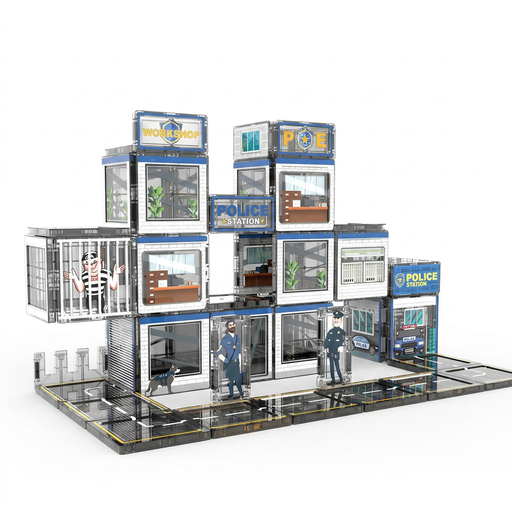
Why This Fits Their Persona: Ideal for the child who loves to imagine and build without instructions. This magnetic tile set encourages open-ended construction, helping children intuitively grasp concepts of geometry, magnetism and 3D design.
The tiles are made from non-toxic ABS plastic with magnets securely sealed inside via ultrasonic welding. Its open-ended nature means it grows with the child's imagination, avoiding the "frustration factor" of a rigid model.
Promotes key STEM skills and is compatible with other 7.5cm magnetic tile sets for future expansion. Includes a storage bag.
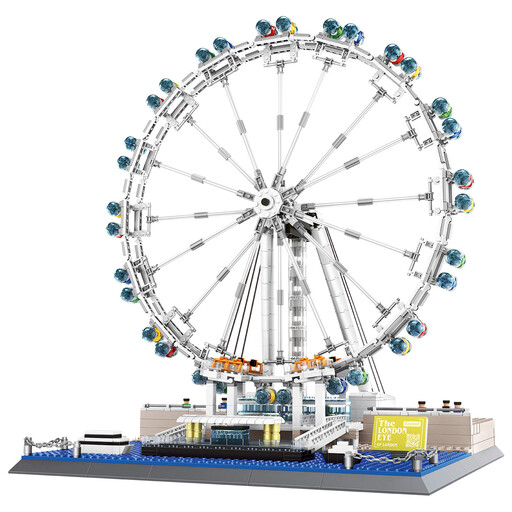
Why This Fits Their Persona: Perfect for older children, teens or adult hobbyists in the UK who enjoy a complex and rewarding project. Building a detailed replica of a famous London landmark provides a huge sense of accomplishment and results in a fantastic display piece.
The high piece count (1528) and intricate design are clearly aimed at an older audience, avoiding the "frustration factor" for younger kids. It uses high-toughness ABS parts to ensure the large, rotating structure is stable.
This is an advanced architecture model set that creates a large, detailed and functional (rotating) model. It is an excellent activity for developing concentration and patience.
We have compiled a complete, real-time list of products that fully satisfy these strict selection criteria and UK safety regulations.
1. Are building blocks from different brands compatible? This varies significantly. Major brands like LEGO have a patented system that is generally not compatible with others. However, many other manufacturers of traditional interlocking bricks produce sets that are compatible with each other, which is great for expanding a collection. For magnetic tiles, compatibility usually depends on the size of the tiles (e.g., 7.5cm sets are often compatible with other 7.5cm sets). Always check the product description for compatibility information before purchasing.
2. How do I clean and maintain building blocks safely? For standard plastic blocks, the safest method is to wash them by hand in lukewarm water (below 40°C) with a mild soap. Avoid hot water, as it can warp the plastic. Rinse them thoroughly and let them air dry completely on a towel. For magnetic tiles or pieces with electronic components, do not submerge them in water. Instead, wipe them clean with a soft, dry or slightly damp cloth.
3. What is the main difference between interlocking blocks and magnetic tiles? Interlocking blocks require precise alignment and pressure to connect, which is excellent for developing fine motor skills and strength. The connections are very strong, allowing for complex, sturdy structures. Magnetic tiles connect automatically when their edges are brought close together. This makes building faster and more intuitive, which is ideal for younger children and for exploring 3D shapes and geometric concepts quickly.