
24/7 Customer Support

Free returns

Same-day & Next-day Delivery

Quality Guaranteed

Unlock Your Welcome Offers: FREE Delivery | Up to 80% OFF | Free 30-day JoyPlus trial
Download the APP
By the Joybuy Product Recommendation Officer
Buying building blocks sets can look straightforward until you compare piece counts, age guidance, magnetic strength, materials and finished dimensions. A colourful box may promise creativity, STEM learning or hours of family play, but those claims do not always explain whether the set suits your child, your available space or your intended use.
This guide highlights common buying pitfalls and compares practical options for families, hobby builders and collectors in the UK.
A set with 1,600 pieces may offer a longer build, but it can also require more sorting, storage space and patience. For younger children, a smaller magnetic building set may provide more immediate play value than a complex architectural model.
Check whether the piece count matches the intended experience:
Piece count should be considered alongside the model’s finished size and build complexity.
Terms such as “child-safe”, “educational” and “non-toxic” are not a substitute for checking the product listing. Look for clear information about recommended age, small-parts warnings, materials and responsible-person details.
Many conventional construction toys contain small pieces and are not suitable for children aged 3 and under. Some sets recommend assembly from age 6 or 7 with direct adult supervision. Magnetic tiles also require regular inspection: discontinue use if a tile is cracked, damaged or shows signs that a magnet may be loose.
Architectural building sets and landmark building blocks can become sizeable display pieces. For example, the COBI Concorde model measures approximately 61.5 cm in length, while the COBI Titanic model measures approximately 38.5 cm in length.
Before ordering, consider:
ABS plastic is widely used in construction toys because it is rigid and suitable for interlocking parts. Smooth edges are important for comfortable handling, particularly in children’s sets. Product descriptions may also specify reinforced magnets or ultrasonic welding to secure magnetic components inside the tiles.
For magnetic building blocks, check whether the product includes:
Magnetic strength affects how easily children can build stable 2D and 3D shapes, but a very firm connection may require more effort from younger hands.
Follow the age guidance shown on the product page rather than choosing by appearance alone. A set designed for children aged 3 and above may use larger magnetic tiles, while detailed model building kits often include smaller parts and recommend use from age 6 or 7.
Adult supervision is particularly sensible during a first build, when children are learning how pieces connect, and whenever younger children are nearby.
The right theme can make a set more engaging. Consider whether the recipient prefers:
For hobby building sets, illustrated instructions and printed details can make the finished model more suitable for display. For younger children, reusable pieces, storage and compatibility with other tiles may matter more than realism.
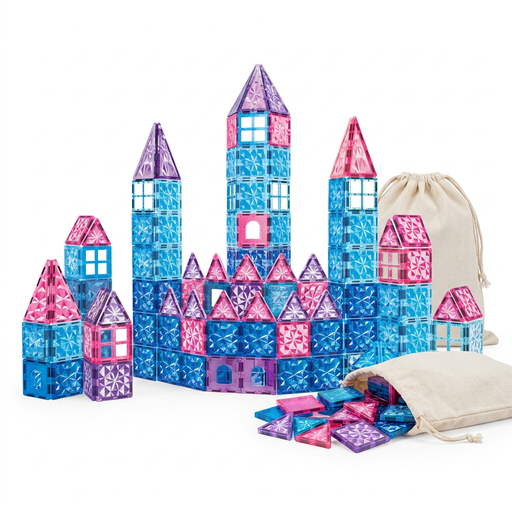
Why This Fits Their Persona: A compact starting point for families wanting magnetic construction toys that are easy to store and take on trips around the UK.
The 58-piece format avoids paying for a large, difficult model before knowing whether the child enjoys magnetic building.
7.5 cm magnetic tiles, ABS construction, storage pouch and no installation required.
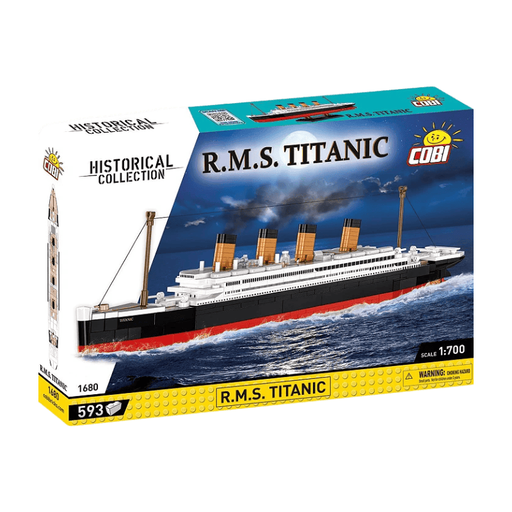
Why This Fits Their Persona: A structured model for adult hobby builders, older children and maritime-history enthusiasts who want a build that can move from play to display.
The listing gives a defined scale, piece count, finished dimensions and age guidance, making the commitment easier to judge.
593 pieces, movable cranes, propellers and rudder, plus a display stand and name plaque.
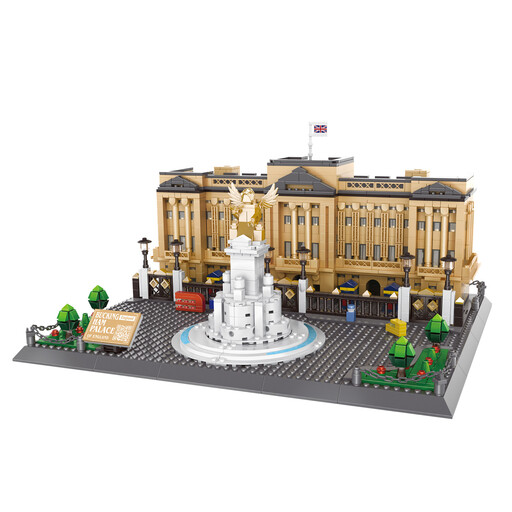
Why This Fits Their Persona: Suits committed builders, architecture fans and gift buyers looking for a substantial British landmark model for a dedicated display area.
Its 1,695-piece specification and 2.57 kg gift-box weight signal a longer, more involved project rather than a quick children’s build.
ABS parts, a detailed Buckingham Palace theme and a finished model intended for collection or display.
We have compiled a complete, real-time list of products that fully satisfy these strict selection criteria and UK safety regulations.
For a birthday or Christmas present, check the recipient’s age, interests and patience before choosing a piece-heavy model. Magnetic tiles, farm-themed construction toys for children and nature sets can suit open-ended play, while landmark building blocks and model building kits are more focused gifts.
For a housewarming present or office decoration, architectural building sets such as the London Eye, Eiffel Tower or Buckingham Palace models may have more display relevance. The London Eye set contains 1,528 pieces and features a rotatable Ferris wheel design. The Eiffel Tower set contains 976 pieces and focuses on its steel structure and cut-out details.
For family use, choose a project that allows adults and children to share tasks. Sorting, following instructions and discussing architecture or transport can turn construction into a collaborative activity without promising a particular educational outcome.
Some magnetic building sets are listed for children aged 3 and above, but conventional small-part models may recommend age 6 or 7. Always follow the individual product warning. Keep small pieces away from children aged 3 and under, and supervise first use.
Count and inspect the tiles after play, wipe them with a damp cloth if required, dry them fully and place them in the supplied pouch or a lidded container. Do not use any tile that is cracked or appears to have a loose magnet.
The sets described here do not require batteries. The main ongoing considerations are storage, replacement of missing parts and suitable display space. Magnetic sets may also be expanded with compatible pieces, but check the stated tile size and compatibility before purchasing.