
24/7 Customer Support

Free returns

Same-day & Next-day Delivery

Quality Guaranteed

Unlock Your Welcome Offers: FREE Delivery | Up to 80% OFF | Free 30-day JoyPlus trial
Download the APP
Choosing building blocks and construction toys can look straightforward until you compare piece counts, age labels, materials and safety information. A large box does not always mean more useful play, while a low price may conceal small parts, weak connections or limited instructions.
This guide from the Joybuy Product Recommendation Officer focuses on practical selection rather than promotional claims. It covers magnetic building blocks, educational building toys, STEM construction toys, kids building sets, military building block sets, model building kits and puzzle cubes for children, gift buyers and adult hobby builders.
A set with hundreds of pieces may contain many tiny, repetitive elements that are difficult for younger children to handle. Conversely, a smaller set with chunky parts, clear instructions or versatile shapes may offer more satisfying play.
Before buying, check:
Many LEGO-style building blocks, model building kits and military construction sets contain small particles. They are generally unsuitable for children under three because of choking and swallowing risks. Some detailed sets recommend assembly from age six with full adult supervision, even if the finished model is intended for display.
For toddlers, look for larger pieces designed for small hands. For children aged 3+, check that the product’s safety information matches the child’s abilities rather than relying only on the appearance of the packaging.
Magnetic building blocks depend on the quality of their casing, welds and internal magnet enclosure. Inspect the listing for information about secure magnet housing, rounded edges and cleaning instructions. Magnets must not be accessible if a tile cracks or breaks. Keep damaged pieces away from children and follow the manufacturer’s warnings.
For products sold in the UK, also look for clear manufacturer or responsible-person details and relevant conformity information, such as CE or UKCA marking where applicable. Product pages should provide enough safety guidance to make an informed choice.
ABS plastic is widely used for building blocks because it is lightweight and suitable for moulded interlocking parts. Smooth edges and consistent connection points can make assembly more comfortable. For magnetic tiles, ultrasonic welding or another secure enclosure method may help keep magnets contained, but buyers should still inspect pieces regularly.
For soft construction toys, such as foam blocks, check the covering, cleaning method, maximum load and whether the item is designed for indoor use.
Age guidance should be treated as a practical safety and difficulty indicator. A set marked 6+ may involve numerous small parts, detailed instructions and a longer assembly time. A set for children aged 3+ may use larger components but still require supervision, especially when children share toys with younger siblings.
Puzzle cubes are a separate category: a compact 2x3x3 puzzle may be suitable for older children or adult collectors, but its small components and turning mechanism are not equivalent to toddler-friendly blocks.
Construction play can quickly spread across a kitchen table or carpet. Count the storage requirements before ordering:
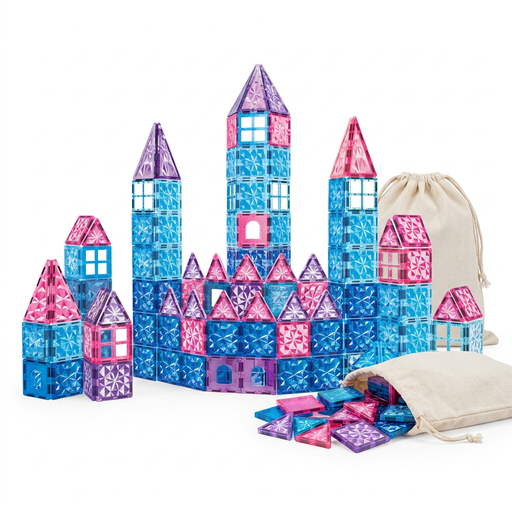
Why This Fits Their Persona: A compact starter collection for families who want to introduce magnetic construction without immediately buying a large set. The included storage pouch is useful for travel and tidying up in smaller UK homes.
The 58-piece format makes the contents easier to assess than a vague “large set” description. Its listed magnetic tile design, storage pouch and smooth ABS construction address portability and organisation.
58 diamond-surface pieces; magnetic connections; storage pouch; no battery requirement stated.
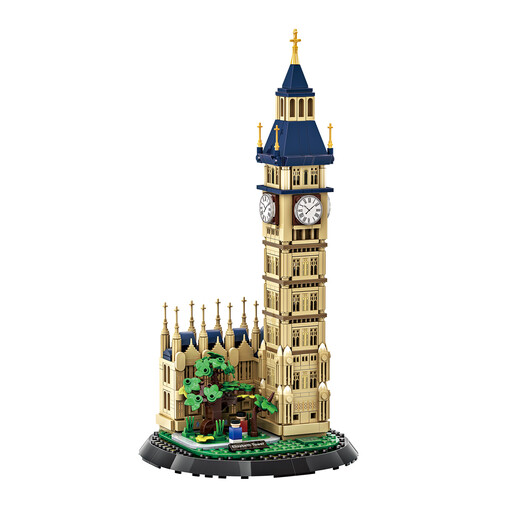
Why This Fits Their Persona: A detailed architectural project for adult hobby builders, older children assembling with supervision and gift buyers seeking a recognisable display model.
The listing gives a defined 783-piece count, gift-box dimensions of 40 × 25 × 8.7 cm and a finished architectural subject, helping buyers plan both assembly and display.
783 ABS pieces; London landmark theme; stated gift-box dimensions; suitable for display-oriented building.
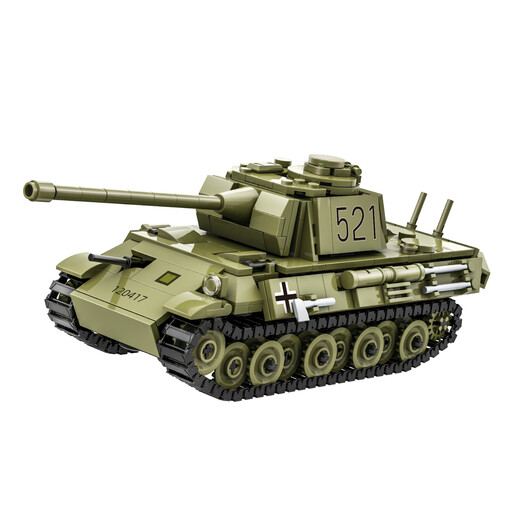
Why This Fits Their Persona: Designed around a military vehicle subject, this set suits hobby builders, military model enthusiasts and families looking for a longer parent-child construction project.
The product clearly states that it contains small parts and recommends assembly from age six with full adult supervision. This makes its intended use clearer than a generic children’s toy listing.
638 ABS pieces; camouflage-green tank model; stated 40 × 25 × 8.7 cm gift-box size; suitable for display after assembly.
For pre-school learning, the Numberblocks MathLink Cubes 1-10 Activity Set combines 100 cubes with activity cards covering counting, number recognition, addition and subtraction. It is listed for children from age three, with adult supervision advised because of small parts.
Children who prefer hands-on engineering may enjoy the Spin Master Meccano Junior 150 Piece Building Bucket, which includes chunky pieces, a child-sized wrench and screwdriver, three starter model instructions and a reusable storage bucket. It is listed for age five and above.
For younger toddlers, the HOMCOM 6 Piece Kids Soft Play Set uses foam components for climbing, crawling, stacking and rearranging. It is designed for children aged 1–3, with indoor use, adult supervision and a stated maximum load of 60 kg.
We have compiled a complete, real-time list of products that fully satisfy these strict selection criteria and UK safety regulations.
Some are, but the age label must match the actual design. Check for small-part warnings, magnet safety information and the manufacturer’s recommended age. Children under three should not use sets containing small pieces unless the product is specifically designed for that age group.
Store them in a dry container or pouch, wipe them with a damp cloth when needed and inspect tiles regularly. Stop using any piece that is cracked, split or has an exposed magnet. Avoid placing magnetic toys near items that may be affected by magnets, and keep loose pieces away from younger children.
Many building blocks, model kits, puzzle cubes and mechanical construction toys require no batteries. Sets with lights, music or motorised features may need batteries, so check the product details before purchase. Battery-powered toys should be stored securely and handled according to the supplied safety instructions.