
24/7 Customer Support

Free returns

Same-day & Next-day Delivery

Quality Guaranteed

Unlock Your Welcome Offers: FREE Delivery | Up to 80% OFF | Free 30-day JoyPlus trial
Download the APP
From simple towers to intricate architectural replicas, building toys offer a unique blend of creativity, learning and satisfaction. Whether you're buying for a curious child or an adult hobbyist, the market is filled with options. However, not all construction toys are created equal. Many shoppers find themselves with a box of frustratingly poor-quality pieces or a set that gathers dust after a single use.
As the Joybuy Product Recommendation Officer, my role is to help you see past the marketing clutter. This guide will highlight the common traps to avoid and the key factors to check, ensuring your next purchase provides lasting value and enjoyment.
Before you add anything to your basket, be aware of these frequent issues that can turn a promising toy into a disappointment:
To ensure you're getting a quality product, focus on these essential parameters. They are far more important than piece count or flashy packaging.
The industry standard for high-quality building blocks is ABS (Acrylonitrile Butadiene Styrene) plastic. This material is known for its strength, colourfastness and ability to be moulded with high precision, which is crucial for that consistent clutch power. More importantly, always look for the UKCA mark on the packaging. This indicates that the product has been assessed and conforms to UK safety standards (such as the EN 71 toy safety directive), ensuring it is free from harmful chemicals and designed to be safe.
Understanding the "system" a toy uses is key to its long-term value.
Choosing between them depends on your goal. For fostering creativity in children, open systems are often a better investment. For adult hobbyists seeking a specific display piece, a closed system model building kit is ideal.
The age recommendation on the box is a starting point, not a strict rule. Consider the user's actual experience and fine motor skills. A complex 800-piece set labelled "6+" might be overwhelming for a six-year-old new to building blocks, whereas an experienced builder of the same age might be ready for the challenge. Look at the number of pieces, the complexity of the instructions and the size of the parts to make a more informed judgement. Educational building sets designed for younger children often feature larger, chunkier pieces that are easier to handle.
Instead of a generic list, we've matched some excellent options to specific types of builders.
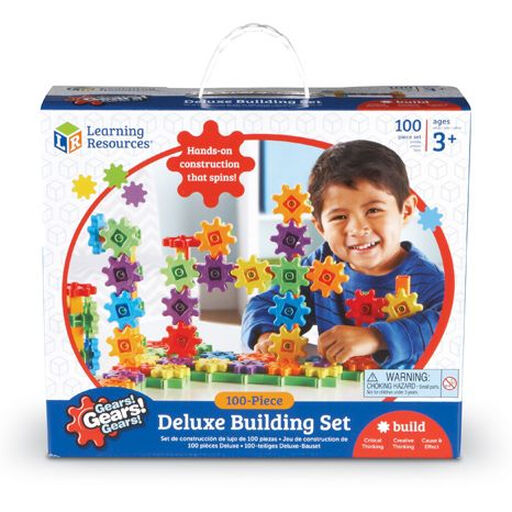
Why This Fits Their Persona: This set is perfect for introducing young children in the UK to foundational engineering concepts. It moves beyond simple stacking, teaching cause-and-effect as they see how connecting gears creates motion. The large, colourful pieces are ideal for small hands still developing dexterity.
It completely sidesteps the "100-in-1" myth by being a true open-ended STEM toy. The goal is exploration, not replicating a specific model. The durable, chunky pieces also eliminate issues with poor clutch power.
Introduces early engineering and problem-solving skills. The pieces are robust and designed for long-lasting play, providing excellent value.
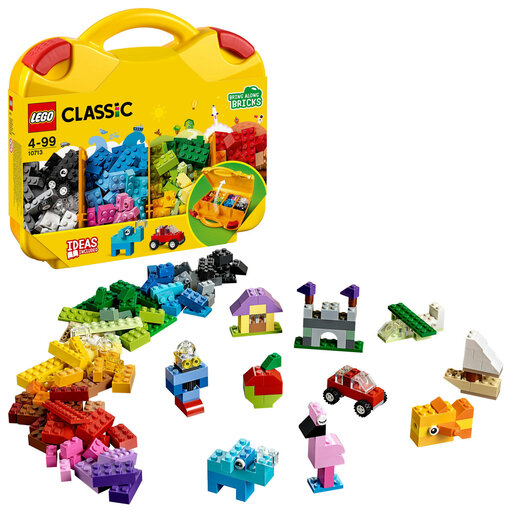
Why This Fits Their Persona: This is an ideal starter set or expansion for any young builder. It provides a versatile collection of standard bricks, wheels and shapes that fuel imagination. The sturdy suitcase with sorting compartments is a practical bonus for UK families, making tidy-up and travel simple.
As a classic open-system set, it's the antidote to restrictive kits. The focus is on free-building. The renowned LEGO quality ensures perfect clutch power and the suitcase provides excellent "after-build" value through organisation and portability.
Encourages open-ended creative play and is fully compatible with the wider LEGO system. The integrated storage solution is highly practical.
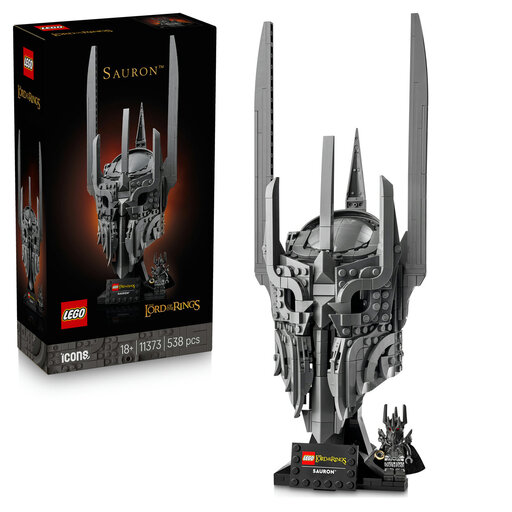
Why This Fits Their Persona: This is a pure display piece for adult fans. It's a challenging and mindful building experience that results in a striking model for a desk or shelf. It caters directly to the collector and film enthusiast looking for a sophisticated building set for adults.
This set's primary purpose is its "after-build" value as a display model, which it delivers exceptionally well. It's a closed system by design and its value lies in the accuracy and aesthetic of the final replica, not in creative rebuilding.
A highly detailed and authentic replica from a popular franchise. It includes a display stand and name plaque, making it a complete collector's item straight out of the box.
We have compiled a complete, real-time list of products that fully satisfy these strict selection criteria and UK safety regulations.
For most plastic building blocks, the safest method is to wash them by hand in lukewarm water (no hotter than 40°C) with a mild soap. Place them in a colander and rinse thoroughly. Avoid washing pieces with stickers, electrical parts or pre-assembled mechanisms. Let them air dry completely on a towel before storing to prevent moisture build-up. Never put them in a washing machine or dishwasher, as the high heat can warp the plastic.
Not necessarily, but there is often a correlation between price and quality control. Higher-priced sets from established brands typically use premium ABS plastic and have very tight manufacturing tolerances, ensuring that perfect "clutch power." Cheaper alternatives can be a false economy if they lead to frustration. However, value is also about the building experience and final model. Some mid-priced model building kits offer excellent detail and an enjoyable build, providing great value for hobbyists.
While all building toys have some educational value, a dedicated STEM toy is specifically designed to teach principles of Science, Technology, Engineering and Maths. For example, a set like the Learning Resources Gears focuses on mechanical engineering concepts. A regular set of building blocks, while excellent for developing spatial reasoning and creativity, is more about free-form construction. Both are valuable, but STEM toys have a more structured learning objective.