
24/7 Customer Support

Free returns

Same-day & Next-day Delivery

Quality Guaranteed

Unlock Your Welcome Offers: FREE Delivery | Up to 80% OFF | Free 30-day JoyPlus trial
Download the APP
From the satisfying click of interlocking bricks to the creation of a magnificent fortress, building toys have been a cornerstone of play for generations. They offer more than just entertainment; they are powerful tools for developing creativity, problem-solving skills and spatial awareness. However, the market is flooded with options and it's easy to fall for marketing hype and purchase a set that ends up gathering dust.
As the Joybuy Product Recommendation Officer, my role is to help you navigate this landscape. We will look past the brightly coloured boxes and focus on what truly matters, ensuring your next purchase is a lasting source of joy and learning, not a short-lived frustration.
Before diving into what to look for, let's identify the common traps that lead to buyer's remorse. Being aware of these can save you both money and disappointment.
To avoid these pitfalls, focus on a few key technical parameters. These are the non-negotiable elements that separate a high-quality educational toy from a disappointing one.
The foundation of any good building toy is the material it's made from. For plastic building blocks for kids, look for items made from ABS (Acrylonitrile Butadiene Styrene). This material is known for its strength, rigidity and resistance to impact, ensuring pieces connect firmly and don't warp or break over time.
For all children's toys sold in the UK, ensure they are marked as compliant with EN 71 standards. This is your assurance that the product has been tested for safety, including the absence of harmful chemicals and the physical safety of its parts. When considering magnetic tiles, this is particularly crucial. Look for sets with ultrasonically welded casings to ensure the small, powerful magnets are securely sealed inside, preventing them from becoming a hazard.
Consider whether you are buying into an "open" or "closed" building system.
Choosing the right system depends on the user's goal. Is it to replicate a detailed model or to build freely from their imagination?
To help you match the right product to the right person, we have selected a few options from our collection, each suited to a different type of builder.
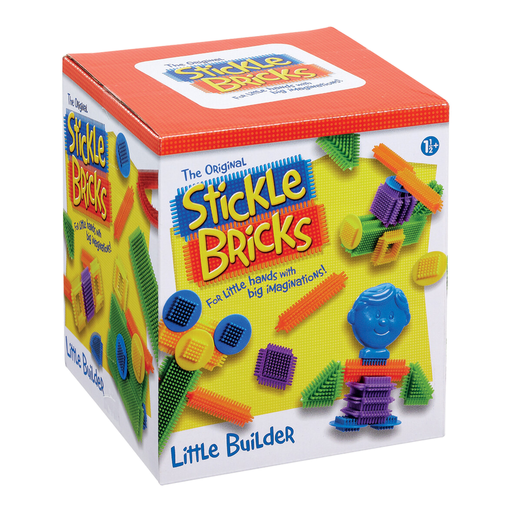
Why This Fits Their Persona: This set is perfect for little hands in the UK just starting their building journey. The unique, bristly pieces are easy to grip and connect in any direction, removing the frustration of aligning traditional blocks. It's an ideal first construction toy for developing dexterity.
It directly solves the "mismatched age guide" pitfall. Designed for ages 18 months and up, the chunky, safe pieces are genuinely appropriate for toddlers, providing a satisfying and achievable building experience.
The pieces stick, stack and construct with minimal effort, encouraging imaginative play without the need for precise alignment. It's a classic design that promotes fine motor skills.
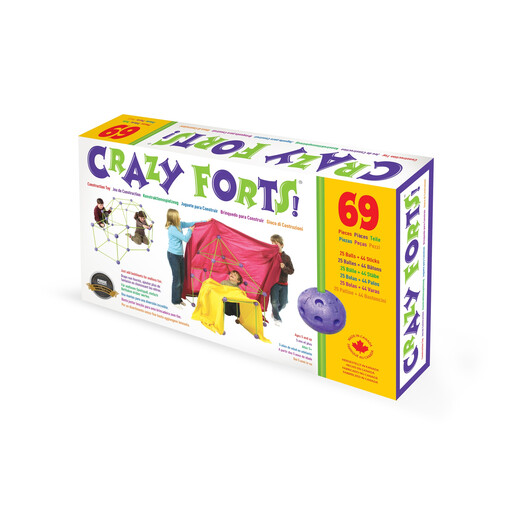
Why This Fits Their Persona: For the child who loves building immersive worlds, this den building kit is ideal. It moves beyond tabletop models to create life-sized play spaces. It's perfect for collaborative play with friends or siblings, turning a living room into a castle, cave, or pirate ship.
This kit shatters the "limited creativity" trap. The simple ball-and-stick system is a framework for imagination. By adding bedsheets or blankets, children create their own unique environment every time, ensuring high replay value.
It encourages physical activity and large-scale problem-solving. The durable, reinforced sticks and solid balls create a stable frame for indoor or outdoor fun, making it a versatile choice.
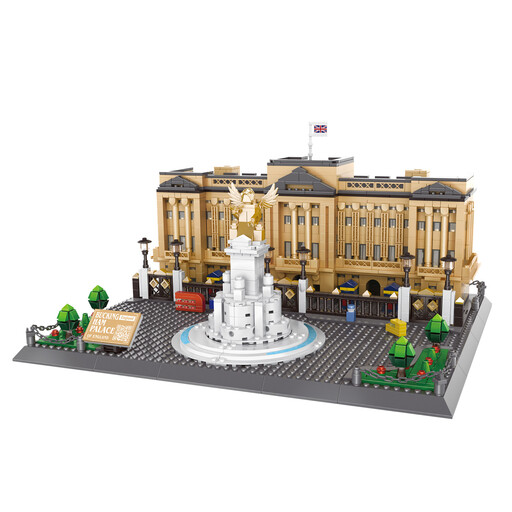
Why This Fits Their Persona: This is a serious project for dedicated builders. As one of the premier construction sets for adults, it appeals to those in the UK who appreciate history, architecture and a complex challenge. The finished model is a substantial and impressive display piece.
It avoids the "durability deception" often found in large sets. The product specifies "high-toughness ABS parts with tight interlocking for a sturdy finished product," which is essential for a 1695-piece model to hold its shape.
This set offers an authentic and detailed replica of a world-famous landmark. It provides hours of focused, stress-relieving activity and results in a collectible model with significant display value.
We have compiled a complete, real-time list of products that fully satisfy these strict selection criteria and UK safety regulations.
Safety is a primary concern with any toy containing magnets. Reputable magnetic tiles are safe for children aged 3 and up, provided they meet strict safety criteria. Always check for EN 71 compliance, which ensures the magnets are securely enclosed in a durable plastic shell that prevents them from coming loose. For children under 3, or any child prone to putting objects in their mouth, constant adult supervision is essential. Regularly inspect tiles for any cracks or damage and discard them if the integrity of the casing is compromised.
For most plastic building blocks and magnetic tiles, cleaning is straightforward. Wipe them down with a damp cloth and a mild soap solution, then allow them to air dry completely. Avoid submerging magnetic toys in water, as this can damage the magnets. Some interlocking brick systems can be washed in a mesh laundry bag on a gentle, cool cycle in the washing machine, but always consult the manufacturer's instructions first to avoid damage.
STEM toys, including many types of engineering toys and construction sets, offer tangible developmental benefits. They encourage spatial reasoning as children figure out how to build stable 3D structures. They promote problem-solving skills when a design fails and needs to be rethought. Fine motor skills are honed by manipulating and connecting small pieces. At its core, building with these creative toys provides a hands-on introduction to concepts of physics, geometry and design in a fun, intuitive way.