
24/7 Customer Support

Free returns

Same-day & Next-day Delivery

Quality Guaranteed

Unlock Your Welcome Offers: FREE Delivery | Up to 80% OFF | Free 30-day JoyPlus trial
Download the APP
Buying building toys for children can look simple until you compare age labels, piece counts, themes, materials and play features. A large box does not always mean more useful play, while a low-priced magnetic set may not offer the durability or storage solution your family needs.
For parents, grandparents and gift buyers in the UK, the most suitable choice usually depends on how the child actually plays. Do they enjoy following instructions, inventing stories, collecting characters or constructing free-form models? This guide highlights common buying traps, essential checks and suitable options for different age groups and play styles.
A higher number of pieces can indicate a longer building project, but it does not automatically mean better value. Some sets contain many small decorative elements, while others include larger components that are easier for younger children to handle.
Compare:
For example, a 37-piece preschool set may be more practical for a toddler than a complex set containing hundreds of small components.
Some educational construction toys focus on stacking, connecting and spatial planning. Others are mainly themed playsets that use a small amount of building to introduce storytelling.
A child who enjoys open-ended design may prefer magnetic building blocks. A fan of films, games or television characters may spend more time with a themed model such as Disney building toys, LEGO building sets or a Pokémon LEGO set.
Always check the manufacturer’s recommended age, warnings and the child’s maturity. Several construction sets include small parts and are not suitable for children below the stated age. Magnetic products also require careful supervision: do not give loose magnets to young children, and stop use if a tile or component becomes damaged.
The CE or UKCA marking, where applicable, is one useful compliance check, but buyers should also read the full product warning, material information and seller details. Do not rely on a product photograph alone.
For children aged around two to four, look for larger bricks, simple shapes and easy-to-grip components. LEGO DUPLO-style pieces and starter-brick formats are designed around smaller hands, although adult supervision remains sensible.
From around four to six, children may be ready for smaller construction pieces and simple character-led models. Older children and teenagers can often manage longer instructions, microscale builds and display-focused designs.
For magnetic sets, check whether the listing identifies the material, such as ABS plastic, and whether it describes enclosed magnets, rounded edges or welded construction. These details can help you compare products, but they do not replace checking the safety information and condition of the set.
Useful questions include:
Measure the available play area before ordering. A finished model may be much larger than the packaging suggests. The LEGO Pokémon Iconic Trainer Moments Poké Ball, for instance, measures over 22 cm high, 24 cm wide and 22 cm deep. A display-oriented build needs a stable shelf, while a magnetic tile set needs a container where pieces will not be lost.
For battery-powered role-play toys, check whether batteries are included, how many are required and whether the product has small removable components.
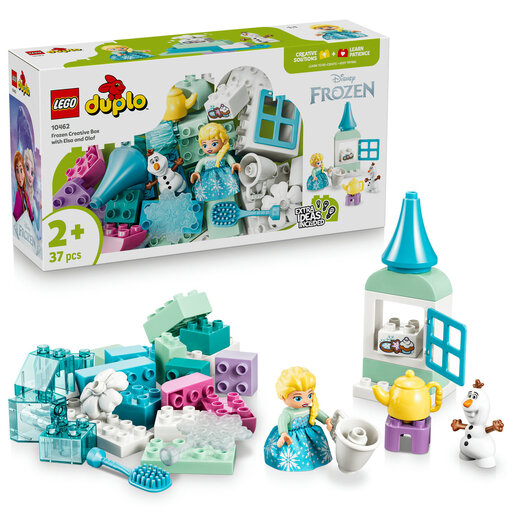
Why This Fits Their Persona: A manageable choice for toddlers aged 2+, especially when you want a recognised theme, larger pieces and several ways to play without a very large set.
The 37 larger bricks are easier to handle than a small-piece advanced model, while the Elsa and Olaf figures support role play as well as simple building.
Includes 37 pieces, two character figures and accessories such as a teapot, cup, brush and wand. The recommended age is 2+.
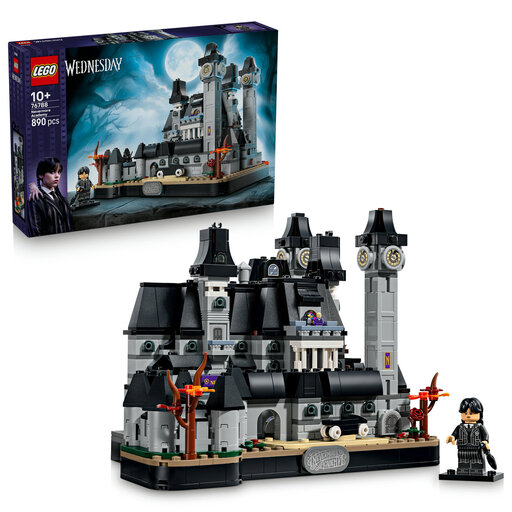
Why This Fits Their Persona: Suitable for older fans who want a substantial build that can remain on display in a bedroom or study after construction.
The model offers more than a single exterior shell, with an open back and several recreated interior locations for display or storytelling.
Contains 890 pieces, a Wednesday Addams minifigure, Wednesday and Enid microfigures and a secret drawer in the base. Check the current listing age guidance before purchase.
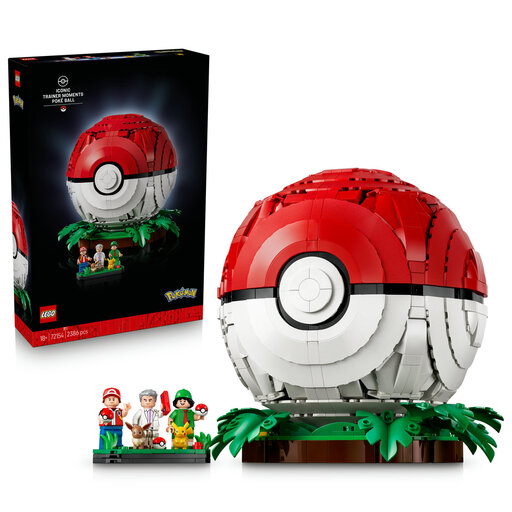
Why This Fits Their Persona: Designed for adult Pokémon fans or older gift recipients who want a long construction project and a themed display piece rather than a toddler playset.
Its very high piece count is matched with a defined build purpose: an opening Poké Ball that reveals a laboratory and battle scene.
Contains 2,386 pieces, five character figures and a model measuring over 22 cm high, 24 cm wide and 22 cm deep. It is listed for ages 18+.
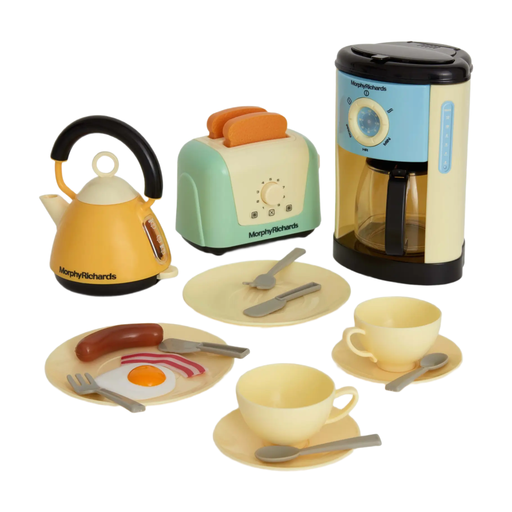
Why This Fits Their Persona: A practical option for preschoolers who prefer pretend cooking, shared play and familiar household scenarios over traditional brick construction.
The play value is not dependent on a single build. Children can repeatedly use the coffee maker, kettle, toaster, crockery, cutlery and play food.
Suitable from age 3, requires no batteries and includes a fillable coffee maker, kettle with water-level indicator and toaster with pop-up toast function.
We have compiled a complete, real-time list of products that fully satisfy these strict selection criteria and UK safety regulations.
Magnetic sets can be useful for open-ended construction, but compare more than the number printed on the box. A 60-piece farm set may suit a child who enjoys themed storytelling, while a 150-piece nature set may offer more freedom to build towers, animals and geometric shapes.
Before buying, check:
For siblings, consider whether there are enough pieces for two children to build at once. For travel, a smaller set with a pouch may be more convenient than a large box.
Choose sets with larger pieces, simple models and clear age guidance, such as a toddler brick set. Avoid small construction components and loose magnets. Supervise play and check pieces regularly for damage.
Some are listed for ages 3+, but suitability depends on the child and the product design. Read the safety warning, confirm that magnets are securely enclosed and remove any damaged tile immediately. Magnetic sets should be stored safely after play.
Lifespan depends on material quality, storage and how frequently the set is used. Keep pieces dry, avoid forcing connections and store them in a labelled box or pouch. Themed sets may provide longer interest when they combine building with character play, while open-ended magnetic tiles can be extended with compatible expansion packs.