
24/7 Customer Support

Free returns

Same-day & Next-day Delivery

Quality Guaranteed

Unlock Your Welcome Offers: FREE Delivery | Up to 80% OFF | Free 30-day JoyPlus trial
Download the APP
Building toys for children can offer hours of hands-on play, but choosing the right set is not simply a matter of counting pieces. A large box may contain many tiny parts, a themed model may have limited replay value and a low-priced magnetic set may not include enough variety for the structures children want to create.
For UK parents, grandparents and gift buyers, the most useful approach is to compare age suitability, construction method, storage, play value and safety information before purchasing. The following guide explains the main buying pitfalls and highlights a selection of building block sets, magnetic building blocks and model building kits for different types of builder.
A high piece count can look attractive, but it does not always mean more creative possibilities. Some sets contain many small elements intended for one display model, while others include fewer, larger pieces that can be reused in several designs.
Check whether the set supports:
For younger children, chunky pieces and straightforward connections may be more useful than a large collection of intricate components.
Age labels are not just marketing categories. They help indicate the complexity of assembly and the size of the components. Many children’s building sets carry warnings about small parts and choking hazards, particularly those aimed at older children and hobby builders.
Always check the product page and packaging for:
A set labelled for ages 7 or 10 may be unsuitable for a younger child, even if they already enjoy simpler construction toys.
Some STEM construction toys need a clear floor area, while detailed model building kits require a stable table and several hours of concentration. Magnetic tiles may be easy to pack away, whereas a large palace or track system can need dedicated storage space.
Consider the child’s available play area and whether the finished model will be played with, dismantled or displayed.
Building toys use different connection systems, each suited to a different play style:
For children who become frustrated easily, look for clearly illustrated instructions, larger parts or simple snap-fit connections. Older children may prefer tighter connections and more detailed steps.
Product descriptions commonly specify materials such as ABS plastic, but buyers should also look at the finish and construction. Rounded edges, securely attached components and smooth connection points are practical details for regular handling.
No building toy should be treated as indestructible. Check pieces before use, particularly magnetic parts and remove any damaged component. Keep packaging and instructions for reference, especially when the set includes age or supervision guidance.
Piece count should be considered alongside piece size and storage. A 150-piece set may be easier to organise than a 1,695-piece architectural model, but the larger set may suit a hobby builder seeking a long construction project.
Storage features that can make a difference include:
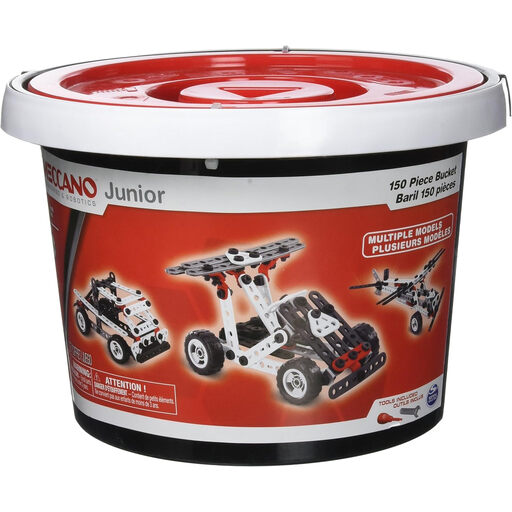
Why This Fits Their Persona: Designed for first-time builders aged 5 and over, this reusable bucket offers a practical starting point for families wanting hands-on construction without committing to a large display model.
The 150 chunky pieces are intended for repeated building and dismantling, rather than a single permanent model. The bucket also helps prevent pieces becoming scattered.
Includes a child-sized wrench and screwdriver, plus instructions for a car, robot and space shuttle.
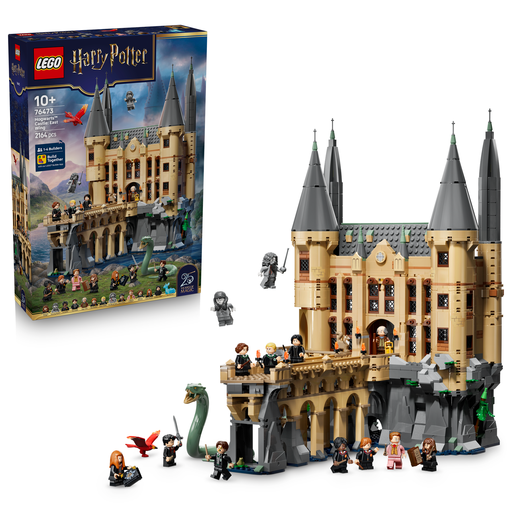
Why This Fits Their Persona: This detailed set suits older children, Harry Potter fans and collectors who value an immersive build with display potential and recognisable themed features.
The 2,164-piece count corresponds to a substantial model with defined play areas, figures and architectural details, rather than loose filler components.
Suitable for ages 10+, includes 13 character figures and measures over 42 cm high when assembled.
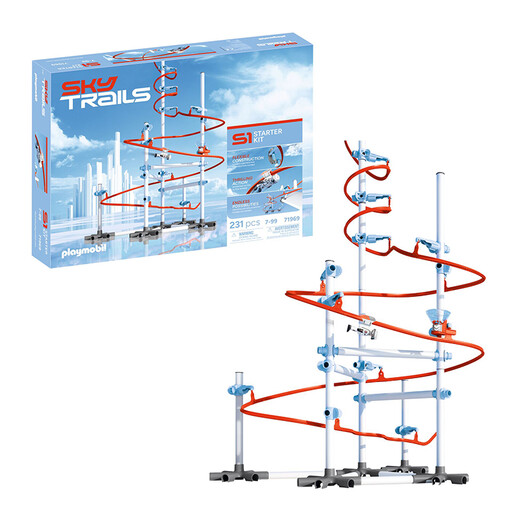
Why This Fits Their Persona: Suitable for children aged 7 and over who prefer active, redesignable construction rather than a quiet, fixed display build.
The modular plug-and-play system is designed for repeated track changes. Buyers can also expand it with compatible Sky Trails additions.
Includes over 100 pieces, two figures, rails, ramps, tubes, a helix and a wave track; the Looping expansion requires this starter set.
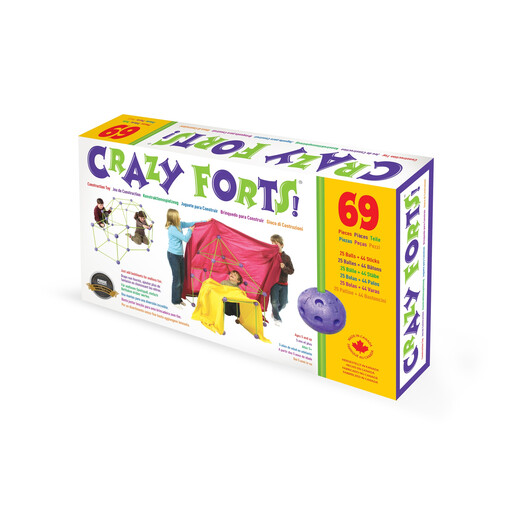
Why This Fits Their Persona: Families looking for collaborative toys for imaginative play can build dens, castles or hideaways indoors or outdoors using household sheets.
The 69-piece structure is reusable for different layouts instead of being limited to one themed model. Its design also avoids batteries and app dependence.
Contains 25 plastic balls and 44 reinforced sticks. Follow the supplied warnings: do not climb on structures or use flames, heat sources or non-breathable coverings nearby.
We have compiled a complete, real-time list of products that fully satisfy these strict selection criteria and UK safety regulations.
Before ordering, confirm the following:
Yes, but suitability varies significantly. Children from age 3 may use larger magnetic tiles or simple construction systems, while detailed model building kits often target ages 6, 8, 10 or above. Always follow the specific age label and small-part warning rather than relying on a broad age range.
Most building block sets, magnetic building blocks and mechanical construction toys do not require batteries. Some illuminated or electronic products may need batteries, so check the product details before buying. Ongoing costs usually relate to replacement pieces, storage or optional expansion packs rather than operation.
Choose a set with a storage bucket, case or organised packaging. Encourage children to dismantle models over a clear surface, check pieces for damage and keep instructions with the components. For larger model building kits, a dedicated box or compartmented organiser can reduce lost parts and make future rebuilding easier.