
24/7 Customer Support

Free returns

Same-day & Next-day Delivery

Quality Guaranteed

Unlock Your Welcome Offers: FREE Delivery | Up to 80% OFF | Free 30-day JoyPlus trial
Download the APP
A new built-in electric oven is a significant investment for any UK kitchen. It’s the heart of countless family meals, baking projects and festive feasts. Yet, navigating the market can feel overwhelming. Flashy marketing slogans and confusing technical jargon often obscure the features that truly matter, leading to purchases that disappoint.
As the Joybuy Product Recommendation Officer, my role is to help you sidestep these common issues. We’ll look past the hype to focus on what delivers genuine value and performance for your home. Before you spend a penny, be aware of these frequent pitfalls:
self-cleaning oven models, there's a world of difference between a steam-assist function and a true high-temperature pyrolytic cycle. Paying a premium for a feature that doesn't perform as expected is a common source of buyer's remorse.smart oven with Wi-Fi connectivity and a companion app sounds futuristic. However, many homeowners find they rarely use these features beyond the first few weeks. It's crucial to ask whether you will genuinely benefit from remote pre-heating or a library of app-based recipes or if you're simply paying extra for a gimmick.built-in double oven models—require hardwiring to a dedicated circuit by a qualified electrician. This can add an unexpected expense to your kitchen renovation budget.To make a confident choice, focus on the core parameters that define an oven's performance and suitability for your kitchen.
The first decision is how the oven will fit into your kitchen layout. This determines the type you need.
60cm oven is designed to be installed in a standard 60cm-wide kitchen housing unit, either at eye-level in a tall cabinet or under a worktop. This offers great flexibility and a wide range of features.Understanding the cleaning technology is essential to managing your expectations and workload.
pyrolytic oven locks its door and heats up to around 480°C, incinerating grease and food residue into a fine ash. Once the cycle is finished and the oven has cooled, you simply wipe the ash away. It’s a true "walk away" solution for heavy-duty cleaning.How an oven circulates heat directly impacts your cooking results. A fan oven (often called a convection oven) uses a fan to distribute hot air evenly throughout the cavity. This eliminates "hot spots," allowing you to cook on multiple shelves at once without needing to rotate trays. It's ideal for batch baking and achieving consistent roasts. Many modern ovens are "multifunction," offering a combination of fan, conventional (heat from top and bottom elements) and grill settings.
To help you match a product to your needs, we've identified several models that align with common UK household profiles.
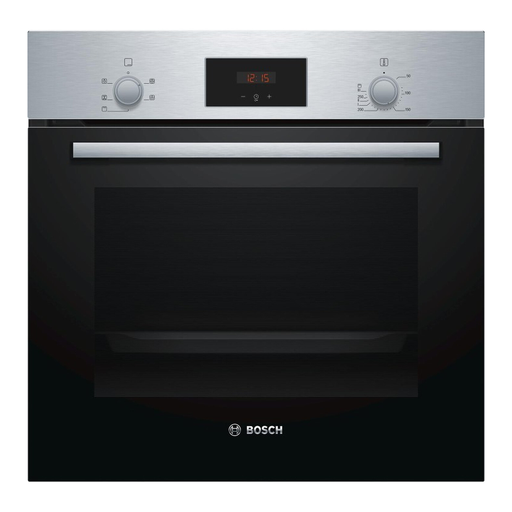
Why This Fits Their Persona: This oven focuses on core performance over unnecessary extras. It's a reliable workhorse for daily dinners and Sunday roasts, with a generous 66-litre capacity and straightforward controls that anyone in the family can use.
It sidesteps the "unused smart feature" trap by providing excellent cooking technology (3D Hotair) without the added cost and complexity of Wi-Fi connectivity.
3D Hotair system ensures even heat on up to three levels simultaneously. The GranitEnamel interior is smoother than standard enamel, making it easier to wipe clean.
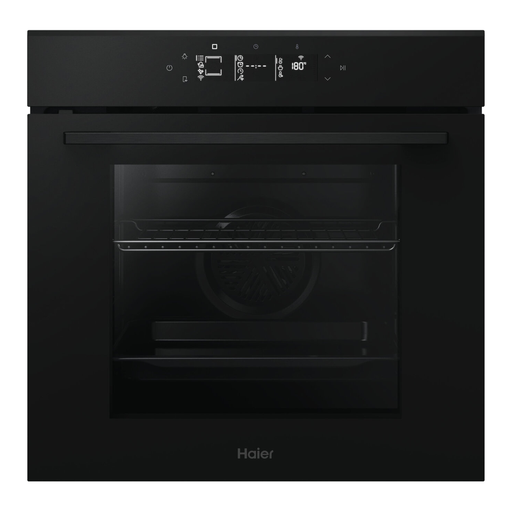
Why This Fits Their Persona: For those who want the latest technology that genuinely enhances cooking. The huge 78-litre capacity, integrated meat probe for perfect roasts and Air Fry function make it ideal for hosting, while the sleek black oven finish adds a modern touch.
It solves the "self-cleaning" dilemma by offering a Dual Clean system: a quick Hydrolytic steam cycle for light spills and a full Pyrolytic function for heavy-duty cleaning.
The integrated meat probe takes the guesswork out of cooking joints. The hOn App offers genuinely useful remote control and a large recipe library.
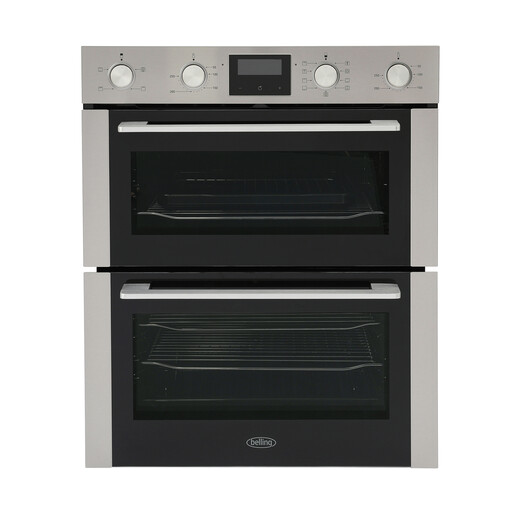
Why This Fits Their Persona: This model is specifically designed for under-counter installation, providing the versatility of a double oven without requiring a tall housing unit. It's the perfect solution for smaller UK kitchens or layouts where eye-level space is limited.
It directly solves the installation pitfall by being purpose-built for a common but tricky kitchen configuration, ensuring a perfect fit and maximising cooking flexibility in a compact space.
It offers true double oven functionality in a built-under format. The main oven is multifunction, providing fan-assisted cooking, while the top oven offers conventional heat and a grill.
We have compiled a complete, real-time list of products that fully satisfy these strict selection criteria and UK safety regulations.
The running cost depends on the oven's energy efficiency rating, its power usage (in kWh) and your electricity tariff. An oven with an A+ rating will be more efficient than one with an A rating. As a rough guide, using a 2.5kW oven for one hour could cost between 60p and 80p, based on average 2026 electricity prices. Look for the energy label on the product, which provides an estimated kWh consumption per cycle for both conventional and fan-assisted modes.
This is a critical safety consideration. Many standard single ovens with a total power load under 3kW can be connected to a standard 13-amp socket. However, more powerful single ovens and almost all built-in double oven models have a higher power rating and must be hardwired by a qualified electrician to their own dedicated circuit (often 20 or 32 amps). Always check the product's specification for its "total connected load" and consult an electrician if you are unsure.
A well-maintained integrated oven from a reputable manufacturer can be expected to last between 10 and 15 years. Longevity is influenced by usage frequency and how well it is cared for. Regularly using the appropriate cleaning function (pyrolytic, catalytic or steam) and avoiding harsh abrasive chemicals on the interior and door glass will help prolong its life and performance.