
24/7 Customer Support

Free returns

Same-day & Next-day Delivery

Quality Guaranteed

Unlock Your Welcome Offers: FREE Delivery | Up to 80% OFF | Free 30-day JoyPlus trial
Download the APP
Replacing an oven can look straightforward until installation day reveals an unsuitable housing size, an awkward power connection or far less usable space than the marketing suggests. A built-in electric oven needs to match your kitchen, cooking habits and household wiring—not just its advertised capacity or appearance.
This guide explains the specifications worth checking, the common buying traps to avoid and our top recommendations for different types of UK households.
“60cm built-in oven” usually refers to the appliance’s external width, which is commonly close to 595mm. However, the required housing cut-out can differ. Check the manufacturer’s installation dimensions, including height, width, depth and ventilation clearance, before ordering.
A single oven is often designed for a housing roughly 590mm high, while a built-in double oven may require a taller eye-level cabinet. Do not assume that replacing one style with another will be a simple swap.
A larger litre figure does not automatically mean more practical cooking space. Look at the number of shelf positions, included trays and the shape of the cavity. A 62-litre single electric oven with four shelf positions may be more useful for everyday meals than a larger cavity with limited accessories.
For families, a family-size oven of around 65–78 litres can accommodate larger roasting trays and batch baking. A built-in double oven adds flexibility, allowing separate temperatures for a main dish and side dishes.
Easy-clean enamel, hydrolytic steam cleaning, catalytic liners and pyrolytic cleaning work in different ways. They can reduce cleaning effort, but none removes the need to wipe spills and follow the instruction manual.
A self-cleaning oven with pyrolytic cleaning uses high temperatures to turn residue into ash. Hydrolytic systems use water and steam to soften grease, while catalytic liners absorb some grease during cooking. Check what parts require manual cleaning and whether accessories can remain inside during a cleaning cycle.
Confirm whether the appliance is a plug-in 13A model or requires hardwiring. The Simfer FO60W is listed with a 13 Amp plug, while several larger models require a qualified electrician. The Hoover double oven and Bosch double oven specifications list a substantially higher connected load, so they should not be treated as direct plug-in replacements.
For rented homes, check with your landlord before changing cabinetry or electrical connections. For owned properties, use the manufacturer’s installation instructions and arrange qualified installation where required.
A single electric oven generally offers one larger cavity and is suitable for most daily cooking. A double model provides two separate cavities, which can be useful for Sunday roasts, entertaining and meals requiring different temperatures.
As a guide:
Remember that a freestanding cooker with two ovens is different from a built-in double oven. The Hisense 60cm electric cooker models include a ceramic hob and stand at approximately 900mm high, so they are not like-for-like replacements for a built-in appliance.
A fan-assisted oven circulates heated air around the cavity, which can support more even cooking across multiple shelf levels. A multifunction oven may add conventional heat, fan cooking, grill, defrost or pizza settings.
An electric oven with grill is useful for browning, toast, gratins and smaller dishes. Energy labels should be compared using the appliance’s stated class. The products below include models rated A or A+ electric oven classifications; actual running cost still depends on temperature, cooking time, usage frequency and local electricity tariffs.
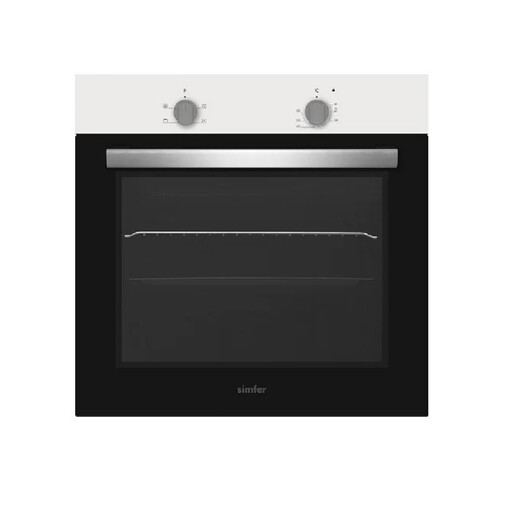
Why This Fits Their Persona: A straightforward white 60cm built-in electric oven for everyday baking, roasting and grilling without paying for connected features.
Its listed 62-litre capacity, four shelf positions and clear four-function layout make the specification easy to assess.
62-litre fan-assisted cavity, integrated grill, easy-clean enamel and A energy rating.
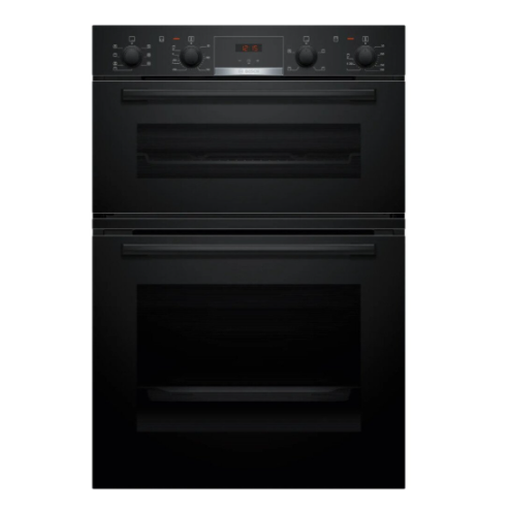
Why This Fits Their Persona: A black built-in double oven for homeowners planning a coordinated modern kitchen and needing two cooking spaces.
The specification states the installation dimensions and confirms that the appliance is intended for eye-level installation, helping avoid cabinet mismatch.
105-litre combined capacity, 3D Hotair, five main-oven shelf positions and EcoClean Direct rear-wall coating.
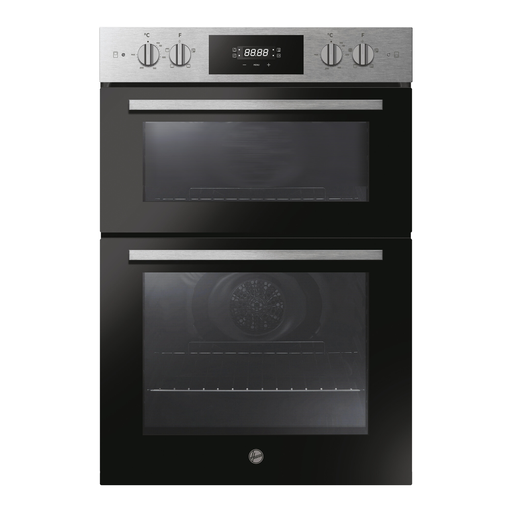
Why This Fits Their Persona: Suited to busy households that cook several dishes and value app connectivity alongside two oven cavities.
Its listed 71-litre main and 45-litre secondary cavities make the capacity clear, while the stated 5.9kW supply highlights the need for suitable installation.
Pyrolytic cleaning in the main oven, Wi-Fi app control, nine cooking modes and triple-glazed doors.
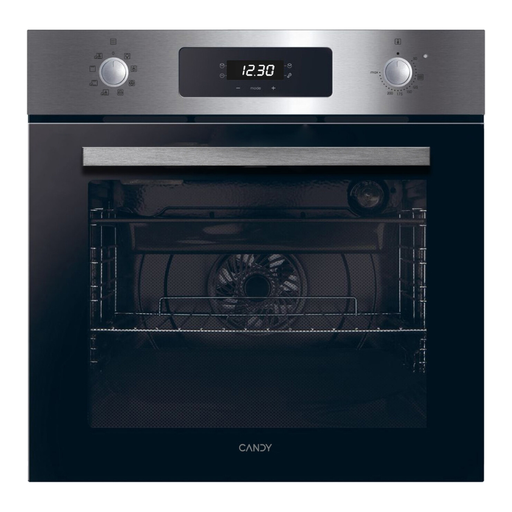
Why This Fits Their Persona: A stainless steel built-in oven for households wanting a roomy single cavity with varied settings for baking, roasting and pizza.
Its eight functions and 70-litre capacity are stated alongside the 595mm external width and installation cut-out measurements.
A+ rating, hydrolytic Easy Steam cleaning, pizza function and touch LED timer.
We have compiled a complete, real-time list of products that fully satisfy these strict selection criteria and UK safety regulations.
Installation depends on the model. Some ovens are supplied with a 13A plug, while larger single and double ovens may require hardwiring. Check the electrical requirements and housing cut-out before purchase. Where hardwiring is required, use a qualified electrician and follow the manufacturer’s instructions.
Running cost depends on the oven’s power consumption, cooking temperature, programme duration and your electricity tariff. An A-rated or A+ electric oven may use less energy than a lower-rated equivalent, but the label should be viewed alongside actual cooking habits. Fan cooking can also reduce the need for prolonged high-temperature operation, depending on the recipe.
Lifespan varies with construction, frequency of use, cleaning routine and maintenance. To support reliable operation, avoid abrasive cleaners, keep ventilation clear, remove spills after the cavity cools and arrange electrical repairs through a qualified professional. Always check the warranty and registration requirements before buying.