
24/7 Customer Support

Free returns

Same-day & Next-day Delivery

Quality Guaranteed

Unlock Your Welcome Offers: FREE Delivery | Up to 80% OFF | Free 30-day JoyPlus trial
Download the APP
Choosing a new built-in electric oven is a significant decision for any kitchen renovation or appliance upgrade. It’s the centrepiece of your cooking space, and getting it right means years of happy baking, roasting and grilling. However, the market is filled with confusing jargon and features that sound impressive but may not suit your needs. Many UK homeowners find themselves paying for functions they never use or, worse, buying an oven that doesn't even fit.
As the Joybuy Product Recommendation Officer, my role is to help you navigate these choices with clear, practical advice. Before you commit, let's look at the most common pitfalls to avoid.
pyrolytic self-cleaning oven heats to around 500°C to incinerate grime to ash, while a catalytic oven uses special liners that absorb grease at normal cooking temperatures. Others offer "hydrolytic" or steam cleaning, which simply uses steam to loosen dirt for you to wipe away. Understanding the difference is key to managing your expectations and budget.60cm oven refers to the standard cabinet width it fits into, not its exact dimensions. More importantly, a built-in double oven comes in two distinct sizes: a taller (approx. 88cm) model for eye-level column housing and a shorter "built-under" model (approx. 72cm) designed to fit beneath a worktop. Ordering the wrong type is a costly and frustrating error.smart oven with wifi can be a fantastic tool, allowing you to preheat your oven on the way home. However, it's crucial to ask yourself if you will genuinely use these remote functions. If you prefer hands-on control, you might be paying a premium for connectivity that gathers dust.To ensure your new integrated electric oven is a perfect fit for your home, focus on these core parameters.
The first decision is about capacity and kitchen layout.
Consider how much time you want to spend on maintenance.
How an oven distributes heat directly impacts your cooking results.
Based on these practical considerations, we've matched several models to different UK household needs.
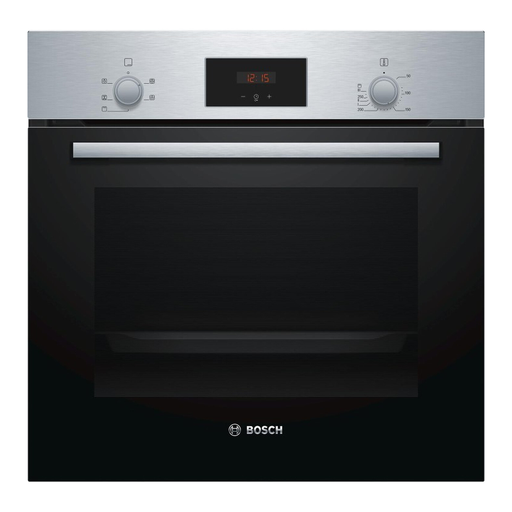
Why This Fits Their Persona: This user needs a reliable, no-fuss appliance that delivers consistent results without a hefty price tag. This Bosch oven focuses on core performance for a new or updated kitchen. The classic stainless steel oven finish fits almost any design.
It avoids overpaying for smart features you won't use. Instead, it invests in what matters: 3D Hotair technology for excellent, even cooking across all shelves.
Features 3D Hotair for multi-level cooking without flavour transfer. The GranitEnamel interior is smoother than standard enamel, simplifying wipe-down cleaning.

Why This Fits Their Persona: Juggling a Sunday roast, sides and a dessert requires space and flexibility. This tall built-in double oven provides a huge 72L main fan oven and a 38L top oven, perfect for large family meals and entertaining.
It correctly identifies the need for a tall housing unit, avoiding the common installation mistake. It also offers a practical cleaning solution (catalytic liners) without the higher cost of a full pyrolytic system.
Equiflow fan technology ensures even heat distribution in the main oven. The catalytic liners absorb grease to simplify cleaning and soft-close doors add a premium touch.
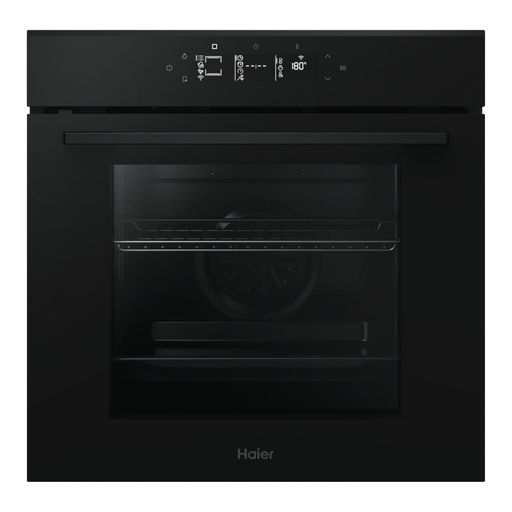
Why This Fits Their Persona: This user embraces technology to enhance their cooking. The Haier H6 is a smart oven with wifi connectivity, controlled via the hOn App for remote preheating and access to over 350 recipes. Its sleek black electric oven design is perfect for a modern kitchen.
While it is a smart oven, its features are genuinely useful for an engaged cook. The app integration and recipe guidance provide real value beyond a simple remote start, justifying the technology.
Features Climatech for even heat distribution and a cool-touch door. The Hydrolytic steam cleaning system offers an eco-friendly way to maintain the oven and telescopic runners make handling hot dishes safer.
We have compiled a complete, real-time list of products that fully satisfy these strict selection criteria and UK safety regulations.
While it may seem like a straightforward task, it is strongly recommended to hire a qualified electrician. Most built-in ovens need to be hardwired directly into your home's mains electricity on a dedicated circuit. This is not a standard plug-in appliance. Incorrect installation poses a serious fire risk, can damage the appliance and will likely void your warranty.
The cost varies depending on your electricity tariff and the specific oven model, but a typical pyrolytic cycle, which lasts 2-3 hours, generally consumes between 3-5 kWh of energy. Based on average UK energy prices, this works out to a modest cost per cycle, a small price for the convenience of a spotless oven without chemicals or scrubbing.
With proper care and regular maintenance, a quality built-in electric oven can be expected to last between 10 and 15 years. Lifespan is influenced by the build quality, how frequently it is used and whether it is cleaned according to the manufacturer's instructions. Models with simpler controls and fewer complex electronics may sometimes have a longer operational life.