
24/7 Customer Support

Free returns

Same-day & Next-day Delivery

Quality Guaranteed

Unlock Your Welcome Offers: FREE Delivery | Up to 80% OFF | Free 30-day JoyPlus trial
Download the APP
Replacing an oven often looks straightforward until the appliance arrives and does not fit the housing, needs unexpected electrical work or lacks the cooking functions your household uses every week. The product description may highlight capacity, fan cooking and energy efficiency, but these details need to be assessed together.
This guide explains the practical checks to make before choosing a built-in electric oven, with suitable options for renters, homeowners and busy UK families.
A 60cm built-in oven usually refers to the approximate appliance width, but the exact dimensions and required cut-out can vary. For example, the Bosch HHF113BA0B measures 595 x 594 x 548mm, while some models list different external and installation dimensions.
Before ordering, measure:
A built-in single oven may be installed under a worktop or at eye level, depending on the cabinet design. A built-in double oven is usually taller and requires a different housing arrangement.
A multifunction electric oven can include fan cooking, conventional heat, grill, defrost, pizza settings and specialist programmes. More functions are not automatically more useful. If you mainly roast, bake and grill, a reliable fan oven with straightforward controls may be more practical than a feature-heavy model.
Look for a clear list of cooking modes rather than relying on phrases such as “professional performance” or “advanced cooking”. A fan-assisted oven is useful for circulating heat, while a grill is more suitable for browning, crisping and finishing dishes. Check whether accessories such as a grill pan, tray or shelf are included.
An A-rated electric oven or A+-rated model may have a favourable label, but actual running costs depend on cooking temperature, programme, preheating and frequency of use. A larger cavity can also require more energy for some meals.
Compare the energy rating with the capacity and features. For occasional cooking, a simple single electric oven may offer better practical value than paying for a larger double oven that is rarely used.
For couples or smaller households, around 50–60 litres may be sufficient. A family-size oven of approximately 62–70 litres provides more room for large roasting trays, batch baking or several dishes.
Capacity alone does not show how usable the oven is. Check the number of shelf positions, included shelves and the internal layout. The Simfer FO60W, for example, has a 62-litre cavity, four shelf positions and a wire shelf supplied.
Electrical requirements vary considerably. Some built-in ovens use a 13-amp plug, while others require hardwiring because of their total connected load. The Bosch HHF113BA0B and HHF113BR0B specify a hardwired connection and a 3.3kW total load. The Simfer FO60W is listed with a 13-amp plug.
A hardwired appliance should be connected by a suitably qualified electrician in line with the manufacturer’s instructions and applicable UK requirements. Do not assume that an existing socket or circuit is suitable. Confirm the connection type before purchase and allow for installation costs.
An easy-clean oven usually has a smooth enamel coating that makes wiping away grease easier; it does not remove the need for regular cleaning. Steam-assisted or hydrolytic systems soften residue, while catalytic liners absorb some grease during cooking. Pyrolytic cleaning uses high heat to turn residue into ash and may require additional power and ventilation considerations.
Double-glazed doors can improve insulation compared with single glazing, but all accessible surfaces may become hot during use. Rotary controls are simple to operate, while digital timers can help manage cooking times more precisely.
The following products are matched to different household requirements using their listed specifications, rather than broad marketing claims.
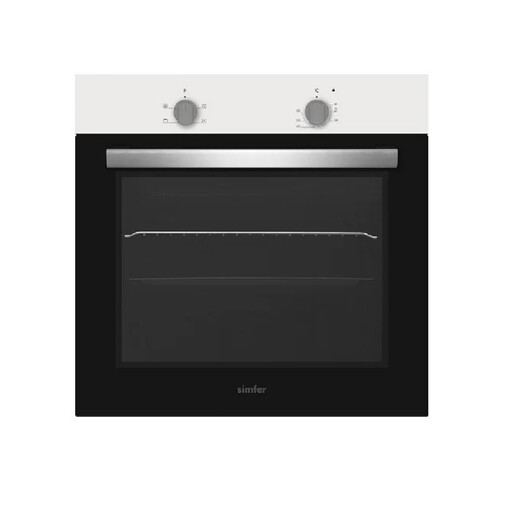
Why This Fits Their Persona: A practical choice for a first fitted oven, with a white finish, simple controls and everyday cooking functions for flats, rentals and smaller family kitchens.
Its listed specifications identify four cooking functions, 62-litre capacity and a 13-amp plug connection, helping shoppers check suitability before ordering.
62-litre fan-assisted cavity, easy-clean enamel, interior light and A energy rating.
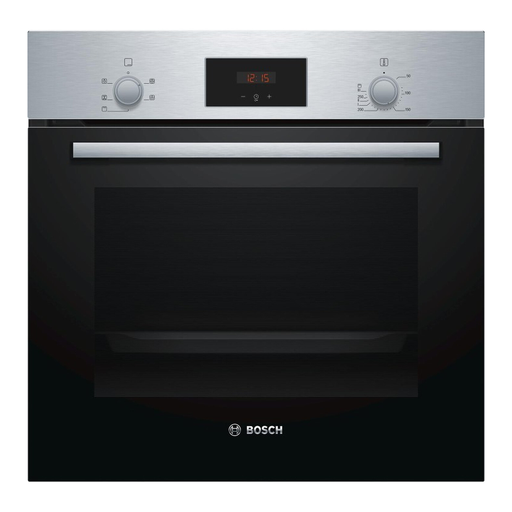
Why This Fits Their Persona: Suits homeowners creating a coordinated modern kitchen and wanting a larger cavity with familiar dial controls and multi-level fan cooking.
The stated 595 x 594 x 548mm dimensions and hardwired 3.3kW connection make cabinet and electrical checks clear before purchase.
66-litre capacity, 3D Hotair, double glazing, GranitEnamel interior and A energy rating.
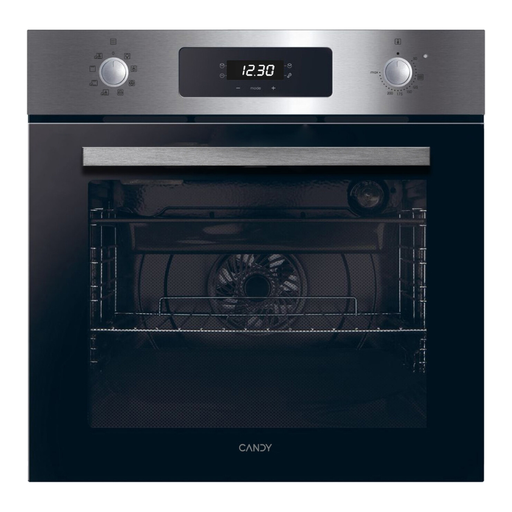
Why This Fits Their Persona: Designed for households that batch bake, prepare large roasts or need flexible settings for varied family meals.
The 70-litre capacity is paired with stated dimensions and a 560mm installation depth, so buyers can assess the housing rather than judging by capacity alone.
Eight functions, pizza setting, digital timer, hydrolytic steam cleaning and A+ rating.
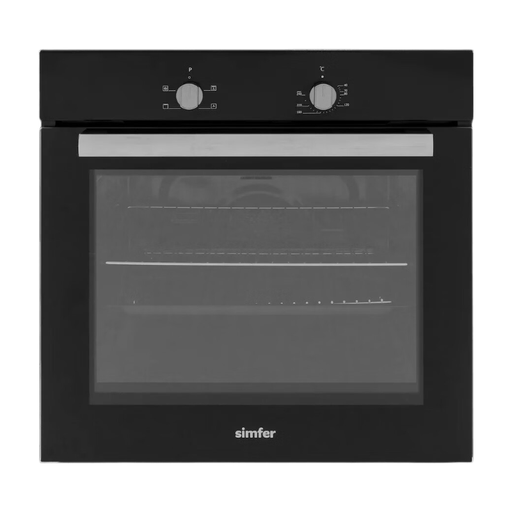
Why This Fits Their Persona: A straightforward option for shoppers prioritising a black built-in oven with fan cooking and grill functions for regular meals.
It provides specific information on the 56-litre capacity, four functions, 2000W grill and supplied accessories.
Turbo fan element, interior light, double-glazed drop-down door and A energy rating.
We have compiled a complete, real-time list of products that fully satisfy these strict selection criteria and UK safety regulations.
A built-in single oven suits a fitted kitchen where the hob is separate or already installed. It creates a streamlined appearance but requires accurate cabinet measurements and may need hardwiring.
A freestanding electric cooker combines the oven and hob in one appliance. Models such as the Simfer SIM61CW provide a 56-litre fan-assisted oven and four-zone ceramic hob in a 60cm format. This can be more suitable when replacing an entire cooker rather than fitting an oven into existing cabinetry.
Double ovens provide separate cavities for cooking at different temperatures, but they need more vertical cabinet space. Check the installation position carefully: some double ovens are designed for eye-level installation and are not suitable beneath a worktop.
Many are designed around a 60cm-wide housing, but dimensions are not identical. Always compare the product’s height, width, depth and cut-out requirements with your cabinet before ordering.
The cost depends on the oven’s power rating, energy rating, cooking temperature, programme and electricity tariff. An A-rated model may use energy efficiently within its tested conditions, but shorter cooking times, avoiding unnecessary preheating and keeping the door closed can also affect consumption.
There is no guaranteed lifespan for every appliance. Longevity depends on installation, frequency of use, cleaning and maintenance. Follow the manual, avoid abrasive products on enamel or glass, keep ventilation clear and check the warranty terms before purchase.