
24/7 Customer Support

Free returns

Same-day & Next-day Delivery

Quality Guaranteed

Unlock Your Welcome Offers: FREE Delivery | Up to 80% OFF | Free 30-day JoyPlus trial
Download the APP
Replacing an integrated oven is rarely as simple as choosing a finish and capacity. A model can look suitable online yet fail to fit the cabinet, lack the cooking function you use most or cost more to maintain than expected.
The main risks when shopping for built-in electric ovens are usually:
This guide compares the specifications that matter most, followed by product matches for different UK households.
A standard 60cm built-in oven is generally designed for a housing unit around 60cm wide, but the appliance dimensions and niche measurements are not always identical. Check the manufacturer’s installation diagram for:
A built-in single oven normally fits a tall housing unit or a suitable under-counter cavity. A built-under double oven is taller and is intended to sit beneath the worktop, so it cannot simply replace a single oven without checking the available cabinet height.
Many full-size ovens require hardwiring or a suitable dedicated connection. Models such as the Bosch HHF113BR0B and CDA SC020SS list hardwired connections, while other products may require an electrician to fit an appropriate plug or connection. Installation should follow the supplied instructions and UK electrical requirements, using a qualified installer where required.
Capacity is more useful than external size when comparing ovens. A 56-litre oven may suit a couple or smaller household, while a large-capacity oven of 70–78 litres gives more room for family roasts, larger dishes or batch baking.
Consider how you cook:
A multifunction electric oven commonly combines conventional heat, fan-assisted cooking, grilling, defrosting and specialist settings such as pizza. Fan assistance can help distribute heat around the cavity, but recipes may still require temperature or shelf adjustments.
An A-rated electric oven can be a sensible choice for regular cooking, while selected models in this range carry A+ or A++ ratings. The rating is only one part of running cost: cooking temperature, cycle length, cavity size and how often the oven is used also affect electricity consumption.
Cleaning systems work differently:
Digital timers, child locks, cool-touch doors and interior lighting can improve everyday usability. A smart built-in oven with Wi-Fi or Bluetooth may offer remote preheating, monitoring and recipe access, but connectivity depends on a compatible app and home network.
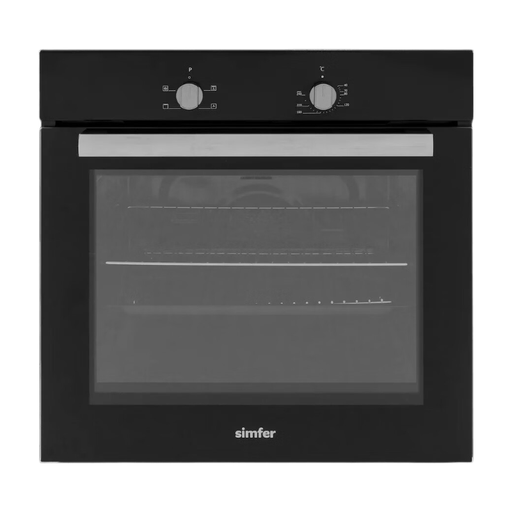
Why This Fits Their Persona: A straightforward choice for renters, first-time homeowners or smaller households seeking a black built-in oven with familiar knob controls and standard-width installation.
It states a 56-litre capacity, four cooking functions and a 2000W grill, making the specification easier to compare without relying on vague space claims.
An A energy rating, turbo fan assistance, integrated grill and double-glazed drop-down door.
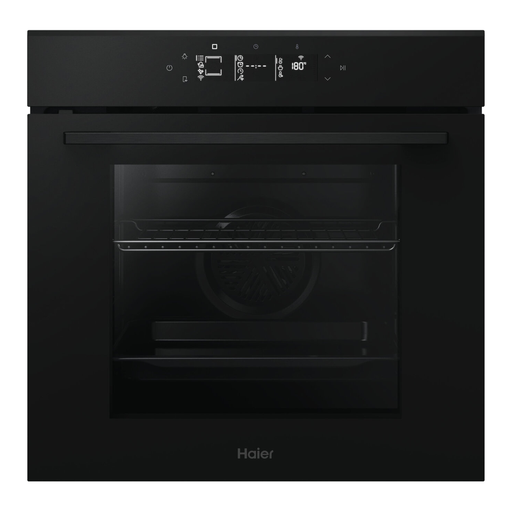
Why This Fits Their Persona: Suitable for home cooks who want a high-capacity black oven, connected controls and more guided cooking options for regular family meals.
Its 78-litre capacity and listed 595 × 595 × 568mm dimensions help clarify both usable space and external fit.
A++ rating, Air Fry mode, meat probe, Wi-Fi and Bluetooth connectivity, plus pyrolytic and hydrolytic cleaning.
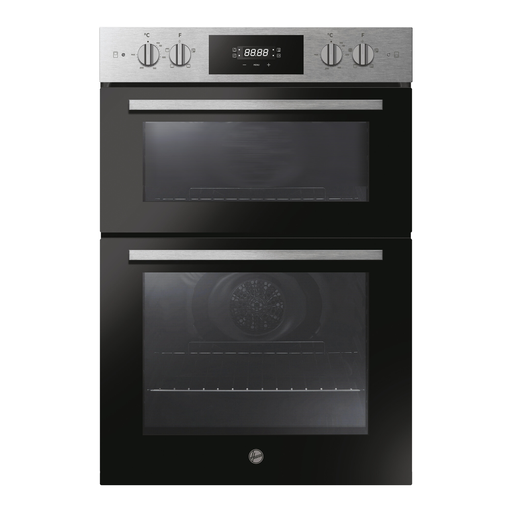
Why This Fits Their Persona: Designed for larger households and frequent entertainers who need two cooking spaces and remote monitoring through a smartphone app.
The separate 71-litre and 45-litre cavities make it easier to plan dishes at different temperatures instead of overloading one oven.
A/A energy ratings, Wi-Fi app control, multiple cooking modes and pyrolytic cleaning in the main oven.
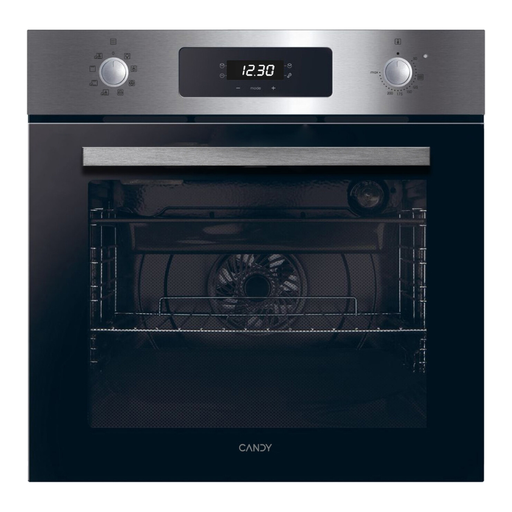
Why This Fits Their Persona: A practical stainless steel option for busy families wanting generous capacity, simple controls and a shorter steam-clean routine.
The hydrolytic system is clearly specified: add 300ml of water, run the cycle and wipe the loosened residue after cooling.
70-litre capacity, eight cooking functions, pizza setting and A+ energy rating.
We have compiled a complete, real-time list of products that fully satisfy these strict selection criteria and UK safety regulations.
Many ovens require a hardwired electrical connection, dedicated circuit or specific ventilation clearance. Check the product instructions and have electrical work completed by a suitably qualified installer. Do not use an extension lead or multi-socket adapter unless the manufacturer expressly permits it.
Lifespan depends on frequency of use, cleaning, installation and component quality. Regularly removing spills, avoiding abrasive cleaners and keeping ventilation clear can help maintain the appliance. Warranty length and registration terms should also be checked before purchase.
Running cost depends on the appliance’s energy rating, cooking temperature, cycle duration and usage pattern. An A-rated or higher-rated model may help manage consumption, but reducing unnecessary preheating, avoiding repeated door opening and cooking several items together can also make a practical difference.