
24/7 Customer Support

Free returns

Same-day & Next-day Delivery

Quality Guaranteed

Unlock Your Welcome Offers: FREE Delivery | Up to 80% OFF | Free 30-day JoyPlus trial
Download the APP
Replacing an oven can look straightforward until installation measurements, electrical requirements and cleaning claims enter the picture. Many built-in electric ovens share a similar 60cm appearance, yet their capacities, cavity layouts and connection requirements can differ considerably.
There are also several common buying traps:
Most 60cm built-in ovens are approximately 595mm wide, but the required niche can vary. For example, several standard single ovens require an installation opening around 590mm high, 560mm wide and 560mm deep, while models such as the Bosch HHF113BA0B list different external dimensions.
Decide whether you need:
Measure the cabinet opening rather than the existing appliance alone. Check the product installation diagram for ventilation gaps, rear clearance and door movement. A qualified installer should confirm that the housing and electrical supply are suitable.
Capacity is measured in litres, but usable space also depends on shelf positions and the shape of the cavity.
A 65-litre oven is generally suitable for everyday family meals, baking and standard roasting trays. A 70-litre oven offers more flexibility for larger dishes or multi-shelf cooking. Models with capacities of 71–78 litres may be useful for households that regularly cook large joints, several trays or meals for guests.
A double oven provides two cavities, but they are not always equal in size. A typical arrangement may combine a main fan oven of around 65–72 litres with a smaller top oven of approximately 30–45 litres. This is useful when cooking dishes at different temperatures, although the cabinet height requirement is greater.
A multifunction oven may include fan cooking, conventional heat, grill, defrost, pizza and warming modes. A fan oven circulates heated air, which can support more even cooking across shelves, but recipe temperatures may still need adjustment.
Cleaning systems work differently:
Energy labels should be compared alongside cavity size and stated energy consumption. A-rated and A+ rated ovens can both be sensible choices, depending on price, capacity and how frequently the appliance is used.

Why This Fits Their Persona: A practical single oven for renters, first-time homeowners and smaller households wanting a standard built-in format without paying for smart controls.
Its 595mm width and 595mm height suit a common 60cm built-in layout, while the Aquactiva steam system is presented as a cleaning aid rather than a replacement for wiping the cavity.
65-litre capacity, eight cooking functions, digital timer and A+ energy rating.
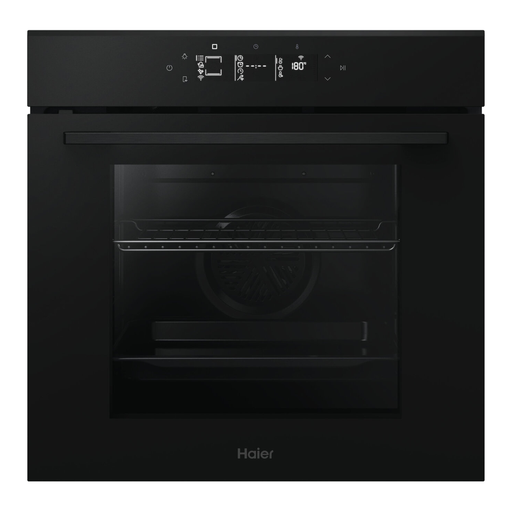
Why This Fits Their Persona: Suitable for kitchen renovators who want a large cavity, connected controls and multiple cleaning options in a black built-in oven.
The listing specifies a 595mm-wide appliance, a 590 × 560 × 560mm cut-out and Wi-Fi plus Bluetooth connectivity, making key compatibility checks clearer.
78-litre capacity, A++ rating, Air Fry mode, meat probe and pyrolytic plus hydrolytic cleaning.

Why This Fits Their Persona: A double-cavity configuration for families, keen home cooks and people who regularly prepare several dishes for entertaining.
The listing gives separate cavity capacities and identifies the hardwired connection, helping buyers check both housing height and electrical installation before ordering.
72-litre fan-assisted main oven, 38-litre top oven with grill, nine settings and soft-close doors.
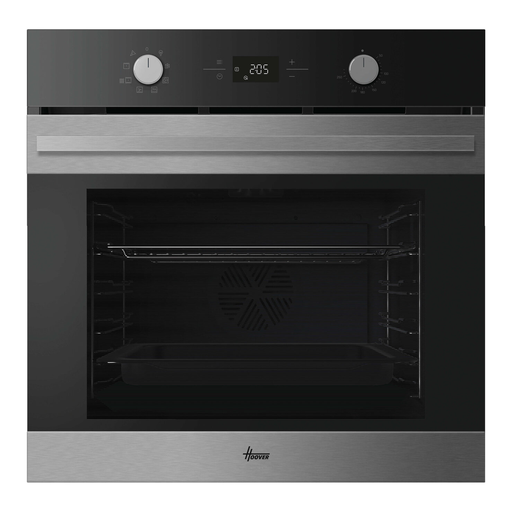
Why This Fits Their Persona: Designed for shoppers who want app connectivity, a sizeable cavity and conventional controls alongside a touch display.
The specification identifies Wi-Fi and Bluetooth connectivity, a standard 60cm niche and a hydrolytic cleaning system, so the headline features can be checked individually.
70-litre capacity, A+ rating, nine cooking functions, soft-close door and hOn App compatibility.
We have compiled a complete, real-time list of products that fully satisfy these strict selection criteria and UK safety regulations.
Some single ovens can use a suitable 13A supply, while higher-powered or double ovens often require hardwiring to an appropriate circuit and isolation switch. Always check the model’s installation instructions and use a qualified electrician where required.
Service life depends on installation quality, frequency of use, cleaning practices and component wear. Keeping ventilation clear, avoiding abrasive cleaners and following the manufacturer’s maintenance instructions can help preserve the appliance. Warranty length and registration conditions should also be checked before purchase.
The rating indicates efficiency under standardised conditions, but it does not predict an individual household’s exact bill. Compare the stated energy consumption per cycle, cavity size and cooking habits. A larger oven may use more energy per cycle even if its label is comparatively efficient.