
24/7 Customer Support

Free returns

Same-day & Next-day Delivery

Quality Guaranteed

Unlock Your Welcome Offers: FREE Delivery | Up to 80% OFF | Free 30-day JoyPlus trial
Download the APP
Replacing an integrated oven is rarely as simple as choosing a colour and capacity. A model can look suitable online yet fail to fit the housing, require unexpected electrical work or offer cleaning technology that does not match your cooking habits. This guide explains the practical details to check before buying built-in electric ovens, with options for everyday meals, family cooking and feature-led kitchen upgrades.
A 60cm built-in oven generally has an external width close to 595mm, but housing cut-out dimensions, depth and ventilation requirements can vary. A built-in single oven may fit a standard eye-level cabinet, while a built-under double oven requires a different height and cabinet arrangement.
Always compare:
Some ovens are supplied with a 13-amp plug, while others are hardwired and may require a qualified electrician. Do not assume an existing connection is suitable.
A multifunction oven, smart built-in oven or pyrolytic oven can offer useful convenience, but added technology is not automatically valuable for every household. Wi-Fi control may be unnecessary if you mainly cook at home, while pyrolytic cleaning can use considerable heat and requires careful preparation.
Match features to routine use:
An A-rated oven or A+ model indicates an energy-efficiency class, but actual running costs depend on cooking temperature, programme, usage frequency and preheating. A larger family-size oven may consume more energy for a single small dish than a compact cavity.
For more economical everyday cooking, use the correct-sized cavity, avoid unnecessary preheating and compare the manufacturer’s energy-consumption information where available.
Most single built-in ovens are designed around a 60cm-wide housing unit. Typical examples include the Bosch HHF113BA0B at approximately 595 x 594 x 548mm and the Candy FIDCN605 at 595 x 595 x 568mm. These figures are not interchangeable with cabinet cut-out measurements, so consult the installation manual before purchase.
Double ovens need particular care. A conventional built-in double oven is often around 885–900mm high, whereas built-under models use a different cabinet format. The Belling BEL BI703MFC is a built-under double oven with separate 54-litre and 38-litre cavities, while the Belling BEL BI903MFC is designed as a taller 90cm built-in double oven.
Hardwired models should be installed by a suitably qualified professional in accordance with the manufacturer’s instructions and applicable UK electrical requirements.
Capacity is measured in litres, but layout also matters. A 56-litre oven may suit smaller households, while a 65–78-litre cavity gives greater flexibility for large roasting tins, batch baking and family portions.
A double oven provides two independent cavities, allowing different temperatures or cooking methods at the same time. However, the smaller top oven may be conventional rather than fan-assisted. Check whether you need:
Cleaning claims should be read literally:
If low maintenance is a priority, check which cavity has the cleaning system. On some double ovens, catalytic or pyrolytic cleaning applies only to the main oven.
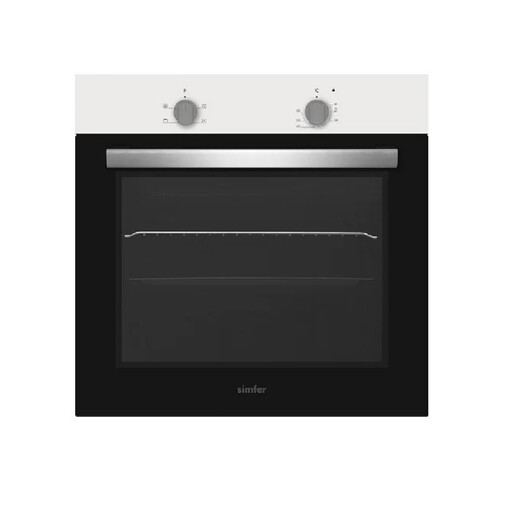
Why This Fits Their Persona: A straightforward white 60cm built-in oven for tenants, first-time homeowners or households replacing a basic appliance without needing connected controls.
It specifies four cooking functions, an integrated grill, easy-clean enamel and an A energy rating rather than relying on vague performance wording. Confirm the installation measurements before ordering.
62-litre capacity, fan-assisted cooking, double glazing and included shelf and drip-pan accessories.
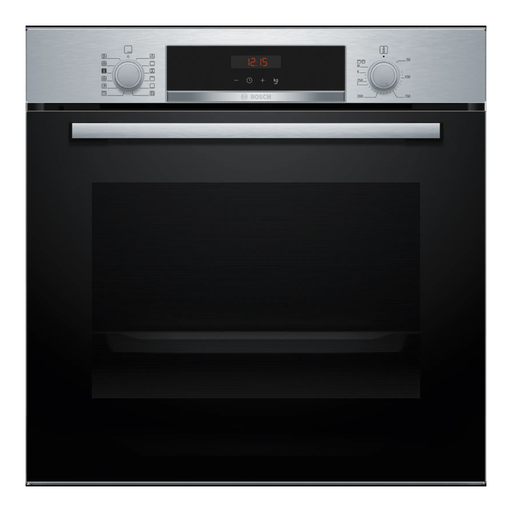
Why This Fits Their Persona: Suitable for home cooks who value moisture-assisted cooking, automatic programmes and a high-temperature cleaning cycle in a single cavity.
The cleaning method is clearly identified as pyrolytic, while the added-steam function uses a water bowl rather than implying a permanent steam supply.
71-litre cavity, 3D Hotair, Hotair Steam, AutoPilot 10 and an A energy class.
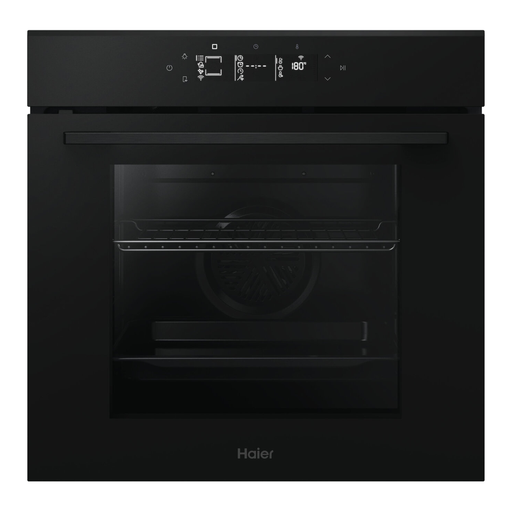
Why This Fits Their Persona: A practical match for frequent cooks who want a large cavity, air-fry mode, meat probe and app-based monitoring.
It combines hydrolytic and pyrolytic cleaning, so light spills and heavier residue have different options. Pyrolytic use still requires removing accessories and following safety instructions.
78-litre capacity, A++ rating, Wi-Fi and Bluetooth connectivity, meat probe, air fry and telescopic runners.
We have compiled a complete, real-time list of products that fully satisfy these strict selection criteria and UK safety regulations.
Many models are hardwired and should be connected by a qualified electrician. Some lower-load appliances may use a 13-amp supply, but the product specification and installation instructions should determine the correct arrangement. Never use an extension lead or unsuitable adapter.
Service life depends on build quality, installation, cleaning habits and frequency of use. Keep the cavity and ventilation areas maintained, avoid slamming doors and replace damaged seals or shelves promptly. Check the manufacturer’s warranty and registration conditions, particularly where extended parts cover is advertised.
Running cost depends on the oven’s energy consumption, electricity tariff, temperature and cooking duration. An energy-efficient oven can reduce consumption compared with a lower-rated equivalent, but good habits also matter. Cooking several items together, using fan-assisted programmes where appropriate and avoiding unnecessary preheating can help manage household energy use.